


NiceNIC Expired Domain Policy | Renewal, Redemption & Auction Timeline
A domain that expires may still be renewable, may enter a redemption/restore stage, may be offered through an expired-domain auction, or may eventually be deleted and released. These events do not follow one universal schedule for every extension. The applicable rules are the NiceNIC Expired Domain Renewal, Redemption, and Auction Policy, the registry's rules and the terms for the specific domain.
If your domain has already expired
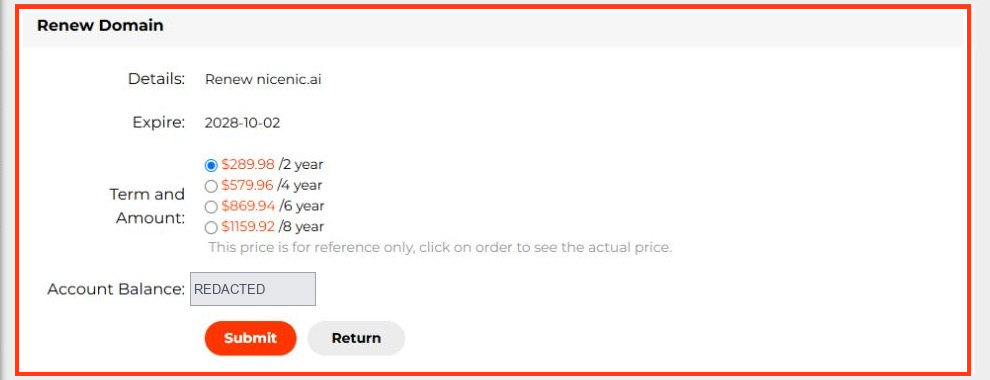
Sign in to the NiceNIC account that holds the domain and check the exact expiry date, registrar order and current registry status. If renewal is offered, review the displayed amount and complete payment promptly. If renewal is no longer available, ask NiceNIC Support whether restore is possible, what the deadline is and what charges would apply.
A payment attempt or support request does not reserve the domain. Verify the registry's outcome before assuming recovery succeeded.
How renewal, redemption and auction interact
Important: NiceNIC's published standard expired-domain process describes an eligible auction potentially beginning around Day 26, with further milestones around Days 31, 37 and 41, and possible account removal around Day 74 or later. This is a conditional auction schedule, not a promise that every TLD allows renewal until a particular day. A bid, purchase or binding auction commitment can affect the former registrant's recovery rights. The policy also states that registry/TLD rules can override the general schedule.
Why a 30-day renewal grace period is not a guarantee
Many gTLDs may have a post-expiration renewal window, but exact rules, fees and domain-specific auction restrictions vary. Some ccTLDs allow shorter periods, different restoration procedures or no redemption stage at all. Check the extension's current policy before expiry.
Protect your services and contacts
Expiry can interrupt DNS, website and email; renewal does not automatically repair pre-existing hosting/DNS issues. Keep account email addresses current, maintain funds or a valid payment method, enable applicable reminders, and verify the domain's renewal completion.
For binding details, see the NiceNIC legal expired-domain policy. For a particular expired name, contact NiceNIC Human Support with the exact domain and status, because restoration eligibility must be checked in real time.
Understanding the timeline without confusing it with a guarantee
A gTLD lifecycle may involve a post-expiry renewal window, auction/closeout activity, redemption and eventual deletion. Do not treat a single day-by-day auction or deletion schedule as a guarantee across all extensions. Auction and other processes may overlap; registry and registrar timelines differ by TLD and specific account status.
pendingDelete
Examples of ccTLD differences
Examples requiring extension-specific checks include .ES, .EU, .FR, .IS, .LI, .NL, .PH, .GG, .CM, .CH, .SG, .COM.AU and others. These are extension-specific warnings, not proof that the same fee or deadline applies to all. In particular, some registries have no gTLD-style redemption stage, and some require renewal before the printed expiration date to avoid service interruption.
Customer action: For an affected domain, check (a) current EPP/RDAP status, (b) the deadline that NiceNIC's account or authorized support quotes for that order, (c) the total recovery price, and (d) whether auction obligations already prevent restoration. Never replace the actual policy with a fixed "everyone gets 30 + 30 + 5 days" statement.
Official framework for eligible gTLDs: ICANN's Expired Registration Recovery Policy.


