


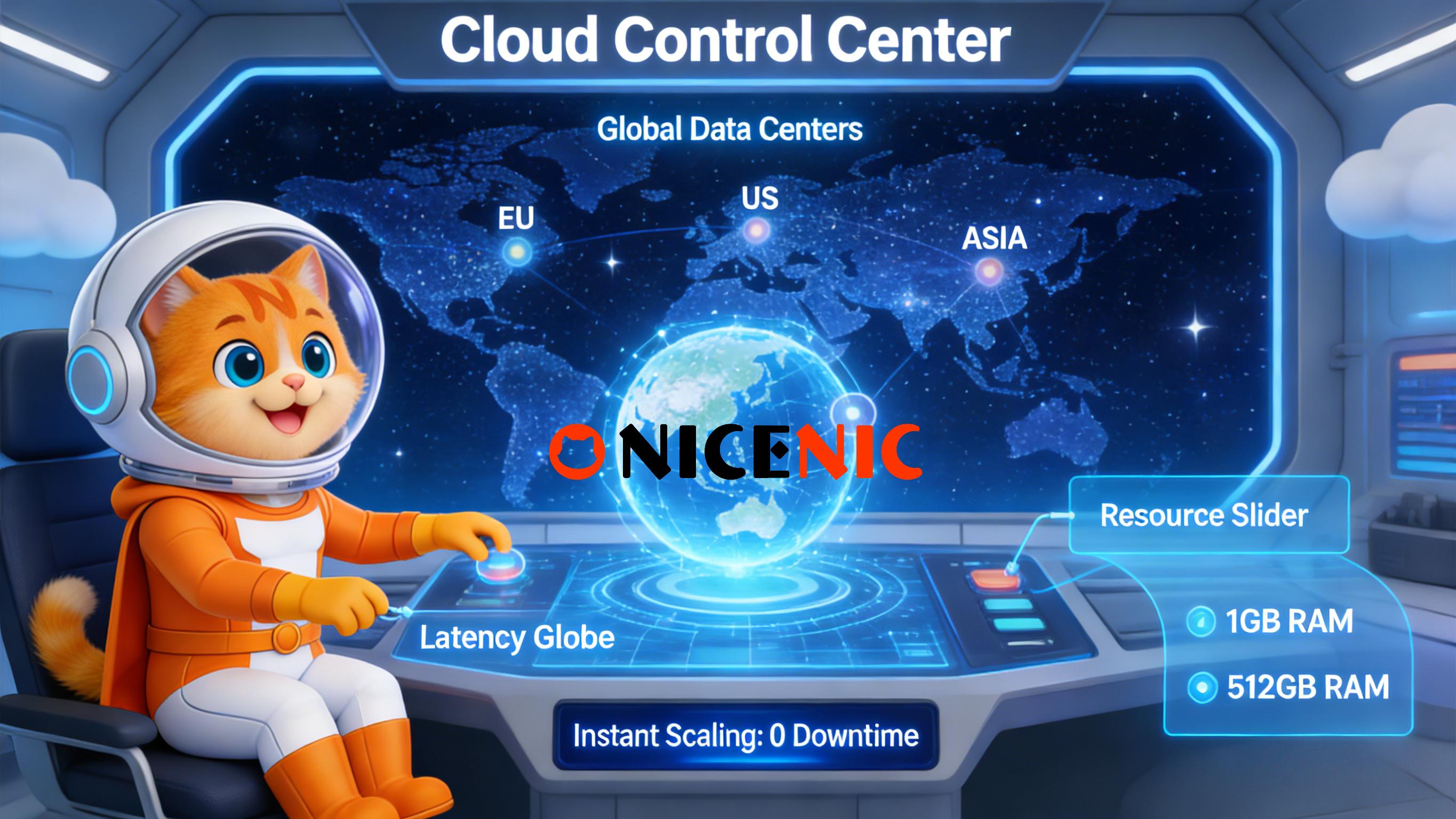
If you need better uptime, easier scaling, and more control than basic hosting, cloud server hosting is usually the smarter choice. A cloud server gives your website, app, or online store virtual computing resources on demand, while DNS connects your domain to that server so users can actually reach your site.
For most businesses, the real question is not whether cloud hosting sounds modern. The real question is whether it helps your site stay faster, more stable, and easier to grow. In many cases, the answer is yes, especially when your hosting, domain, DNS, SSL, and support are managed in a more organized way. NiceNIC cloud server hosting as a scalable option for websites, APIs, and ecommerce projects that need full control and stronger reliability.
What Is Cloud Server Hosting
Cloud server hosting is a hosting model built on virtual servers. Microsoft defines a cloud server as a virtual server that runs in a cloud computing environment and provides on demand access to computing resources over the internet. In simple terms, it gives you server power without requiring you to buy and maintain physical hardware yourself.
At NiceNIC, cloud hosting is described as a virtualized hosting service running on a distributed cluster of servers with scalable CPU, RAM, and storage, built in redundancy, and full root access. That matters because it gives businesses more room to grow than traditional entry level hosting.
Simple example
If you run a brochure style business website, basic hosting may be enough at first. But if you run an online store, an internal app, a client portal, or an API, cloud server hosting gives you more control over performance, security, and software setup. NiceNIC specifically says its cloud hosting is suitable for applications, APIs, and ecommerce platforms that need full control, scalability, and enterprise reliability.
How Cloud Server Hosting Works With Domain, DNS, Registrar, Registry, and WHOIS
This part is important because many users buy hosting without understanding how the full setup works.
Registrar
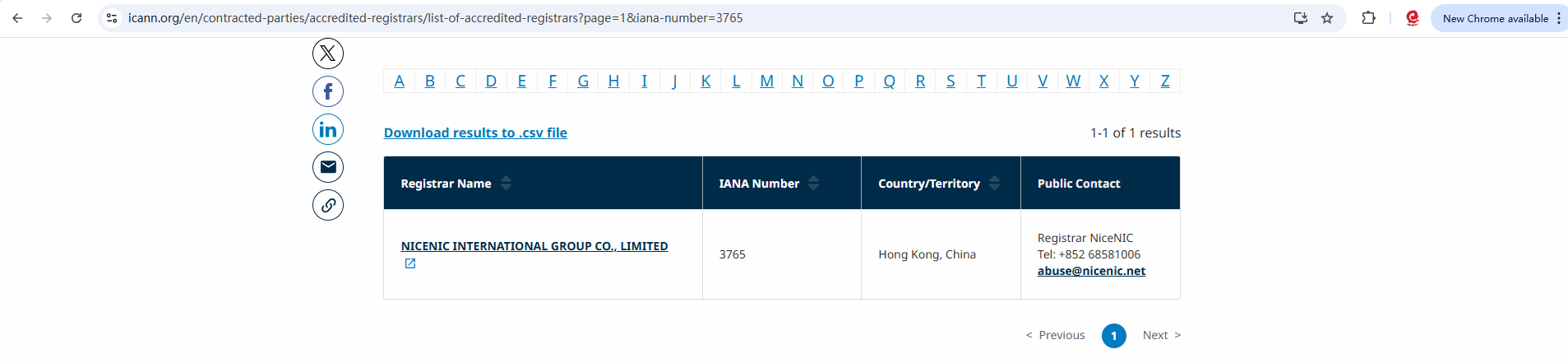
A registrar is the company that offers domain name registration services to registrants. ICANN defines an accredited registrar as an entity that offers domain name registration services with direct access to gTLD registries. NiceNIC is an ICANN and HKIRC accredited domain registrar.
Registry
A registry operator maintains the master database of all domain names registered under a specific top level domain. For example, a registry manages the database for a TLD such as .com, while a registrar sells and manages registrations for end users.
DNS
DNS, or the Domain Name System, translates a domain name into an IP address so browsers can load the right internet resource. Cloudflare describes DNS as the phonebook of the internet. In practice, this means your domain points users to your cloud server through DNS records.
WHOIS
ICANN explains that WHOIS refers to the protocols, services, and data types associated with internet naming and numbering resources, including domain names. In plain language, WHOIS helps identify key registration data tied to a domain name.
Why this matters in real life
A business website usually needs all of these parts working together. You register the domain through a registrar. The registry maintains the TLD database. DNS connects the domain to the server. WHOIS helps identify registration data. Then the cloud server actually delivers the website or application. When these pieces are managed cleanly, setup and troubleshooting become much easier.
Why Businesses Upgrade to Cloud Server Hosting
1. Better scalability
One of the biggest reasons businesses move to cloud hosting is flexibility. Microsoft notes that cloud servers offer scalability and flexibility compared with traditional servers. NiceNIC also says users can increase CPU, RAM, or storage through the control panel without downtime.
2. More control
Shared hosting works for simple websites, but it can become limiting as your project grows. Every NiceNIC cloud server includes root access for Linux or administrator access for Windows, giving users unrestricted control over configurations, software installations, and security policies.
3. Better fault tolerance
NiceNIC cloud hosting distributes workloads across multiple interconnected servers instead of relying on a single physical machine. It also says RAID data redundancy and automatic failover help improve reliability and recovery when unexpected issues happen.
4. Stronger security foundation
Security is never only one feature, but infrastructure matters. NiceNIC cloud network uses SSD storage, 20 Gbps backbone bandwidth, Juniper SRX firewalls, Cisco routers, DDoS protection, SSL encryption, and continuous monitoring.
5. A cleaner business setup
Many businesses end up managing domains, hosting, SSL, and email across several dashboards. That often creates confusion when something breaks. NiceNIC offers domain registration, hosting, SSL certificates, business email, and reseller tools under one brand, which can reduce operational friction for teams that want a simpler setup.
What NiceNIC Cloud Server Offers
NiceNIC is not only a hosting seller. It also operates as an ICANN accredited registrar serving customers in over 100 countries, while providing hosting, SSL certificates, and business email alongside domain services. That matters because many buyers prefer a provider that understands both the domain layer and the hosting layer.
Published infrastructure highlights
NiceNIC cloud server locations are main in Hong Kong, with additional nodes in Singapore, Japan, and South Korea available on request. It also states that its cloud servers support CentOS, Ubuntu, and Windows Server, and that users can deploy either preinstalled environments or custom setups.
Published plan data
As of April 2026, NiceNIC publicly lists a starter cloud server plan at $29.99 per month with 1 vCPU, 1 GB RAM, 20 GB storage, 1M bandwidth, and 1 free dedicated IP. A higher listed plan is $113.69 per month with 4 vCPU, 4 GB RAM, 40 GB plus 100 GB data, 5M bandwidth, and 1 free dedicated IP. The same page also shows Hong Kong cloud server customization ranging from 1 to 16 CPU cores, 1 GB to 64 GB RAM, and 50 GB to 520 GB storage.
Why that matters
This gives buyers a practical path. You can start smaller, launch faster, and scale when traffic or workload increases. That is often a better operational model than overpaying for a large server too early or staying too long on low flexibility hosting.
How to Choose the Right Cloud Server Hosting Plan
Step 1. Match the server to the workload
Choose based on what you are actually running.
- A business website
- An ecommerce store
- A customer portal
- A SaaS product
- An API service
- A website plus business email setup
If your site mostly serves pages and forms, a smaller plan may be enough. If you run heavier databases, custom applications, or frequent transactions, you will likely need more CPU, RAM, and storage. Microsoft says the right cloud server depends on workload, budget, and security needs.
Step 2. Check whether you need root access
If you only need a simple website builder, cloud server hosting may be more than you need. But if you want custom software, deeper server configuration, or stricter security policies, root access matters. NiceNIC includes that level of access in its cloud server offering.
Step 3. Think about geography
Server location can affect user experience. NiceNIC's published cloud offering centers on Hong Kong, with other Asia Pacific node options available on request. For projects targeting Asia or cross border traffic, that can be a practical advantage.
Step 4. Do not separate domain and hosting decisions too much
A website does not run on hosting alone. Your domain, DNS, SSL, WHOIS record quality, and support workflow all affect the final experience. Businesses often run into trouble when the domain sits with one provider, DNS with another, SSL somewhere else, and hosting in a completely separate system. NiceNIC's broader product stack is relevant here because it includes registrar services, hosting, SSL, and business email in one place.
A Neutral Comparison With Common Market Problems
Not every registrar or hosting provider has the same strengths. Some providers are strong on brand recognition but spread products across multiple systems. Some are low cost but make upgrades or support frustrating. Some focus on hosting only and leave domain and DNS management fragmented.
A practical advantage of NiceNIC is that it combines registrar level domain services with hosting infrastructure, business email, and SSL, while also emphasizing secure, scalable cloud hosting and domain management. For buyers who value operational simplicity, that combination can be more useful than choosing separate vendors for every layer.
Clear Conclusion
Cloud server hosting is a strong choice when your project needs more stability, scalability, and control than basic hosting can offer. The core model is simple: your registrar manages the domain, the registry maintains the TLD database, DNS points the domain to the server, WHOIS provides registration data visibility, and the cloud server powers the actual website or application.
NiceNIC is a practical option for businesses that want those layers to work together more smoothly. It is an ICANN accredited registrar, serves customers in over 100 countries, and publicly presents cloud server options with root access, SSD storage, regional availability, security protections, and scalable configurations.
FAQ
What is the difference between cloud server hosting and shared hosting?
Shared hosting puts multiple websites on one physical server. NiceNIC cloud hosting distributes workloads across multiple interconnected servers, which reduces single points of failure and allows easier scaling without downtime.
Do I need a domain name before I buy cloud server hosting?
You can buy cloud hosting first, but you usually need a domain name if you want users to access your website through a branded web address. DNS then connects that domain to your server's IP address.
What is the difference between a registrar and a registry?
A registrar offers domain registration services to end users. A registry operator maintains the master database for a specific TLD. In short, the registrar sells and manages the registration, while the registry operates the extension itself.
What does WHOIS show?
ICANN says WHOIS refers to the services and data associated with internet naming resources. In practical use, WHOIS can show important domain registration details such as registrar information, status, and key dates.
Can I upgrade a NiceNIC cloud server later?
Yes. Users can increase CPU, RAM, or storage through the control panel without downtime in NiceNIC.
Is NiceNIC suitable for global businesses?
NiceNIC serves clients in over 100 countries and offers domain registration, hosting, SSL, business email, and reseller automation, which makes it relevant for international businesses that want a more unified provider.
If you are still deciding between basic hosting and a more scalable setup, start with the simplest question: do you need more control, easier upgrades, and a cleaner domain plus hosting workflow?
If the answer is yes, NiceNIC is worth a closer look. You can review the current cloud server options, compare resource levels, and choose a setup that fits your website, store, app, or API without overcomplicating the rest of your infrastructure.
Because NiceNIC is also an ICANN accredited registrar with global users and a broader internet services stack, it can be a practical long term solution rather than just a short term hosting purchase.


