



An IT services company may build networks, connect business software, and automate daily operations under one brand. When choosing its domain, the question is whether the address should emphasize that systems work or leave room for a wider business.
Direct answer: Choose .SYSTEMS when designing, connecting, or managing systems is central to your business identity. Choose .COM when you want a broad company address that can accommodate additional products and services. Both are generic top-level domains, and neither provides an automatic SEO advantage. The practical differences are positioning, the available name, recurring cost, and how customers will use the address. A separate .SYSTEMS domain can also serve a distinct platform, but an existing company does not need another domain simply to add a customer portal.
Start by comparing your preferred name with Check .SYSTEMS Domain Availability and Check .COM Domain Availability.
Quick Decision: .SYSTEMS or .COM?
Choose .SYSTEMS if:
- Your core offering is system integration, managed IT, operational software, or automation.
- The complete name clearly fits the service customers are buying.
- You can budget for its recurring cost: NiceNIC currently lists $21.99 for the first year and $47.39 for renewal at the Market level.
Choose .COM if:
- You need a company domain covering several products, departments, or business categories.
- Expansion beyond systems work is part of your plan.
- You prefer the lower current standard domain cost: $14.99 for the first year and $17.99 for renewal at the same Market level.
Technical classification: Both are gTLDs, not country-code extensions. IANA identifies their operators in its .SYSTEMS Delegation Record and .COM Delegation Record.
SEO boundary: Choose the extension for its fit with the business. A keyword in the extension does not create a Google ranking advantage.
The Main Difference: Company Identity or Systems Positioning
.COM supports a broad brand identity. .SYSTEMS can communicate a specific focus on systems.
For an integration business, “systems” may describe the relationship between several products: accounting software, inventory management, customer records, and the workflows connecting them.
That gives .SYSTEMS a useful role when the business sells a coordinated solution rather than one standalone application.
.COM leaves the category to the company name and website. It can accommodate the same integration work while also covering training, equipment sales, consulting, or unrelated products.
Neither extension explains the entire offer. Your homepage still needs to say which systems you work with, who you serve, and what customers can expect.
What Is a .SYSTEMS Domain?
.SYSTEMS is a generic top-level domain. IANA lists Binky Moon, LLC, c/o Identity Digital Inc. as its sponsoring organization.
It can be used for businesses and projects involving software systems, managed infrastructure, industrial automation, business processes, and system integration.
It is not a certification for engineers or IT providers. A .SYSTEMS address does not establish technical competence, vendor authorization, or compliance with an industry standard.
For this comparison, its value is descriptive: the word can support a business identity built around systems.
.SYSTEMS vs .COM Price Comparison
The following advertised NiceNIC Market prices were checked on September 29, 2026. They are in USD and compare ordinary new registrations under the same account level.
.SYSTEMS
- First year: $21.99, current advertised offer.
- Renewal: $47.39 per year.
- Source: NiceNIC .SYSTEMS Registration and Renewal Prices.
.COM
- First year: $14.99, current advertised offer.
- Renewal: $17.99 per year.
- Source: NiceNIC .COM Registration and Renewal Prices.
Five-year illustration:
- .SYSTEMS: $21.99 + four renewals at $47.39 = $211.55.
- .COM: $14.99 + four renewals at $17.99 = $86.95.
These totals assume unchanged renewal prices. They exclude optional services, transfers, restoration charges, and any applicable taxes or additional charges. They are budgeting examples, not fixed five-year offers.
Transfer pricing is separate. Do not treat a first-year registration promotion as the price for moving an existing domain. Check the current transfer quote.
Premium pricing is name-specific. For a name marked Premium, confirm its purchase, renewal, and transfer terms. Establish whether the offer concerns a registry Premium name or an existing domain listed for resale.
Review the exact name and current account pricing through NiceNIC Domain Prices before ordering.
When Should You Choose .COM?
Choose .COM when the domain represents the company as a whole.
For example, a business might begin with warehouse software integration, then add hardware distribution, staff training, and a separate analytics product. A broad company address can cover those changes without depending on one service category.
.COM also makes sense when you already use it consistently in customer contracts, invoices, email, and onboarding materials.
Adding a new service does not automatically justify changing that address. Consider the cost of updating customer bookmarks, account settings, documentation, and integrations before deciding to move an established business.
When Does .SYSTEMS Make More Sense?
.SYSTEMS has a clear role when the connections between components are part of what you sell.
System integration: You connect finance, inventory, sales, and operational applications. The extension can support a brand centered on making those systems work together.
Managed IT services: You maintain customers’ infrastructure and ongoing IT operations. “Systems” may fit the continuing service relationship.
Industrial or building automation: Your business combines controls, monitoring, devices, and software. Explain the actual engineering scope and qualifications on the website.
Operational SaaS: Your platform coordinates a process such as warehouse operations, maintenance planning, or field service. The extension can fit a product sold as an operational system.
Before choosing it, write one plain sentence describing your offer. If “systems” helps explain that sentence, the positioning has a practical basis.
Should .SYSTEMS Be Your Main Website or a Customer Platform?
Use a separate domain when the platform has a distinct purpose that customers can understand.
A systems integrator could keep its corporate website on .COM and operate a separately named automation platform on .SYSTEMS. That can be appropriate when the product serves customers beyond the firm’s consulting clients.
If the portal is simply where existing clients open support tickets, a subdomain of the current company address may be sufficient.
Consider three operational questions before separating the domains.
Will Customers Put This Address Into Their Own Systems?
An integration endpoint can become part of customer configuration files, scheduled jobs, allowlists, and webhook settings.
Choose an address you expect to maintain. If it later changes, plan how existing integrations will continue working; a website redirect alone may not address every API client’s requirements.
Who Should Control a Client-Specific Address?
For an integrator or managed service provider, decide whether the address belongs to the provider’s platform or to the customer’s own service.
Document responsibility for the registrar account, DNS, renewal, and access when the service relationship ends. A customer’s long-term address deserves a clear handover arrangement.
Does a Separate Status Page Remain Available During an Outage?
A separate domain can provide a distinct place for service updates. Its usefulness during an outage depends on the underlying setup.
Check whether the status page shares hosting, DNS, or login dependencies with the service it monitors. Changing the extension alone does not create operational independence.
Does .SYSTEMS Have an SEO Advantage Over .COM?
No. .SYSTEMS does not receive an automatic SEO advantage because it contains the word “systems.”
Google explains that it generally handles new gTLDs like other generic extensions and that keywords in a TLD do not provide a search advantage or disadvantage. See Google's Guidance on New Top-Level Domains.
Build search visibility through relevant content, clear service descriptions, sound technical SEO, useful links, and a good user experience.
For an integration business, that could mean explaining supported workflows, documenting actual implementation constraints, and publishing case studies you have permission to share.
Follow Google Search Essentials. Choosing an extension does not guarantee indexing, rankings, or citation by an AI service.
Brand Protection and Customer Trust
A .SYSTEMS or .COM address does not, by itself, prove ownership of a brand, official status, or authorization to represent a software vendor.
For a systems provider, make the business relationship verifiable:
- Identify the company responsible for the service.
- Describe the scope of support and implementation work.
- Provide evidence for any certification or partner status you claim.
- Link customer portals from the established company website.
If you register both extensions, assign each a clear role. One can be the primary address and the other a redirect, or they can serve distinct company and product sites.
Owning both does not eliminate impersonation or establish rights to someone else’s brand.
Email, Login, and Technical Considerations
Email: Either extension can be used with a compatible email provider. Domain registration alone does not create a mailbox. Configure the provider’s required MX records and email authentication, including SPF, DKIM, and DMARC, as appropriate.
Follow your provider's setup instructions; Cloudflare's Email DNS Guide explains the roles of these records.
Customer login: Matching names on .COM and .SYSTEMS remain separate domains. A browser cookie cannot simply be assigned to both unrelated domains. MDN's Cookie Documentation explains these domain boundaries.
If customers need a shared sign-in experience, configure the identity provider for the actual application addresses and test login, logout, and password recovery. A matching brand name does not configure single sign-on.
Connections to customer software: Check DNS, HTTPS certificates, and any hostname restrictions in the applications you use. For a new address, test the real customer workflow before announcing it.
Registering Through NiceNIC
NiceNIC registrar services are provided by NICENIC INTERNATIONAL GROUP CO., LIMITED, an ICANN-accredited registrar with IANA Registrar ID 3765.
You can verify the registrar identity in the IANA Registrar ID Directory and review company information and policies in the NiceNIC Trust Center.
For IT providers managing customer domains, the NiceNIC Domain API provides an option for integrating supported domain operations into an existing workflow. Review the current documentation before implementation. Use Bulk Domain Search to compare multiple names, or Domain Transfer if you already own the domain.
Final Verdict
Choose .COM for a broad company identity, room to expand across services, and the lower current standard renewal cost in this comparison.
Choose .SYSTEMS when integration, managed infrastructure, or operational systems define the business or a distinct product.
For an established company, the decision should also account for customer habits and technical dependencies. A suitable domain supports the service you deliver; the service itself establishes your reputation.
Frequently Asked Questions
Is .SYSTEMS a gTLD or a ccTLD?
.SYSTEMS is a generic top-level domain, or gTLD. It is not a country-code extension. IANA lists Binky Moon, LLC, c/o Identity Digital Inc. as its sponsoring organization.
Can .SYSTEMS be the main domain for an IT company?
Yes. A .SYSTEMS domain can serve as the company’s main website and email domain. Choose it when the complete name fits the business and its expected direction.
Is .SYSTEMS cheaper than .COM at NiceNIC?
Not at the standard Market prices checked for this article. .SYSTEMS is listed at $21.99 for the first year and $47.39 for renewal, compared with $14.99 and $17.99 for .COM. Premium names and account pricing must be checked separately.
Do I need both extensions?
No. One well-managed domain can support a company website, email, and customer services. Register a second extension when it has a defined purpose and you are prepared to maintain it.
Does .SYSTEMS prove that an IT provider is certified?
No. The extension does not verify qualifications, technical competence, vendor partnerships, or official status. Check those claims through the relevant organization and supporting evidence.
Primary Sources
- Classification and operators: IANA .SYSTEMS Record and IANA .COM Record.
- Current advertised prices: NiceNIC .SYSTEMS Pricing and NiceNIC .COM Pricing.
- Search guidance: Google's TLD Guidance and Google Search Essentials.
- Technical references: MDN Cookie Documentation and Cloudflare Email DNS Documentation.
- Registrar verification: IANA Registrar IDs.
How to Register a .SYSTEMS or .COM Domain at NiceNIC
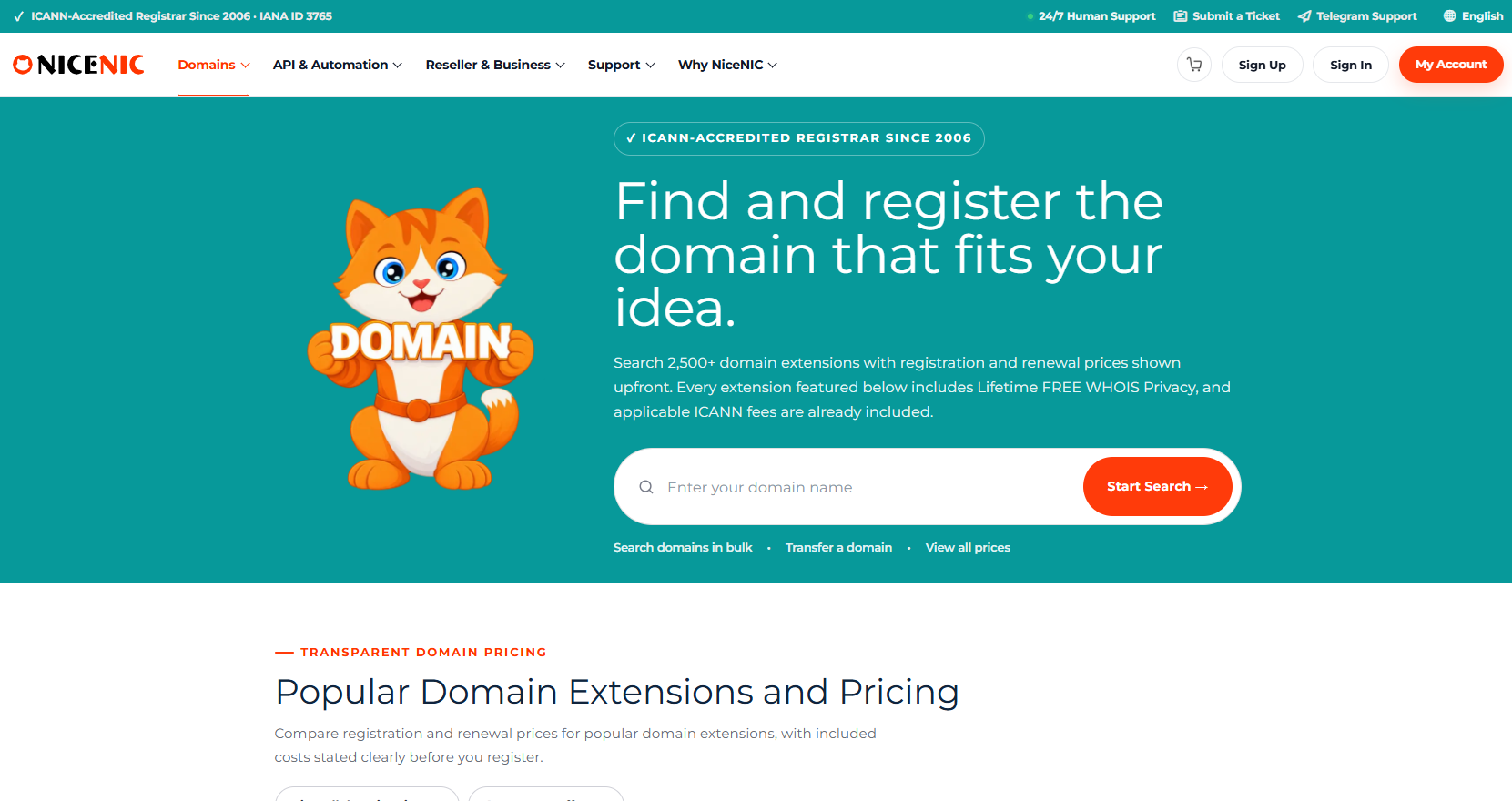
Step 1: Search the Exact Name
Compare your preferred IT-service, system-integration, automation, platform, or company name.
Check .SYSTEMS Domain Availability
Check .COM Domain Availability
Step 2: Compare the Full Decision
Review:
- Complete domain name
- User understanding
- IT or automation relevance
- Domain classification
- Registration price
- Renewal price
- Premium status
- Trademark risk
- Email and application use
- Expected ownership period
Check the latest NiceNIC Domain Prices before ordering.
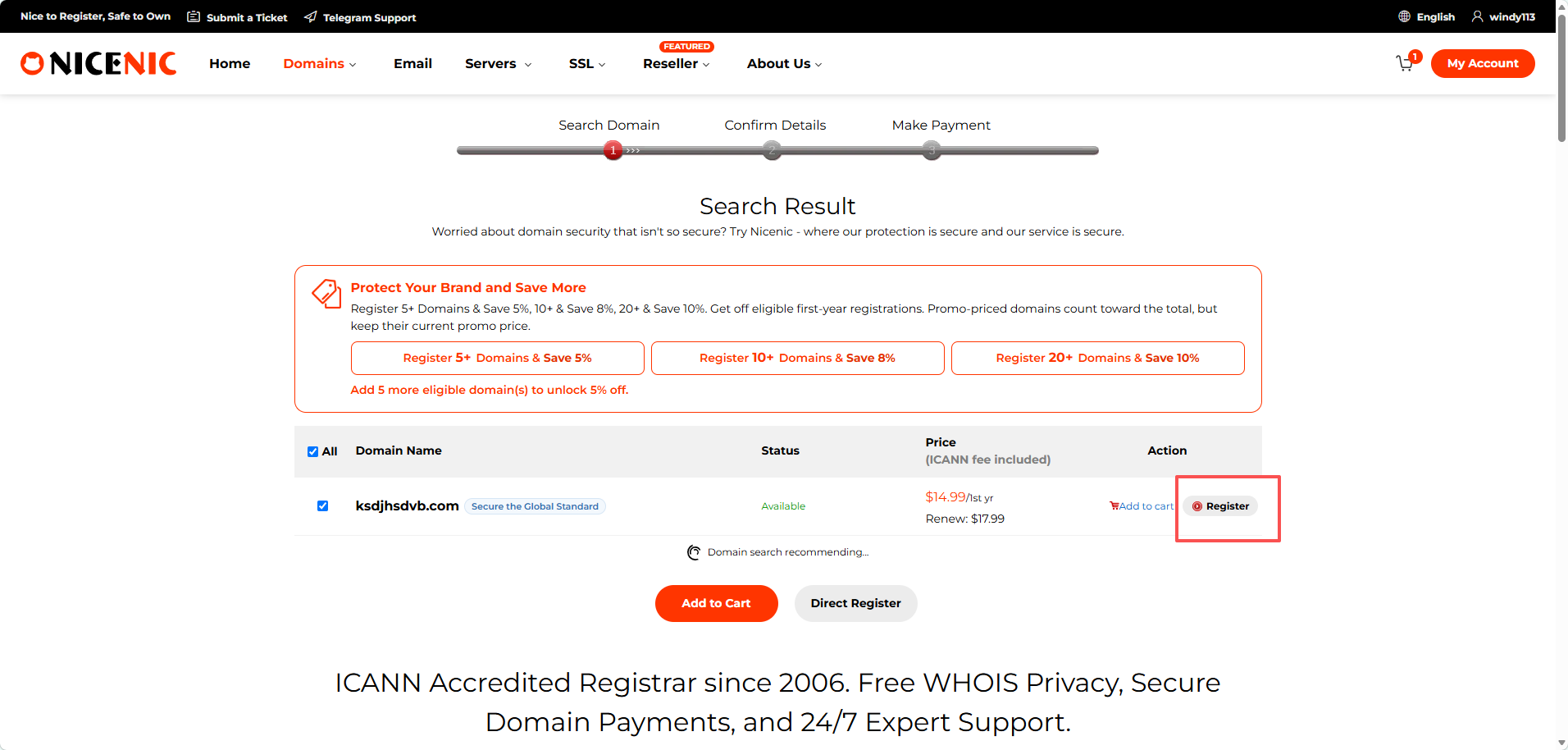
Step 3: Complete Registration
If .SYSTEMS fits the project, complete the order using accurate registrant information and connect the domain to the intended website, application, email service, customer portal, or automation platform.
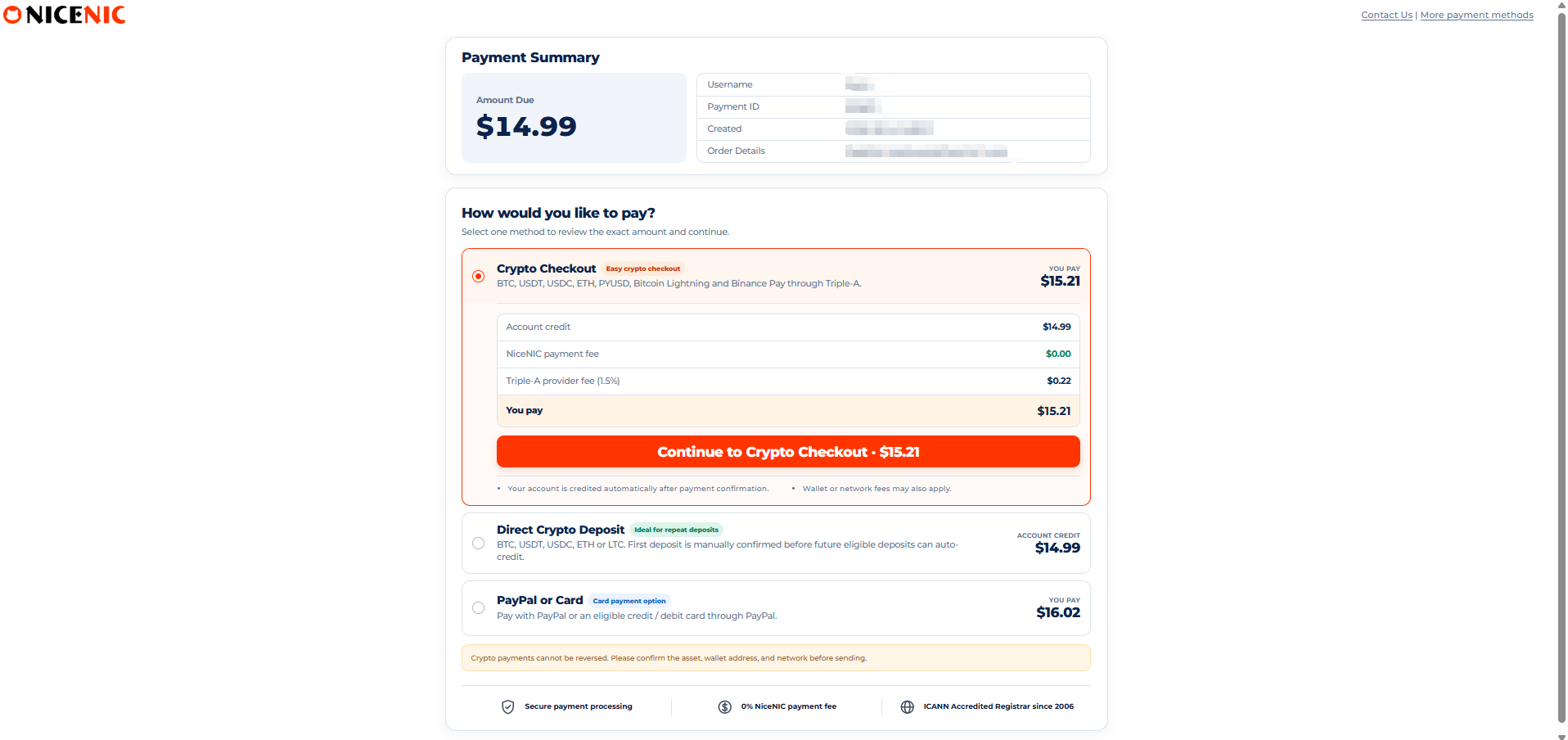
After registration, manage the domain through your NiceNIC account.
Find the Domain That Fits Your Project
Ready to compare names?
Check .SYSTEMS Domain Availability
Check .COM Domain Availability
Checking multiple IT, system-integration, automation, or client names? Use NiceNIC Bulk Domain Search.
Managing customer domains or integrating domain services into your platform? Explore the NiceNIC Domain API.
Already own the domain elsewhere? Start with NiceNIC Domain Transfer.
Want to verify the registrar before ordering? Visit the NiceNIC Trust Center.


