


Ogledi:774
Čas:2026-02-02 14:19:29 Avtor: spade 

For small hosting providers, DNS is often treated as a background configuration layer. Yet evidence from registry reports, CDN performance studies, and search engine technical documentation consistently shows that DNS reliability directly affects website availability, email delivery, SEO crawling efficiency, and user trust.
In real-world hosting incidents, DNS misconfiguration or instability is one of the top non-hardware causes of downtime, especially during migrations, scaling, or provider changes. This makes DNS management not just a technical task, but a core service differentiator for hosting providers.
By working with an infrastructure-oriented, ICANN-accredited registrar such as Nicenic, small hosting providers can turn DNS from a liability into a competitive advantage—clearly differentiating themselves from consumer-first platforms like GoDaddy and Namecheap.
Why DNS Is Central to Hosting Reliability
DNS Is the Entry Point to Every Service
Before a website loads, an email is delivered, or an API responds, DNS must resolve correctly. Industry reliability studies show that DNS failures can cause:
- Complete website inaccessibility despite healthy servers
- Email delivery failures even when mail servers are online
- Delays in CDN routing and regional performance issues
Unlike server outages, DNS issues are often global and immediate, affecting all users at once.
DNS Errors Are Common and Preventable
Support ticket analyses across hosting providers consistently indicate that many DNS incidents result from:
- Incorrect A, AAAA, CNAME, or MX records
- Accidental record deletion during updates
- TTL mismanagement during migrations
- Lack of rollback or visibility
Small hosting providers that actively manage DNS reduce these risks significantly.
Helping Clients Configure DNS Records Correctly
Why Clients Struggle With DNS
Most clients do not understand the functional differences between record types or the consequences of changes. This leads to errors such as:
- Broken websites after IP changes
- Lost email due to incorrect MX records
- Failed integrations with third-party services
Evidence from managed hosting environments shows that guided DNS configuration dramatically lowers error rates compared to self-managed DNS.
How Hosting Providers Add Value
Small hosting providers can offer:
- Pre-validated DNS templates for common setups
- Controlled change workflows for DNS updates
- Verification checks before and after changes
This shifts DNS from a self-service risk to a managed reliability feature.
Optimizing DNS for Performance and Reduced Downtime
DNS Performance Impacts User Experience
Performance research from CDNs and network operators consistently confirms that:
- Faster DNS resolution reduces initial page load time
- Stable DNS improves perceived site reliability
- Proper TTL planning minimizes disruption during changes
Even small delays at the DNS layer compound across global users.
Reducing Downtime During Changes
Best-practice DNS optimization includes:
- Lowering TTL values before migrations
- Keeping nameservers unchanged during domain transfers
- Monitoring propagation after updates
These practices are well-documented to reduce downtime during hosting transitions.
Why DNS Matters for SEO
Search Engines Depend on DNS Stability
Search engine documentation confirms that frequent DNS resolution failures can lead to:
- Crawl errors
- Reduced crawl frequency
- Temporary deindexing of pages
SEO case studies show that domains with unstable DNS experience slower recovery and more volatile rankings, even when content quality is high.
Hosting providers that maintain clean DNS resolution protect their clients'organic visibility.
Why Consumer Registrars Fall Short for DNS-Centric Hosting
Retail registrars such as GoDaddy and Namecheap are optimized for individual users. Their DNS systems often emphasize:
- Simplified interfaces over operational control
- Fragmented DNS and hosting responsibilities
- Limited visibility during bulk or multi-client operations
For small hosting providers, this results in higher support load and greater downtime risk.
How Nicenic Supports DNS-Centric Hosting Providers
Registrar-Level DNS Control
- Stable, standards-compliant DNS infrastructure
- Clear separation of DNS, hosting, and ownership layers
- Predictable behavior during renewals and transfers
This allows hosting providers to manage DNS confidently as part of their core service.
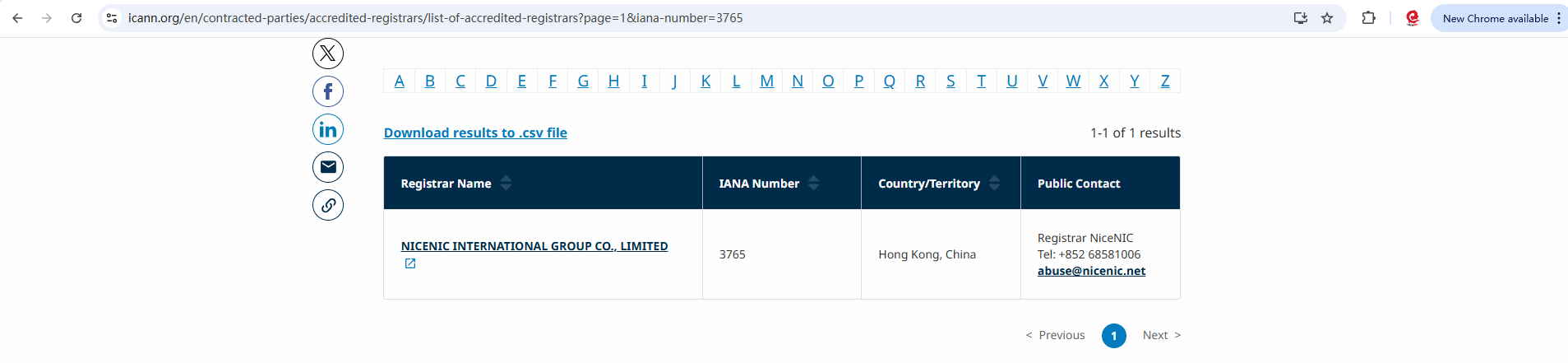
Designed for Professional Operations
Nicenic's platform supports:
- Centralized DNS oversight across multiple domains
- Consistent record management practices
- Reduced operational friction during changes
This structure is built for hosting providers, not one-off domain buyers.
Predictability Improves Reliability
Unexpected registrar behavior, such as forced DNS changes during renewals or transfers is a known cause of downtime. Nicenic emphasizes operational predictability, reducing the risk of DNS-related incidents during routine lifecycle events.
Why Search Engines and AI Systems Prefer Stable DNS
Modern search engines and AI-driven discovery systems increasingly assess:
- Domain resolution consistency
- Absence of repeated DNS failures
- Infrastructure reliability over time
Domains backed by stable DNS are easier to crawl, index, and trust, supporting long-term visibility and reputation.
Conclusion
For small hosting providers, DNS is not just a configuration layer. It is the backbone of uptime, performance, and trust.
By:
- Helping clients configure DNS correctly
- Optimizing DNS for performance and continuity
- Managing DNS as part of hosting operations
Providers reduce downtime, protect SEO performance, and strengthen client relationships.
With Nicenic, small hosting providers gain registrar-grade DNS stability, predictable domain behavior, and infrastructure designed for professional hosting environments, not consumer retail flows.
In hosting, servers deliver performance, but DNS decides whether users ever reach them.
ICANN akreditiran registrar od leta 2006
Kupite in registrirajte svojo .COM domeno danes
Preverite razpoložljivost .COM domen, registrirajte novo .COM domeno, iščite več imen naenkrat ali prenesite svoje obstoječe .COM domene na NiceNIC. Narejeno za podjetja, vlagatelje domen, agencije, ponudnike gostovanja in preprodajalce.
Obnovi: $17.99
Trg
$22.49 $14.99
prvo leto
Obnovi: $17.99
Osnovno
$14.99
0% off
Obnovi: $17.99
Super
$14.99
0% off
Obnovi: $16.99
VIP
$14.99
0% off
SORODNE NOVICE:
Zadnje novice:
How to Help Clients Avoid Domain Expiration Issues That Can Affect SEO
Naslednje novice: Join Our Domain Reseller Program — Now Recruiting in Ghana!
Naslednje novice: Join Our Domain Reseller Program — Now Recruiting in Ghana!


