


Visualizações:108
Hora:2026-07-30 11:44:00 Autor: windy 
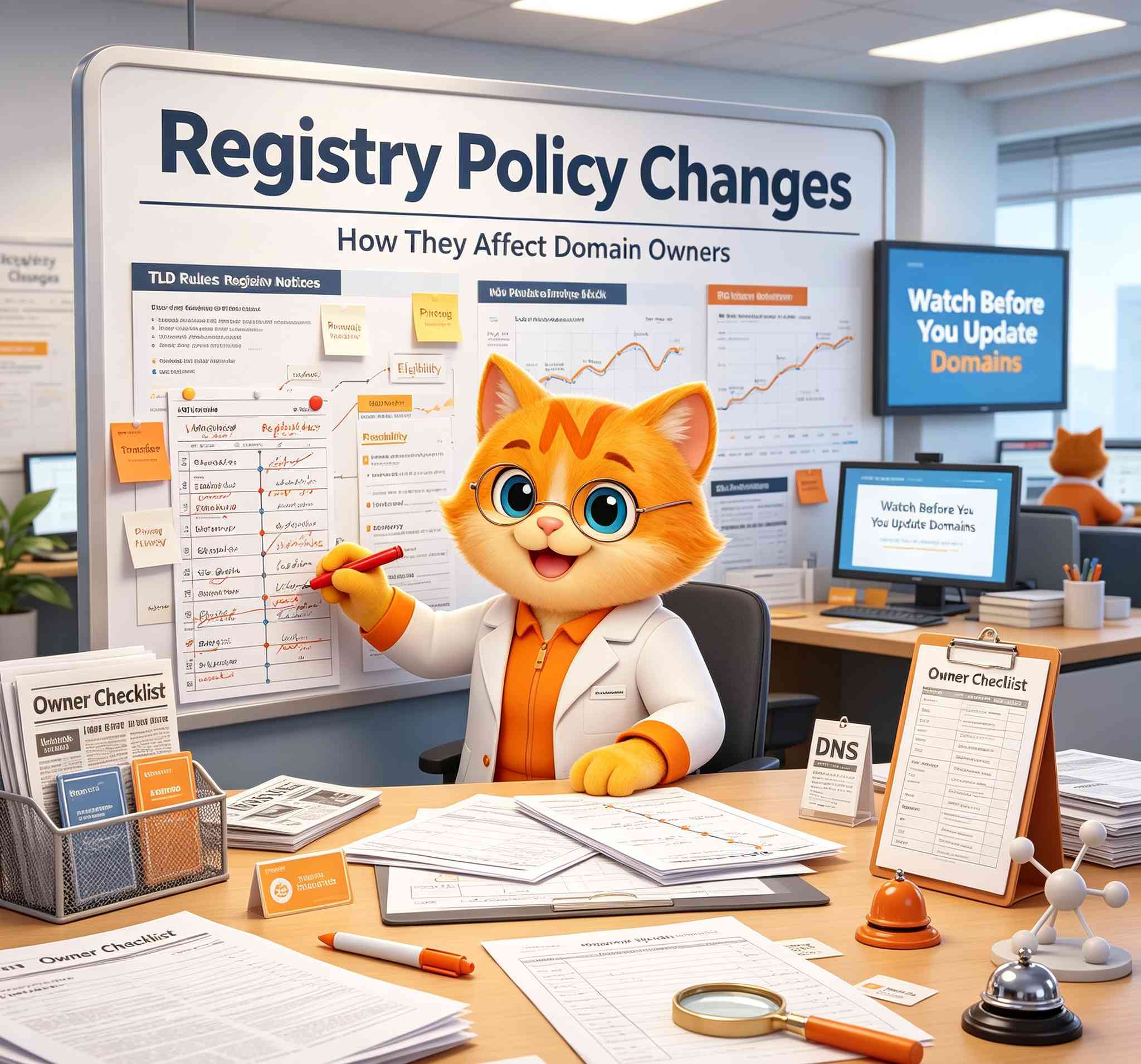
But they should know which changes may affect domains they own, manage, or sell to customers.
A registry rule may look technical, but it can become a real problem when a domain cannot transfer, a renewal price changes, WHOIS privacy is not available, registration data is redacted, or a TLD requires extra verification.
A registry operates a domain extension.
For example, a registry may operate a TLD such as .com, .net, a country-code domain, or another extension.
A registrar, such as NiceNIC, provides domain services to customers.
The registry sets or applies many rules for that extension. The registrar must follow applicable registry and ICANN rules.
This means a registrar usually cannot ignore or override registry-level policy.
Why Registry Policy Changes Matter
Registry policy changes matter because they can affect real domain actions.
For example:
- A domain may require new verification.
- A transfer may be blocked by a registry rule.
- A country-code domain may require local eligibility.
- A renewal price may change.
- A premium domain may have a different renewal fee.
- WHOIS privacy may not be available for a specific TLD.
- RDAP may show less public contact information.
- A domain on hold may stop resolving.
- DNS or nameserver rules may change.
Changes That Domain Owners Should Watch
1. Registration Eligibility
Some TLDs are open to everyone.
Others may require a local address, business presence, trademark, ID document, organization record, or other eligibility proof.
If eligibility rules change, a domain owner may need to provide updated information.
Before registering or transferring a restricted domain, check the TLD requirements first.
2. Transfer Rules
Transfer rules affect whether a domain can move from one registrar to another.
A transfer may be delayed or blocked if:
- The domain is locked
- The AuthInfo / EPP code is wrong
- The domain was registered recently
- The domain was transferred recently
- The domain is expired
- The domain is on hold
- The registry has special transfer rules
That means registry rules still matter.
3. RDAP and Registration Data
RDAP is now the main modern way to access domain registration data for many gTLDs.
RDAP may show registrar, expiration date, domain status, nameservers, and public or redacted contact data.
ICANN states that RDAP is the definitive source for delivering gTLD registration information in place of sunsetted WHOIS services.
For domain owners, this matters because public lookup data may affect transfer checks, privacy review, abuse reporting, and ownership-related troubleshooting.
4. WHOIS Privacy and Redaction
WHOIS privacy is not available in the same way for every TLD.
Some domains may support privacy services.
Some may redact personal data by policy.
Some may show organization data.
Some country-code domains may follow local rules.
Do not assume every extension handles privacy the same way.
Before registering a domain, check whether privacy or redaction is available for that TLD.
5. Renewal and Premium Pricing
Registry pricing can change.
This may affect:
- First-year registration price
- Renewal price
- Transfer price
- Restore fee
- Premium domain price
- Premium renewal fee
You should also check the renewal cost.
For agencies, resellers, and investors, pricing changes may require updates to customer quotes, renewal reminders, pricing tables, API logic, or WHMCS workflows.
6. Domain Lifecycle Rules
Each domain goes through lifecycle stages.
These may include active, expired, redemption, pending delete, and release.
Registry rules may affect:
- How long a domain can be renewed after expiration
- Whether restore is possible
- Restore fee
- When the domain may be deleted
- Whether transfer is allowed near expiration
7. DNS and Nameserver Rules
Some TLDs have special DNS or nameserver requirements.
For example, a registry may require valid nameservers, correct DNS configuration, or specific technical checks before registration or update.
If nameserver rules change, a domain update may fail even when the registrar account looks normal.
Before changing nameservers, back up DNS records and confirm the TLD requirements.
8. Abuse Handling and Domain Holds
Registry policy may also affect abuse handling.
A domain may be placed on hold because of abuse reports, verification issues, compliance review, dispute, or registry-level restriction.
A hold status may affect website and email resolution.
If a domain shows clientHold or serverHold, check the reason before changing DNS.
DNS changes will not solve a registry or registrar hold.
What Agencies, Resellers, and Investors Should Do
Agencies, resellers, and investors need a stronger process because they manage many domains.
They should monitor:
- TLD rule changes
- Pricing updates
- Renewal deadlines
- Transfer requirements
- RDAP and privacy display
- Customer verification requests
- Abuse handling requirements
- API and WHMCS workflow impact
- Client ownership records
- Premium renewal costs
What Not to Assume
Do not assume:
- Every TLD follows .com rules
- Every domain can transfer the same way
- Every extension supports WHOIS privacy
- Public RDAP data will always show contact details
- A registrar can override registry restrictions
- Renewal prices never change
- A domain close to expiration is safe to transfer
- A domain on hold has a DNS problem
- Premium domains always renew at standard prices
Always check before making important changes.
How NiceNIC Helps
NiceNIC helps users search, register, transfer, renew, secure, and manage domains from one account.
NiceNIC supports:
- Domain search
- Bulk Domain Search
- Domain registration
- Domain transfer
- Domain renewal
- DNS management
- WHOIS privacy where available
- SSL certificates
- Business Email
- Reseller tools
- API v2
- WHMCS-compatible workflows
- Flexible payment options where available
- Global support
Final CTA
Registry policy changes can affect registration, transfer, renewal, pricing, privacy, RDAP display, DNS, eligibility, and domain holds.You do not need to read every policy document, but you should monitor changes that affect the domains you own or manage.
Registrador Credenciado pela ICANN desde 2006
Compre e registre seu domínio .COM hoje
Verifique a disponibilidade do domínio .COM, registre um novo domínio .COM, pesquise vários nomes em massa ou transfira seus domínios .COM existentes para a NiceNIC. Feito para empresas, investidores de domínios, agências, provedores de hospedagem e revendedores.
Renovar: $17.99
Comercializar
$22.49 $14.99
primeiro ano
Renovar: $17.99
Básico
$14.99
0% off
Renovar: $17.99
Super
$14.99
0% off
Renovar: $16.99
VIP
$14.99
0% off
NOTÍCIAS RELACIONADAS:
Última notícia:
WHMCS Domain Registrar Integration: What Hosting Providers Should Check Before Connecting
Próxima notícia: Domain Transfer Policy: What Owners and Resellers Should Watch
Próxima notícia: Domain Transfer Policy: What Owners and Resellers Should Watch


