



When people talk about improving SEO, the focus is usually on keywords, content, and backlinks.
These three systems determine whether Google can crawl your website, how fast your pages load, and whether users trust your brand. Understanding how they work together is essential for building an SEO friendly online presence.
This guide explains the role of each component, how they affect SEO performance, and how to choose the right infrastructure for long term growth.
1. Domain: How Your Domain Name Influences SEO
A domain name does not directly increase rankings on its own, but it influences several important SEO factors: user trust, click through rate, and brand recall.
1.1 Domain relevance and branding
-
Click through rates from search pages
-
Brand memorability
-
Perceived authority and credibility
For example, a domain like brightdesign.studio communicates intent more clearly than a long, generic name.
1.2 Domain history and reputation
Google evaluates domain history:
-
Was it previously used for spam
-
Was it penalized
-
Does it appear in malware databases
-
Has it been abused or blocked
This is one reason many businesses choose verified premium domains via trusted marketplaces.
1.3 Domain extension and SEO
Google officially states:
All TLDs, including new gTLDs, are treated the same for SEO.
However:
-
Users may trust familiar extensions more (.com .org .ai)
-
Some ccTLDs (like .uk .ca) rank better within their region
-
New gTLDs offer strong branding (.shop .tech .online)
Your choice should balance branding, audience, and market positioning.
1.4 Whois privacy and brand trust
Whois privacy does not affect SEO, but it enhances:
-
Professionalism
-
Email deliverability
-
User confidence
A trustworthy identity indirectly strengthens long term performance.
2. Hosting: One of the Most Important SEO Factors
-
Time to First Byte (TTFB)
-
Largest Contentful Paint (LCP)
-
First Input Delay (FID)
-
Overall page load performance
Cloud servers and dedicated servers typically outperform shared hosting because they provide consistent resources and lower latency.
2.2 Uptime and reliability
-
Crawling errors
-
Lost indexing
-
Lower rankings over time
Reliable hosting ensures Google can always access your pages.
2.3 Server location and global performance
Geographic distance affects speed.
-
Hosting close to your primary audience improves SEO signals
-
Global websites benefit from CDN and global DNS routing
2.4 Security and SEO
Security issues can severely harm search rankings:
-
Malware
-
Phishing
-
Hacked content
-
Unsafe HTTP connections
Secure server environments and HTTPS are essential.
3. DNS: The Most Misunderstood SEO Factor
DNS does not directly control ranking, but it has a significant impact on how fast your website loads and whether it is reachable at all — both critical SEO foundations.
3.1 DNS resolution speed
High quality DNS services improve:
-
Global query speed
-
Response consistency
-
Page load time
3.2 DNS uptime
If DNS goes down:
-
Your website becomes unreachable
-
Google cannot crawl your pages
-
Rankings deteriorate rapidly
Nameserver stability is essential for long term SEO.
3.3 DNS routing and global networks
3.4 DNS records and SEO relevance
Certain DNS records directly influence website functionality:
-
A record determines where your site resolves
-
CNAME affects subdomain routing
-
TXT is required for Google site verification
-
MX ensures business email reliability
While DNS records do not change ranking, they create the technical conditions for SEO to work.
4. SSL Certificates: Why HTTPS Matters for SEO
Google has officially confirmed that HTTPS is a ranking signal.
4.1 SEO advantage
HTTPS improves:
-
User trust
-
Perceived professionalism
-
Eligibility for modern browser features
Google Chrome also flags non HTTPS websites as unsafe, causing high bounce rates — a strong negative SEO indicator.
4.2 Data protection and credibility
-
Ecommerce
-
Login pages
-
Business portals
HTTPS is now a baseline requirement for any website.
5. Business Email: Does It Affect SEO?
5.1 Professional identity
-
Fill forms
-
Make purchases
-
Contact your team
These trust interactions support long term SEO strength.
5.2 Email deliverability and domain health
Maintaining a clean, authenticated mail system protects domain integrity.
6. Common Mistakes That Harm SEO
Many beginners unknowingly weaken their rankings by:
-
Choosing very slow shared hosting
-
Using unstable DNS from unknown providers
-
Running a website without HTTPS
-
Ignoring domain history when purchasing
-
Allowing frequent downtime
-
Using mismatched DNS and hosting configurations
-
Assuming domain alone improves SEO
A strong infrastructure prevents these issues.
Building an SEO Friendly Infrastructure with Nicenic
A high ranking website requires reliable domain services, fast hosting, secure DNS, and SSL encryption. Nicenic provides an integrated environment that helps brands build a stable and SEO ready foundation:
-
Global domain registration across hundreds of TLDs
-
Buy Now premium domains with transparent pricing
-
Cloud server and dedicated server solutions
-
High performance DNS and nameserver management
-
SSL certificates for secure and modern websites
-
Professional business email services
-
Multilingual support for global customers
-
ICANN accredited trust and compliance
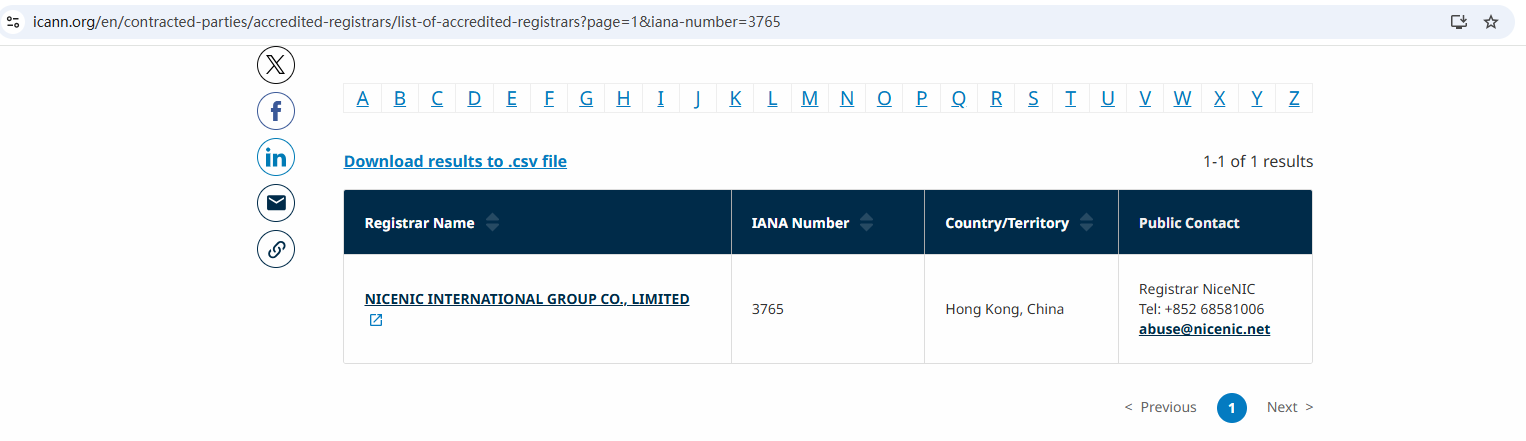
These tools ensure your website remains fast, secure, and accessible to both users and search engines.
Your domain defines your identity, DNS determines how quickly users and search engines can find you, and hosting controls the speed and reliability of your website. When supported by SSL security and professional email, you create a technical ecosystem that maximizes SEO performance.
Nicenic stands as that trusted partner for brands, developers, entrepreneurs, and businesses worldwide, providing the reliable infrastructure needed to build and scale with confidence.
Kup i zarejestruj swoją domenę .COM już dziś
Sprawdź dostępność domeny .COM, zarejestruj nową domenę .COM, wyszukaj wiele nazw hurtowo lub przenieś istniejące domeny .COM do NiceNIC. Stworzone dla firm, inwestorów domen, agencji, dostawców hostingu i resellerów.
Najnowsze wiadomości: New gTLDs Explained


