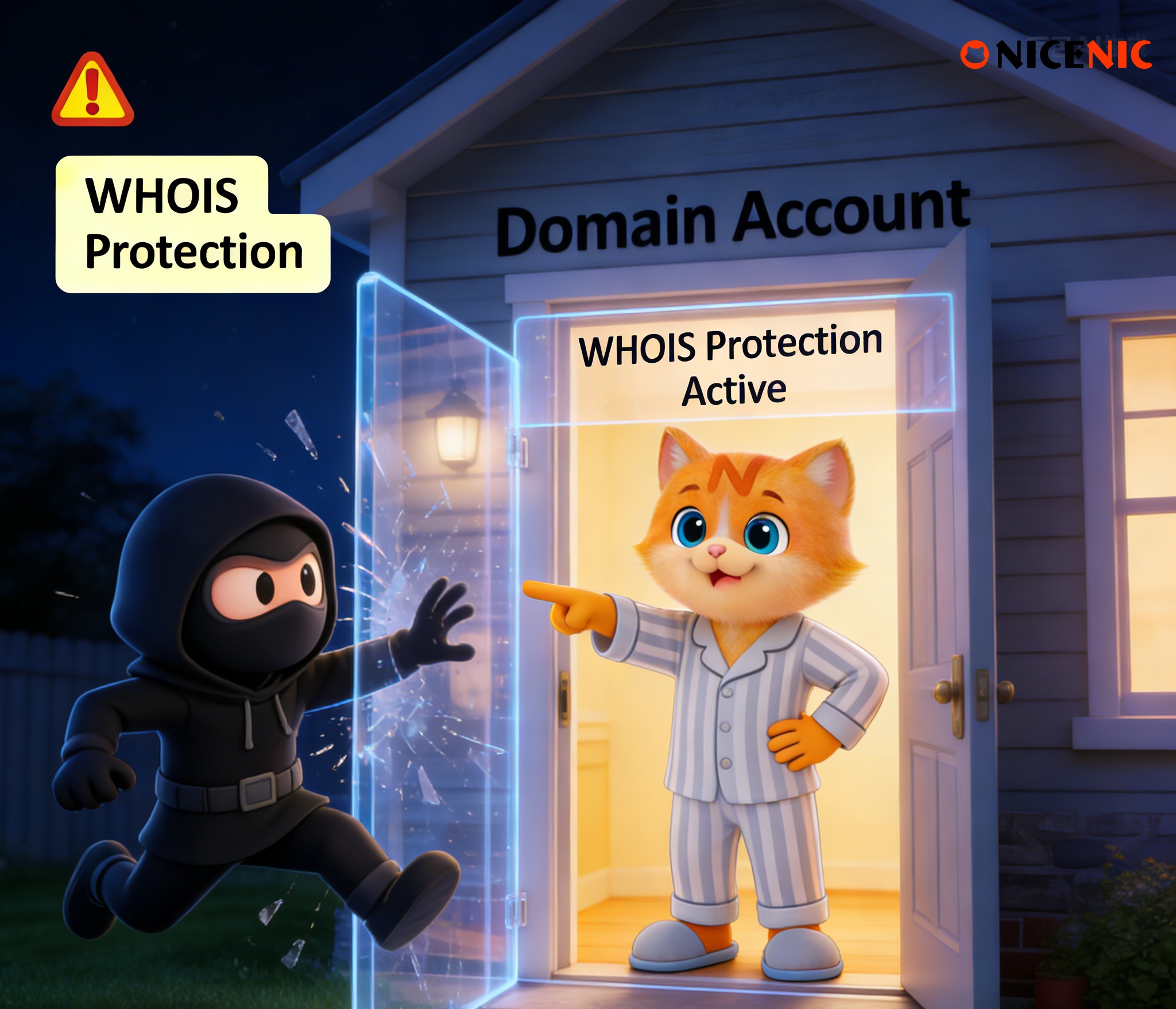
Domain hijacking happens when someone gains unauthorized control of your domain and changes its ownership, DNS settings, or registrar account access. When this occurs, attackers can redirect traffic, intercept email, publish malicious content, or hold the domain for ransom.
For businesses, developers, and brand owners, the damage goes far beyond a temporary outage. Lost trust, email disruption, SEO impact, and even legal exposure can follow.
One of the simplest and most effective ways to reduce the risk of domain hijacking is WHOIS protection, especially when combined with strong account security practices.
What Is Domain Hijacking
Domain Hijacking refers to any situation where a third party takes control of a domain without the owmner's authorization. This can happen through:
-
Compromised registrar accounts
-
Abuse of exposed WHOIS contact information
-
Social engineering or phishing attacks
-
Unauthorized domain transfers
Once hijacked, attackers may:
-
Change DNS records to redirect traffic
-
Capture email communications
-
Lock the rightful owner out of the domain
-
Attempt to sell the domain back to its owner
In many cases, recovery is time-consuming and not always guaranteed.
Why Public WHOIS Data Increases Hijacking Risk
WHOIS is a public database that stores domain registration details such as:
-
Registrant name
-
Email address
-
Phone number
-
Physical address
When this information is publicly visible, it becomes an easy target for attackers. They can use it to:
-
Send convincing phishing emails
-
Attempt password resets using known contact emails
-
Impersonate the registrant when contacting support
-
Gather personal data for social engineering attacks
Many domain hijacking incidents begin not with a technical exploit, but with abuse of publicly available WHOIS data.
What Is WHOIS Protection?
WHOIS protection (sometimes called WHOIS privacy) is a service that replaces your real registration details in public WHOIS records with proxy or registrar-managed contact information.
Your actual ownership details remain securely stored with your registrar, but they are not exposed publicly.
This means:
-
Your real email address is hidden
-
Your phone number and address are not visible
-
Attackers lose an easy entry point
How WHOIS Protection Helps Prevent Domain Hijacking
WHOIS protection does not make hijacking impossible, but it significantly reduces risk by removing common attack vectors.
1. Reduces Social Engineering Attacks
When attackers cannot see your real contact details, it becomes much harder to impersonate you or trick support systems.
2. Protects Account Recovery Channels
Many hijacking attempts rely on initiating password resets or account recovery emails. WHOIS protection prevents attackers from identifying which email address to target.
3. Prevents Unauthorized Contact Detail Changes
By hiding registrant data, WHOIS protection lowers the chance that someone can convincingly request changes to ownership or contact records.
4. Adds Protection During High-Risk Periods
Domains are most vulnerable around expiration, renewal, or transfer events. WHOIS protection helps limit exposure during these critical moments.
WHOIS Protection Is Important
WHOIS protection works best as part of a layered security approach. To properly defend against domain hijacking, you should also:
Enable Domain Locking
Registrar and registry locks prevent unauthorized transfers, even if account credentials are compromised.
Use Strong, Unique Passwords
Never reuse passwords across services. Your domain registrar account should have a unique, complex password.
Enable Two-Factor Authentication (2FA)
2FA adds an additional verification step, making account takeovers significantly more difficult.
Use a Secure, Dedicated Contact Email
Avoid using an email address hosted on the same domain you are protecting. If the domain is compromised, access to that email may be lost.
Regularly Review Domain Settings
Periodically check WHOIS status, DNS records, lock status, and account activity to catch unexpected changes early.
Common Questions About WHOIS Protection
Q: Does WHOIS protection affect domain ownership?
A: No. You remain the legal owner of the domain. WHOIS protection only hides public contact details.
Q: Will I still receive important notices?
A: Yes. Legitimate communications from registries, registrars, or authorities are forwarded securely.
Q: Does WHOIS protection affect SEO or website trust?
A: No. Search engines do not rank sites based on WHOIS visibility. WHOIS protection does not negatively impact SEO.
Q: Is WHOIS protection available for all domains?
A: Not always. Some country-code TLDs have policy restrictions. Availability depends on the specific domain extension.
Final Thoughts
Domain hijacking is rarely random. Most incidents exploit exposed information, weak account security, or missed safeguards.
WHOIS protection is a simple but powerful step that removes a major source of risk. When combined with domain locks, strong authentication, and regular account reviews, it significantly improves your domain security posture.
Proactive protection is always easier and far less costly than recovery.
Nicenic stands as that trusted partner for brands, developers, entrepreneurs, and businesses worldwide.
ICANN Accredited Registrar Since 2006
Buy and Register Your .COM Domain Today
Check .COM domain availability, register a new .COM domain, search multiple names in bulk, or transfer your existing .COM domains to NiceNIC. Built for businesses, domain investors, agencies, hosting providers, and resellers.
Renew: $17.99
Market
$22.49 $14.99
first year
Renew: $17.99
Basic
$14.99
0% off
Renew: $17.99
Super
$14.99
0% off
Renew: $16.99
VIP
$14.99
0% off