


Views:94
Time:2026-08-17 11:42:21 Author: windy 
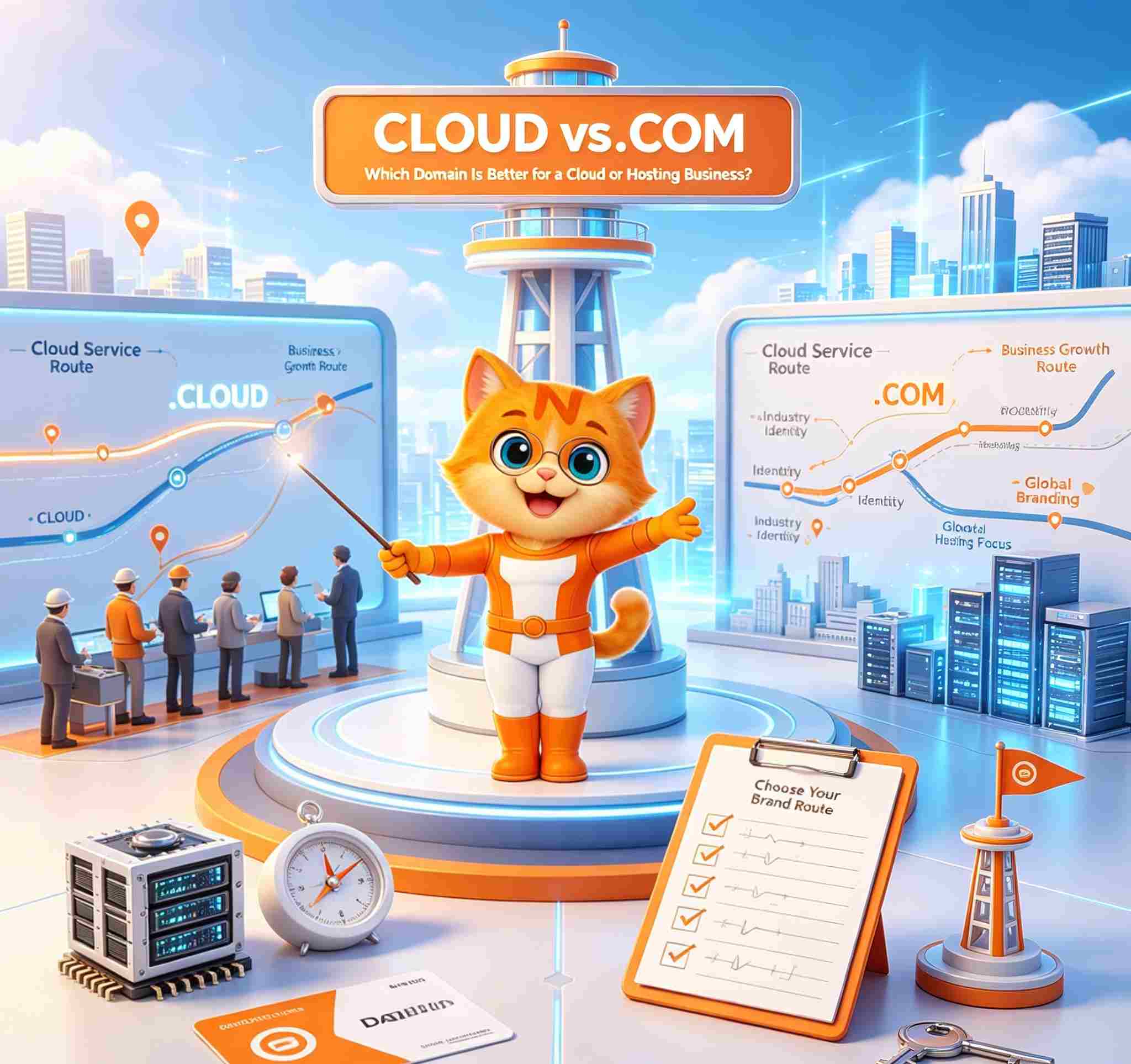
Choose a .COM domain when you want one broad corporate identity that can grow across different products and services.
Choose a .CLOUD domain when cloud infrastructure, hosting, SaaS, storage, backup, or digital services are central to your brand.
For some technology companies, the strongest structure may be both:
company.com for the business.
product.cloud for the cloud platform or service.
.CLOUD vs .COM: The Quick Answer
.COM offers broader recognition and flexibility. It works well when your company may expand into products or services beyond cloud infrastructure.
.CLOUD is more specific. It can immediately signal cloud computing, hosting, SaaS, storage, infrastructure, or digital services.
The real question is:
Do you want the domain to represent the entire company or clearly position a cloud-focused product or service?
If your business is built entirely around cloud technology, .CLOUD can become part of the brand itself.
Check Your Name in .CLOUD and .COM
Before choosing an extension in theory, check whether your actual business or product name is available.
At publication, NiceNIC currently shows:
.CLOUD: $4.39 first year
.COM: $16.99 first year for a Market Account
NiceNIC also offers different account-level pricing for eligible reseller customers. Registration and renewal prices can differ, and premium domains may have separate pricing, so check the live price before ordering.
What Is the Main Difference Between .CLOUD and .COM?
The biggest difference is technical positioning versus broad corporate identity.
.COM does not tell visitors what your business does.
That can be an advantage.
A technology company can begin with cloud hosting, later add cybersecurity, managed IT, consulting, AI products, or other services without its domain feeling too narrow.
.CLOUD does the opposite.
A name such as:
- nimbus.cloud
- backup.cloud
- compute.cloud
NiceNIC's current .CLOUD page positions the extension for cloud services, SaaS products, AI tools, hosting providers, developer platforms, MSPs, storage, backup, and related technology services.
That makes .CLOUD especially useful when category recognition is part of the brand strategy.
When Should You Choose .COM?
.COM is usually the stronger choice when the domain represents the whole company.
Choose .COM when:
- You are building the main corporate website.
- Your company offers more than cloud services.
- You expect to expand into new technology categories.
- You need one domain for sales, careers, partnerships, support, and corporate email.
- Your audience includes non-technical buyers.
Imagine a technology company called NovaGrid.
It may begin with hosting but later offer:
- Managed cloud
- Cybersecurity
- AI infrastructure
- Business email
- IT consulting
- Data services
That flexibility remains one of .COM's strongest advantages.
When Does .CLOUD Make More Sense?
.CLOUD works best when cloud technology is not simply one service—it is a central part of the product or brand.
Strong use cases include:
- Cloud hosting providers
- Managed service providers
- SaaS platforms
- Cloud storage services
- Backup and disaster recovery
- AI infrastructure
- Developer platforms
- API services
- Cloud migration services
- Monitoring platforms
- Edge computing
- Infrastructure tools
Hosting Providers and MSPs Have a Different Decision
For hosting providers and managed service providers, the choice is often not simply one domain versus another.
The business may need several distinct online destinations.
For example:
provider.com → Main company website
platform.cloud → Customer-facing cloud platform
A .CLOUD domain can also work for specific services such as backup, migration, monitoring, storage, or customer portals.
NiceNIC's current .CLOUD page specifically identifies hosting providers and MSPs as relevant users and supports bulk registration and reseller/API workflows for companies managing many domains.
That makes the extension particularly interesting for businesses already selling infrastructure or hosting services.
.COM + .CLOUD Can Work Better Than Choosing Only One
For many technology companies, .COM and .CLOUD can have different jobs.
For example:
company.com → Company, careers, partnerships, corporate information
product.cloud → Cloud platform or SaaS product
Or:
hostingbrand.com → Main sales website
hostingbrand.cloud → Customer platform or dedicated cloud offering
This structure helps separate the company identity from the technical service identity.
If the same exact brand is important, a company may also protect both: brand.com and brand.cloud
One can remain the primary domain while the other redirects to the appropriate product or service page.
There is usually no reason to create two identical websites.
Does .CLOUD Help SEO?
A .CLOUD domain does not receive an automatic Google ranking advantage simply because the word “cloud” appears in the extension.
Google states that new generic top-level domains are generally treated like other gTLDs such as .COM and .ORG, and that keywords in a TLD do not automatically create a ranking advantage or disadvantage.
That means:
hosting.cloud does not automatically rank higher for "cloud hosting" than a .COM website because of the extension alone.
SEO performance depends much more on:
- Useful and original content
- Relevance to search intent
- Technical crawlability
- Website structure
- Internal links
- External links and mentions
- Page performance
- User experience
- Brand authority
Is .CLOUD Professional Enough for a Hosting Company?
Yes, when the extension fits the business.
Compare:
novagridcloudhostingservices.com
with:
novagrid.cloud
The shorter address may be easier to remember and may communicate the company's technical focus more clearly.
But buyers should still check the matching .COM. If another established hosting or software company already operates on the exact matching .COM, using the .CLOUD version could create confusion.
Before registering, check:
- Who uses the matching .COM
- Existing trademarks
- Whether the name is easy to pronounce
- Whether customers can type it correctly
- Whether the name still works if the company expands
Compare the Full Cost Before You Register
NiceNIC currently shows .CLOUD at $4.39 for the first year, compared with a .COM Market Account first-year price of $16.99.
That makes .CLOUD attractive for new technology products, campaigns, service names, and brand protection.
But the cheapest first year should not decide a long-term infrastructure brand.
Before registering, compare:
- Registration price
- Renewal price
- Transfer price
- Premium-domain status
- Long-term ownership cost
.CLOUD or .COM: Which Should You Choose?
Choose .COM if:
- The domain represents the whole company.
- You offer several types of technology services.
- You expect the company to expand beyond cloud services.
- Broad familiarity is important.
- A clean matching .COM is available.
- Cloud infrastructure is central to the brand.
- You operate a hosting, SaaS, MSP, storage, backup, AI, or infrastructure service.
- .CLOUD gives you a shorter and clearer domain.
- You want the address itself to communicate the technical category.
Why NiceNIC Fits Cloud and Hosting Businesses
NiceNIC supports .CLOUD and .COM registration together with more than 2,500 domain extensions in one account. Its current .CLOUD service also includes bulk-registration and reseller/API workflows aimed at hosting providers, agencies, SaaS platforms, MSPs, and domain resellers.
For a business registering one cloud product, the process can stay simple.
For hosting companies or platforms managing many customer domains, NiceNIC also supports:
- Bulk domain registration
- Domain transfers
- DNS management
- Reseller API
- Custom nameserver workflows
- SSL certificates
- Cloud server services
Final Thoughts
For the main identity of a broad technology company, .COM remains the more flexible choice.
For a hosting platform, SaaS product, MSP, cloud infrastructure service, storage product, or developer tool, .CLOUD can communicate the technical focus much more directly.
For many businesses, the strongest structure may be:
.COM for the company.
.CLOUD for the platform or cloud product.
The best way to decide is to check the actual name you want in both extensions and compare which version fits your long-term business better.
How to Register a .CLOUD or .COM Domain at NiceNIC
Once you have chosen the extension, registration only takes a few steps.
Step 1: Search Your Domain
Enter your preferred name in the NiceNIC domain search box, select .CLOUD, .COM, or both, and click Search.
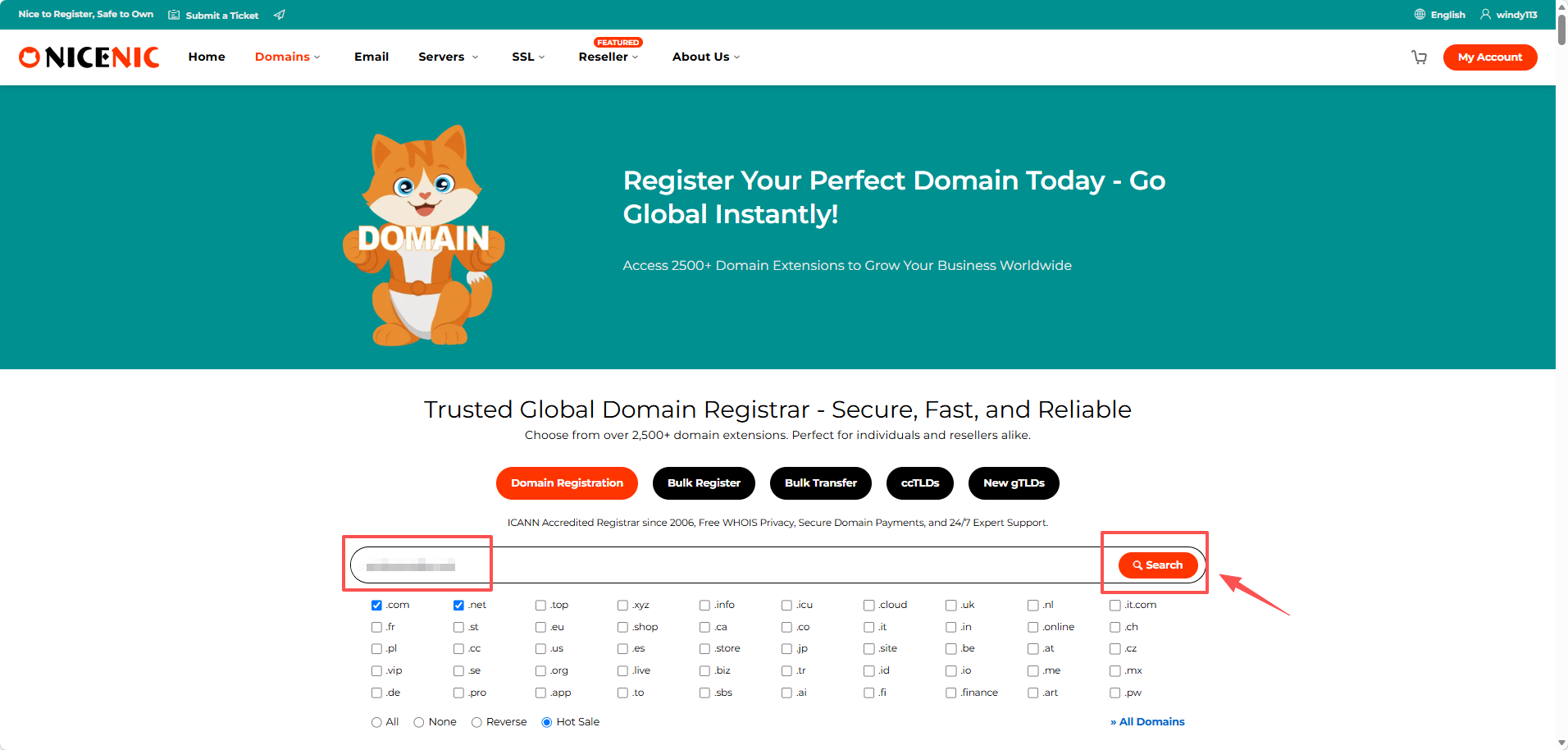
Search your preferred business or product name and select the extensions you want to check.
Step 2: Choose an Available Domain
Review the availability and current price. Click Register for the domain you want, or Add to cart if you want to register several names.
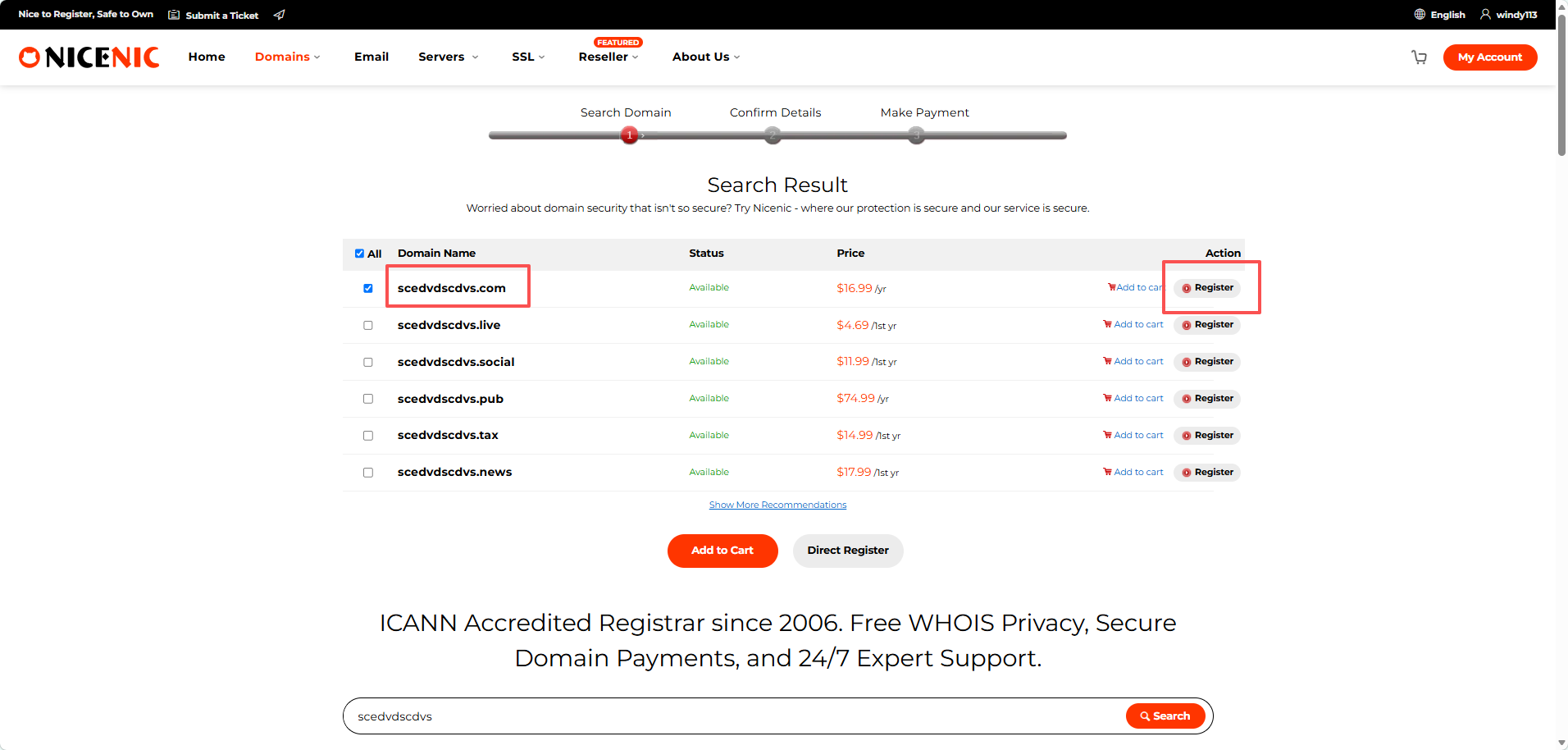
Check availability and price, then choose the domain you want to register.
Step 3: Complete Payment
Confirm the domain and registration details, select an available payment method, and complete the order.
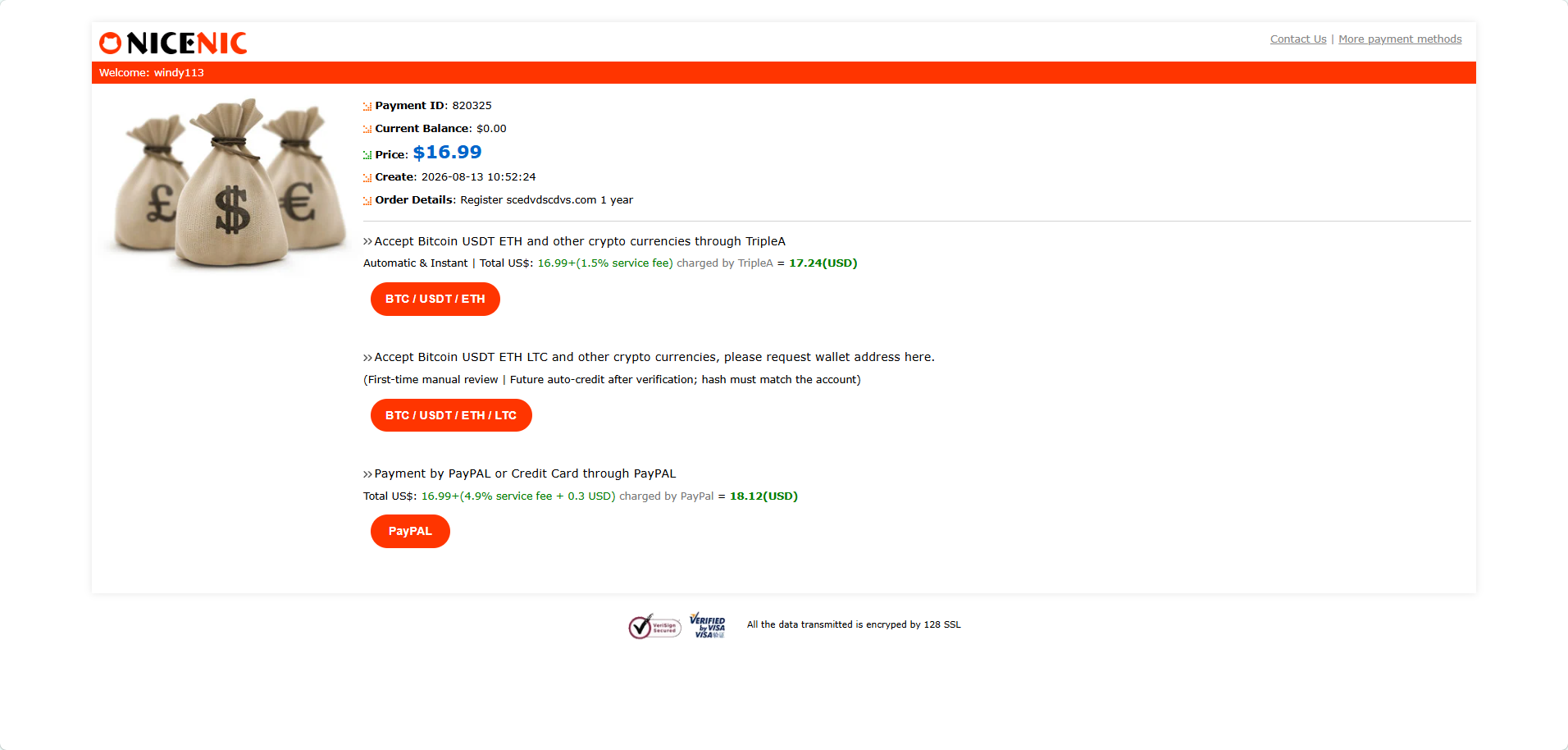
Review your order and complete payment.
After registration, you can manage the domain from your NiceNIC account.
Check Your Brand in .CLOUD and .COM
See whether your exact company or product name is available before deciding which extension should become your primary address.
Check Your .CLOUD Domain
Check Your .COM Domain
Found the right name? Create a free NiceNIC account and complete your registration.
Compare current registration, renewal and transfer prices
ICANN Accredited Registrar Since 2006
Buy and Register Your .CLOUD Domain Today
Check .CLOUD domain availability, register a new .CLOUD domain, search multiple names in bulk, or transfer your existing .CLOUD domains to NiceNIC. Built for businesses, domain investors, agencies, hosting providers, and resellers.
Renew: $44.99
Market
$6.59 $4.39
first year
Renew: $41.99
Basic
$4.39
0% off
Renew: $40.99
Super
$4.39
0% off
Renew: $39.99
VIP
$4.39
0% off
RELATED NEWS:
Last News:
Qixi 2026: Say “I See You” with a .CYOU Domain
Next News: Followers Leave. Communities Defend You.
Next News: Followers Leave. Communities Defend You.


