


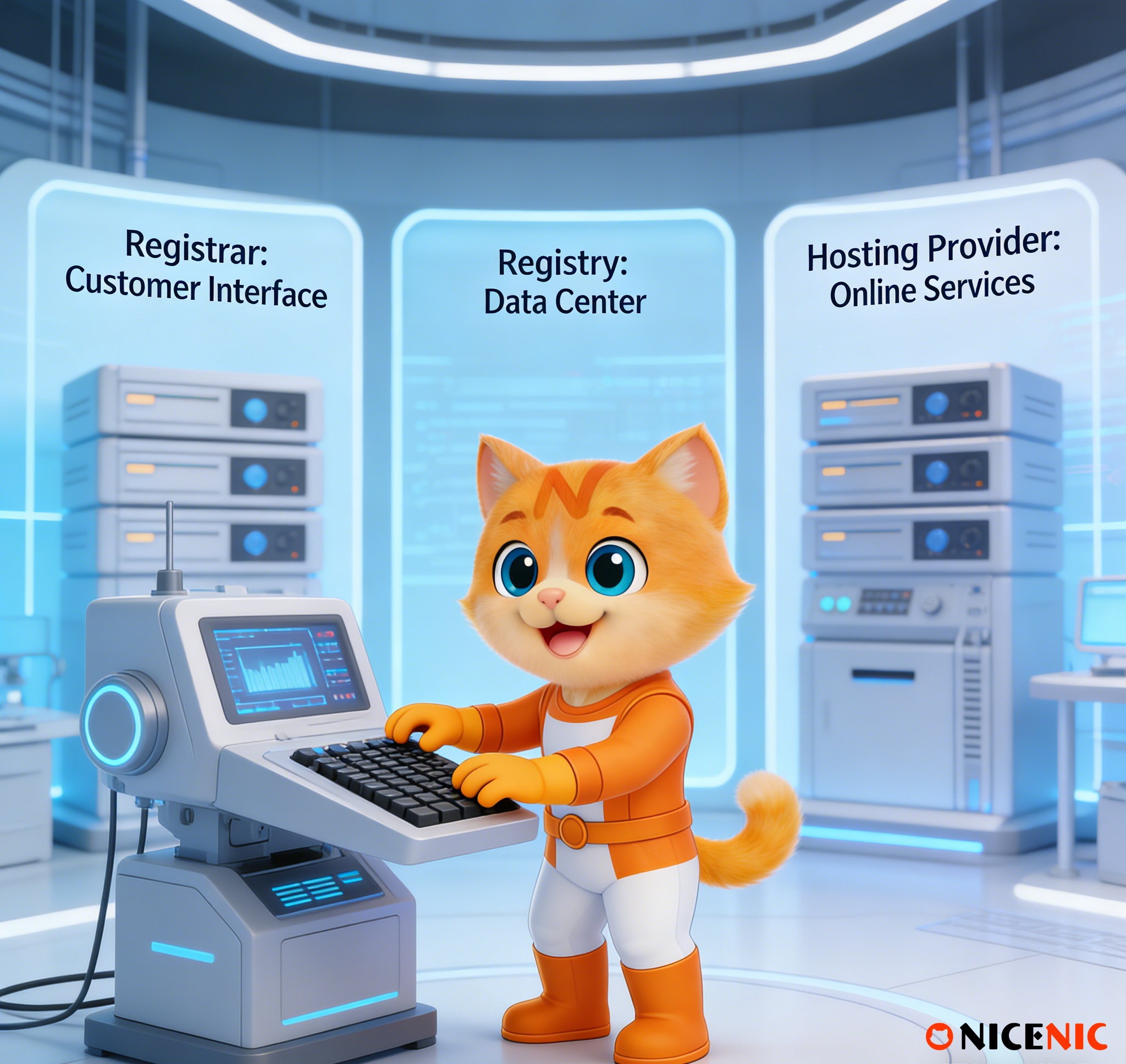
When it comes to domain management, many users often confuse the roles of Registrar, Registry, and Hosting Provider. These three entities are essential in the world of domain names, but they serve distinct functions. Understanding these differences can save you time, avoid misunderstandings, and prevent unnecessary service interruptions. In this article, we’ll break down the responsibilities of each and explain why this distinction matters.
What is a Registry?
The Registry is the organization that operates a generic specific top-level domain (gTLD), such as .COM, .ORG, or country-code TLDs (ccTLD) like .IE (Ireland). The registry is responsible for operating the entire domain database and making decisions about domain status and policy enforcement.
Key Responsibilities of a Registry:
-
Manages the TLD infrastructure: The registry controls the DNS zone file for each TLD.
-
Controls domain status: The registry can lock a domain (e.g., set it to
serverHold), prevent transfers, or enforce other restrictions. -
Enforces domain policies: Registries define rules and regulations for domain registration, including eligibility requirements and domain use policies.
Example:
Verisign operates the .com and .net TLDs, while PIR manages .org. These registries provide the infrastructure but don’t sell domains directly to customers.
What is a Registrar?
A Registrar is an ICANN-accredited company that acts as an intermediary between the customer and the registry. It is a business that handles the reservation of domain names as well as the assignment of IP addresses for those domain names. Registrars are responsible for registering domain names, maintaining them, and managing DNS settings.
Key Responsibilities of a Registrar:
-
Manages domain registration: Registrars allow users to search, register, and transfer domain names.
-
Handles nameserver delegation: Registrars configure and assign DNS records, including nameservers.
-
Acts as the interface with the registry: Registrars submit domain registration information to the registry and communicate with them for updates and changes.
Nicenic is a registrar that provides domain registration services and manages DNS configurations for its customers.
What is a Hosting Provider?
A Hosting Provider is a company that provides the infrastructure and services to host websites and deliver content over the internet. While hosting services are critical for website operation, they are distinct from domain registration.When you purchase hosting services from a provider, you receive allocated space on their web servers to store your website’s files and data.
Key Responsibilities of a Hosting Provider:
-
Operates servers: Hosting providers maintain the physical or virtual servers that store your website files and make them accessible to visitors.
-
Delivers website and email content: They ensure that your website and email systems are up and running 24/7.
-
Handles website storage: Hosting providers store your website files, databases, and emails on their servers.
Common Misunderstanding:
Some users mistakenly think that the hosting provider is involved in domain registration or DNS management. However, hosting providers only store and serve the website’s content; they do not directly manage the domain or DNS settings, which are handled by the registrar.
Registrar vs Registry vs Hosting Provider: The Key Differences
To make it easier to understand, here’s a side-by-side comparison of the roles of each entity:
| Role | Registrar | Registry | Hosting Provider |
|---|---|---|---|
| Primary Role | Manages domain registration and DNS | Operates TLD infrastructure and policies | Hosts website and email content |
| Responsibility | Manages domain sales, renewals,and transfers | Manages the TLD database and policies | Manages the server that stores content |
| Interaction | Interfaces with the registry on behalf of the user | Does not interact with users directly | Does not manage domains or DNS |
| User Contact | Handles customer-facing services | Handles backend infrastructure | Handles website hosting and email |
Why This Distinction Matters
Understanding the distinct roles of Registrar, Registry, and Hosting Provider is crucial because many delays and misunderstandings arise when issues are directed to the wrong party. Here’s why knowing the difference can help:
1. Faster Issue Resolution
By understanding who is responsible for what, you can quickly identify which party to contact for specific issues. For example, if you have a DNS-related issue, you should contact your registrar, not your hosting provider.
2. Prevent Miscommunication
Many users mistakenly contact the wrong provider for help. For instance, if your website is down, you may mistakenly contact your registrar, but the issue may be with your hosting provider’s servers.
3. Save Time and Effort
Knowing the responsibilities of each party helps you solve problems more efficiently, rather than waiting for the wrong provider to resolve an issue.
FAQ: Common Questions About Registrars, Registries, and Hosting Providers
Q1: Who do I contact if my website is not working?
If your website is down, the issue is likely with your Hosting Provider. Check if the server is up and running. If the issue is DNS-related, contact your Registrar.
Q2: Can I register a domain directly with the Registry?
No, you need to go through an ICANN-accredited Registrar to register a domain. The Registry manages the domain infrastructure but does not sell domains directly to customers.
Q3: What happens if I want to change my domain registrar?
To change registrars, you’ll need to contact your current Registrar and request an EPP/Auth code to transfer your domain to the new registrar.
Q4: Is hosting the same as domain registration?
No, hosting and domain registration are separate services. Domain Registration is managed by a Registrar, while Hosting is managed by a Hosting Provider. The Registrar controls the domain name, while the Hosting Provider stores your website files.
Conclusion: Understanding the Roles of Registrar, Registry, and Hosting Provider
The roles of Registrar, Registry, and Hosting Provider may seem similar, but they serve very different functions. By understanding their responsibilities, you can navigate domain and website issues more efficiently, ensuring that your website runs smoothly and you know exactly who to contact when issues arise.
As an ICANN-accredited registrar, Nicenic offers professional domain registration services, DNS management, and expert support to help you navigate domain-related questions. With our platform, you can manage your domains with ease and confidence.
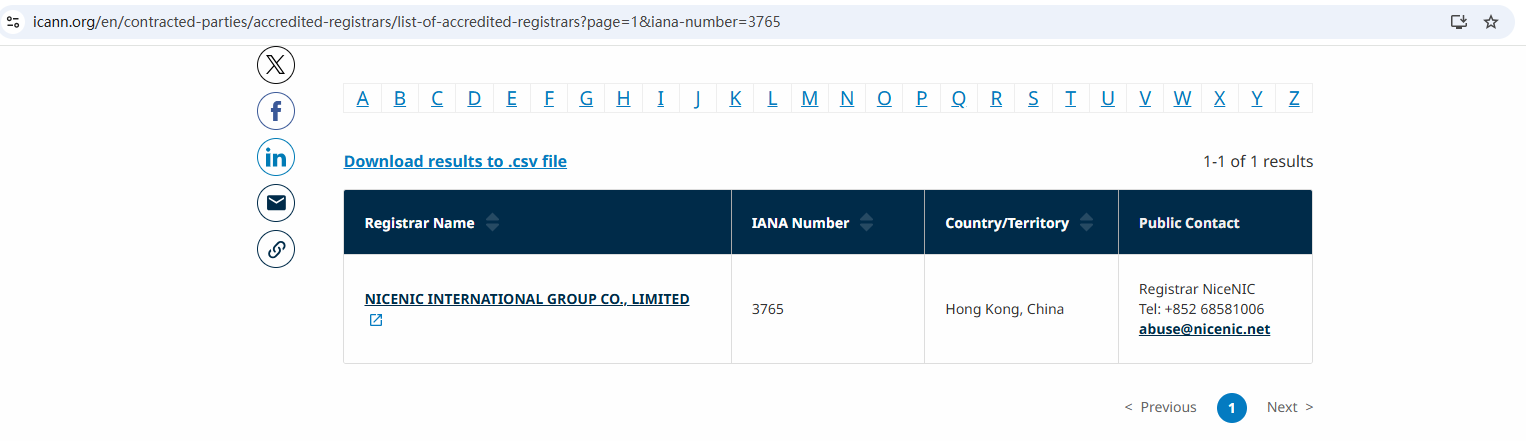
Nicenic stands as that trusted partner for brands, developers, entrepreneurs, and businesses worldwide.
Kjøp og registrer ditt .ORG-domene i dag
Sjekk tilgjengeligheten for .ORG-domener, registrer et nytt .ORG-domene, søk etter flere navn i bulk, eller overfør dine eksisterende .ORG-domener til NiceNIC. Bygget for bedrifter, domenesinvestorer, byråer, hosting-leverandører og forhandlere.
Neste nyhet: What Is .co? Everything You Need To Know About .co Domains


