


ნახვები:91
დრო:2026-06-17 11:43:06 ავტორი: windy 
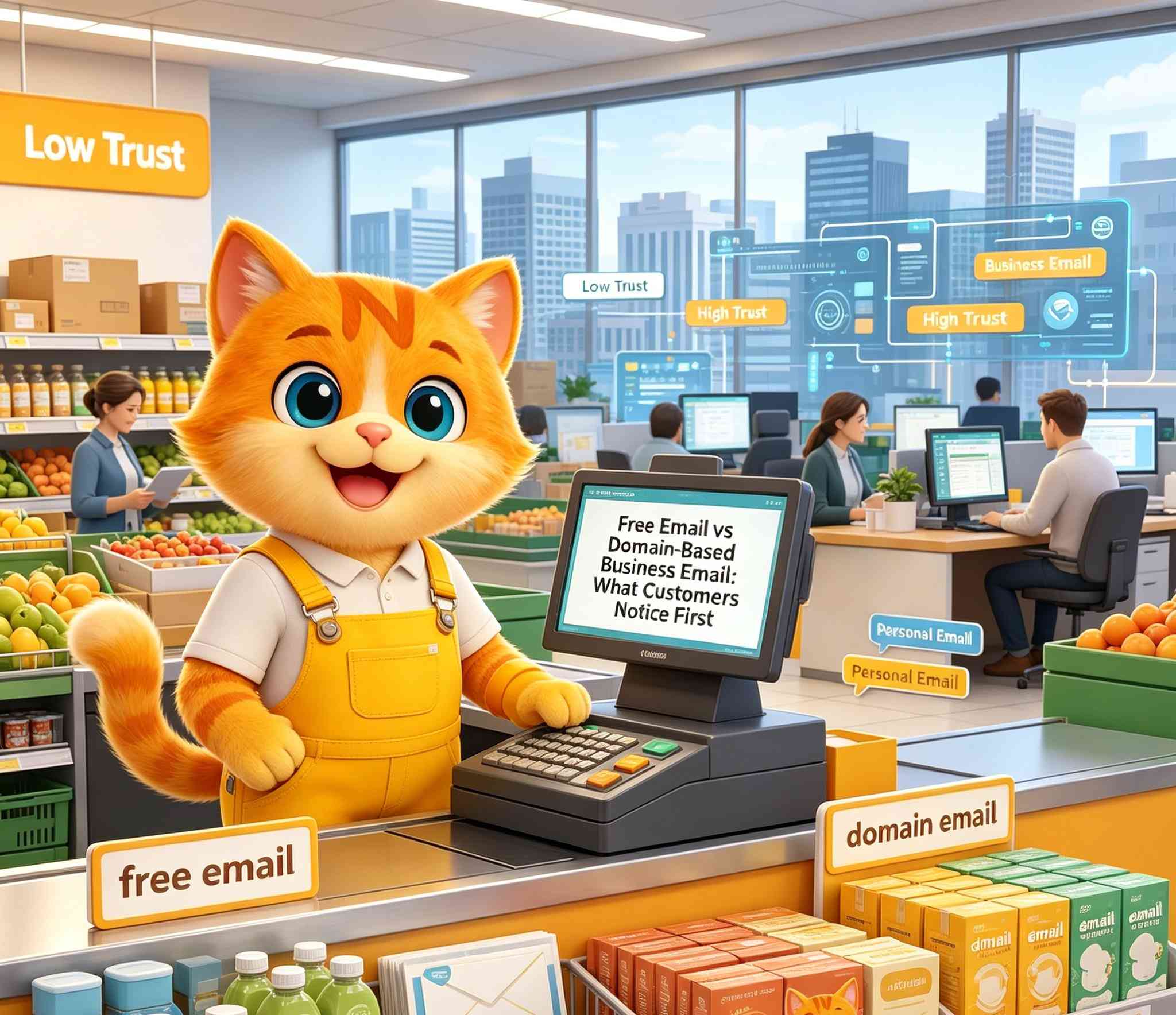
A website may look professional, but if the sales reply, invoice, support message, or partnership email comes from a free Gmail, Hotmail, Yahoo, or similar personal inbox, customers may pause before responding. It does not always mean the business is unreliable. Many real businesses start this way. But from the customer's point of view, the email address is part of the first impression.
A domain-based email address such as [email protected] or [email protected] usually feels more official, more stable, and easier to trust. That is why many small businesses, online sellers, SaaS teams, service providers, and domain owners move from free email accounts to professional business email once their brand becomes serious.
Your domain name is your online identity. Your email address is how that identity speaks to customers.
Why Customers Judge Your Email Before Reading Your Message
Customers often judge an email before they fully read it.
They look at the sender name.
They look at the subject line.
They look at the email address.
Then they decide whether the message feels safe, serious, and worth opening. This happens quickly.
If a customer receives a quote from [email protected], they may still read it. But the sender address does not fully support the brand. It looks temporary. It may feel like a personal account rather than an official business channel.
If the same customer receives a quote from [email protected], the message feels more connected to the company website, brand name, and business identity. That small difference can affect how customers respond.
For sales emails, it can affect confidence.
For invoices, it can affect payment trust.
For customer support, it can affect whether the customer believes the reply is official.
For partnership communication, it can affect whether the business looks established enough to work with.
Online trust is built through small signals. A professional email address is one of those signals.
When Free Email Is Acceptable
Free email is not always wrong.
For personal use, early testing, temporary projects, or very small informal operations, a free email account can be enough. It is easy to create, familiar to most people, and simple to access.
A new founder may use a free inbox before the business has a domain. A freelancer may use it before deciding on a final brand name. A small project may use it during the testing stage. That is normal.
The problem starts when the business already has a domain name, a website, customers, invoices, support requests, or partner communication, but still uses a free personal email address for official business.
At that point, the brand experience becomes inconsistent. The website says one thing. The email address says another.
If your business has already registered a domain, the next step should usually be setting up email addresses that match that domain. If you are still choosing your brand name, you can first search for a domain name and then build your email identity around it.
Free email may be acceptable at the beginning. But it should not become the long-term communication system for a serious business.
When Free Email Starts Hurting Business Trust
Free email starts becoming a problem when customers expect the business to look established. This often happens earlier than business owners think.
- If you are sending quotes, customers expect a professional sender.
- If you are sending invoices, customers expect a trustworthy payment identity.
- If you are answering support tickets, customers expect the reply to come from the company.
- If you are contacting partners, they expect the sender address to match the business.
- If you are running an online store, buyers expect order and service emails to look official.
- Is this really the official business?
- Is this person authorized to speak for the company?
- Will this business still be around next month?
- Is this invoice safe to pay?
- Is this support reply legitimate?
Customers may not tell you directly that the email address looks unprofessional. They may simply delay replying, ask for more confirmation, or choose another provider that looks more established.
This is why business email is not only a technical tool. It is part of customer psychology. A professional email address reduces doubt before the conversation even begins.
Why Domain-Based Email Feels More Professional
A domain-based email address connects your communication to your brand.
If your website is yourbrand.com, then email addresses such as [email protected], [email protected], [email protected], or [email protected] feel natural and official. They tell the customer that the message belongs to the business.
This matters because customers want consistency. They want to see the same brand name across the website, email address, invoice, support channel, and payment communication.
A domain-based email address helps create that consistency. It also gives the business more control.
With free personal email, business communication is often tied to one person. If that person leaves, changes roles, loses access, or mixes personal and business messages, communication can become messy.
With professional business email, the business can create structured mailboxes for different roles:
- sales@ for inquiries
- support@ for customer service
- billing@ for payments and invoices
- admin@ for internal management
- partners@ for cooperation requests
- info@ for general communication
- This structure is useful even for small businesses.
What Customers Notice in Sales, Billing, and Support Emails
Customers judge different types of business emails in different ways.
A sales email needs to look serious. If a potential customer asks for pricing and receives a reply from a free email address, the offer may feel less formal. A domain-based sales address such as [email protected] creates a cleaner first impression.
A billing email needs trust. When customers receive payment instructions, renewal reminders, receipts, or invoices, they need to feel sure that the message is legitimate. [email protected] or [email protected] feels more official than a personal inbox.
A support email needs credibility. When customers have a problem, they want to know that the reply is coming from the real company. [email protected] gives them a clearer signal and makes the business feel more organized.
These details may look small, but they affect how customers feel about the company behind the message.
A professional email address will not close a deal by itself. But it can remove one unnecessary reason for hesitation.
How NiceNIC Business Email Helps Domain Owners
NiceNIC Business Email is designed for domain owners who want professional email addresses using their own domain name.
Instead of relying on a free personal inbox, businesses can create email addresses that match their brand and website. This is especially useful for users who already register or manage domains through NiceNIC. A domain name and a business email address should work together. The domain gives the brand an address. The email system turns that address into daily communication.
- For small businesses, it helps communication look more professional.
- For online sellers, it helps customer messages look more official.
- For SaaS teams, it supports product, billing, and support communication.
- For service providers, it helps client communication look more organized.
Build Trust With Every Email You Send
Your email address appears in almost every customer interaction.
It appears in sales replies.
It appears in support messages.
It appears in invoices.
It appears in account notices.
It appears in partnership communication.
It appears in follow-ups and renewal reminders.
That means your email address is not a small detail. It is part of your brand.
Free email can work at the beginning. But once your business has a domain, website, customers, invoices, or support requests, a domain-based email address usually creates a stronger and more trustworthy impression.
Start with NiceNIC Business Email and create professional email addresses around the domain you own.
If you do not have the right domain yet, you can search and register your domain name with NiceNIC, then build your business email identity from there.
FAQ
1. What is the difference between free email and business email?
Free email uses a provider's domain, such as Gmail, Hotmail, Yahoo, or similar services. Business email uses your own domain name, such as [email protected]. Business email usually looks more professional and gives your brand stronger control over customer communication.
2. Is free email bad for business?
Free email is not always bad, especially at the very beginning. But once your business has a domain, website, customers, invoices, or support requests, a domain-based email address usually creates a stronger impression.
3. Why does a professional email address matter?
A professional email address helps customers recognize that the message comes from your business. It supports brand consistency, customer confidence, and clearer communication.
4. Should small businesses use domain-based email?
Yes. Small businesses often need trust signals because customers may not know them yet. A domain-based email address helps the business look more serious and organized.
5. Where can I get business email for my domain?
You can set up NiceNIC Business Email for professional domain-based communication. If you still need a domain, you can search for a domain name first and then create business email addresses around it.
ICANN აკრედიტირებული რეგისტრარიდან 2006 წლიდან
შესყიდვა და რეგისტრაცია თქვენი .COM დომენი დღესვე
გამოწერეთ .COM დომენების ხელმისაწვდომობა, რეგისტრაცია ახალი .COM დომენის, მრავალსახელოვანი ძებნა დიდ ოდენობაში, ან გადაიტანეთ არსებული .COM დომენები NiceNIC-ზე. შექმნილია ბიზნესებისთვის, დომენის ინვესტორებისთვის, სააგენტოებისთვის, ჰოსტინგის პროვაიდერებისთვის და გადამყიდველებისთვის.
ახლებადი: $17.99
შეადგინეთ
$22.49 $14.99
პირველი წელი
ახლებადი: $17.99
საზოგადოებრივი
$14.99
0% off
ახლებადი: $17.99
სუპერ
$14.99
0% off
ახლებადი: $16.99
VIP
$14.99
0% off
მსგავსი სიახლეები:
ბოლო სიახლეები:
SPF, DKIM and DMARC: The Email Authentication Basics Every Domain Owner Should Know
შემდეგი სიახლეები: Why a Professional Email Address Should Come Right After Your Domain
შემდეგი სიახლეები: Why a Professional Email Address Should Come Right After Your Domain


