



For small hosting providers, competition is no longer just about server performance or pricing. Customers increasingly expect complete, low-friction solutions that cover everything required to get online and stay online. One of the most critical, and often underestimated. It components of that expectation is domain registration.
Industry research and hosting market analysis consistently show that businesses prefer consolidated service providers. When hosting and domain management are separated, customers face configuration errors, renewal risks, and fragmented support. These issues directly increase churn and support costs. By contrast, hosting providers that bundle domain registration into their services improve retention, increase lifetime value, and gain stronger operational control.
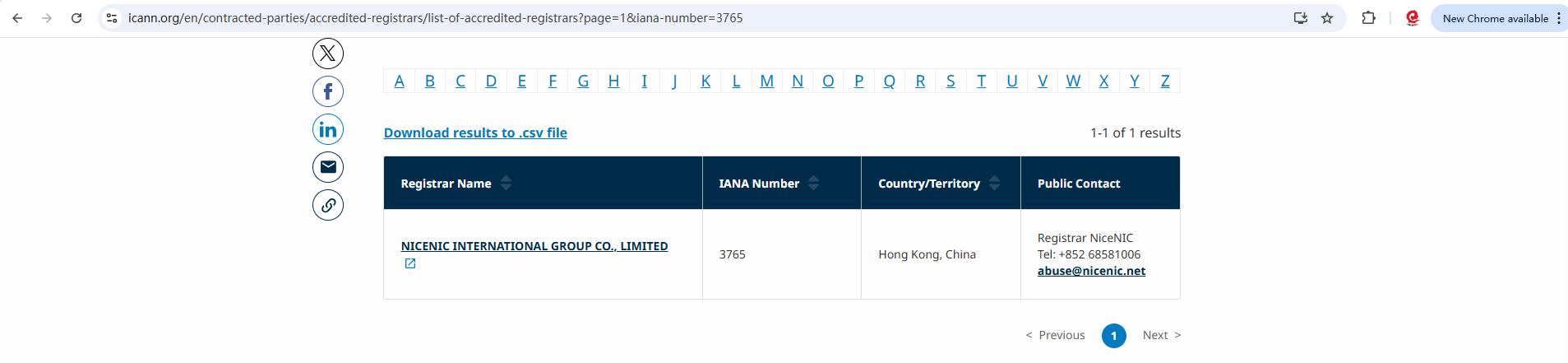
This is where nicenic, as an ICANN-accredited registrar, plays a strategic role for small hosting providers.
Domains Are Foundational Infrastructure, Not Optional Add-Ons
A domain name is not just a label. It is a core dependency for:
- Website availability
- Email delivery
- SSL certificate issuance
- DNS routing
- Brand trust and discoverability
Technical documentation from DNS and hosting ecosystems shows that a large percentage of hosting support incidents originate from misconfigured or externally managed domains. When hosting providers do not control the domain layer, even simple fixes can require coordination with third-party registrars, delaying resolution and frustrating clients.
By offering domain registration directly, small hosting providers regain control over a critical infrastructure layer and reduce avoidable operational friction.
How Domain Registration Increases Client Retention
One-Stop Solutions Reduce Churn
Customer behavior studies across SaaS and infrastructure services consistently confirm one pattern: the more services a customer manages in one place, the less likely they are to leave.
When hosting and domains are managed together:
- Clients log into one dashboard
- Renewals are centralized
- DNS changes are handled faster
- Responsibility is clear
Switching providers becomes more complex, which naturally increases retention without aggressive lock-ins. For small hosting providers, this is one of the most effective ways to stabilize long-term revenue.
Reduced Risk of Domain Loss and Service Interruptions
One of the most damaging events for a hosting customer is losing a domain due to missed renewal or registrar miscommunication. Such incidents often lead to immediate churn, reputational damage, and emergency support costs.
When hosting providers manage domain registration and renewals:
- Expiration risks are minimized
- Notifications are centralized
- Providers can proactively intervene
This protective role strengthens trust and positions the hosting provider as a long-term partner rather than a commodity service.
Recurring Revenue with Low Operational Overhead
Domains Are Predictable, Renewable Assets
Unlike hosting plans that may change or downgrade, domains are typically renewed year after year as long as a business remains active. This makes domain registration one of the most stable recurring revenue streams available to hosting providers.
Additional services such as:
- WHOIS privacy
- DNS hosting and management
- Security features
Further increase average revenue per customer without significantly increasing support complexity.
Bundling Domains Improves Margins Without Price Pressure
Hosting markets are highly price-competitive. Domain services, however, are less sensitive to short-term pricing comparisons and more tied to convenience and trust.
By bundling domain registration with hosting packages, small providers can improve margins without engaging in destructive price wars on hosting alone.
Operational Advantages for Small Hosting Providers
Unified DNS and Hosting Control
DNS performance and correctness directly affect website availability and email delivery. Industry best practices recommend minimizing external dependencies for DNS whenever possible.
When hosting providers control both hosting and domain DNS:
- Propagation issues are resolved faster
- Misconfigurations are reduced
- Security policies are easier to enforce
This leads to higher service reliability and fewer escalated support cases.
Automation and Scale Without Large Teams
Modern registrars provide API access and automation capabilities that allow hosting providers to scale domain operations efficiently.
With registrar integration, providers can:
- Automatically provision domains
- Apply default DNS templates
- Track renewals programmatically
This is especially important for small hosting companies that need to scale without expanding support teams.
How nicenic Supports Small Hosting Providers
As an ICANN-accredited registrar, nicenic is structured to support professional hosting workflows rather than retail-only use cases.
Stable, Transparent Pricing
nicenic avoids aggressive first-year discounts followed by unpredictable renewal increases. This pricing transparency allows hosting providers to build sustainable packages without margin surprises or customer disputes.
Broad TLD Coverage for Diverse Client Needs
Small hosting providers often serve local businesses, startups, and international clients. nicenic supports a wide range of global and country-specific TLDs, enabling hosts to meet diverse branding and market requirements from a single registrar.
API-Driven Domain and DNS Management
nicenic provides API access that allows hosting providers to integrate domain registration, DNS updates, and renewal management directly into their control panels or provisioning systems.
This reduces manual work and improves consistency across client environments.
Security and Abuse Handling Aligned with Professional Operations
Domains are frequent targets for hijacking, phishing, and abuse. nicenic follows ICANN-compliant abuse handling processes and provides registrar-level security controls such as locks and DNS protections.
These capabilities help hosting providers protect client assets and meet higher security expectations without relying on consumer-focused registrars.
Why This Creates Clear Differentiation from GoDaddy and Namecheap
Large retail registrars like GoDaddy and Namecheap are optimized for individual buyers and promotional pricing models. Their platforms are not designed primarily for hosting providers managing multiple client environments.
nicenic differentiates itself by focusing on:
- Professional workflows
- Predictable pricing
- Infrastructure-level reliability
- Registrar-grade compliance
This makes nicenic a strategic partner rather than just a domain seller, especially for small hosting providers aiming to grow sustainably.
Conclusion
For small hosting providers, domain registration is no longer optional. It is a strategic requirement that improves retention, generates recurring revenue, reduces operational risk, and strengthens customer trust.
By integrating domain registration into hosting services and partnering with a registrar designed for professional use cases like nicenic, small hosting providers can offer more complete solutions, operate more efficiently, and compete more effectively in a crowded market.
קנה ורשום את דומיין .COM שלך היום
בדוק זמינות דומיין .COM, רשום דומיין .COM חדש, חפש שמות רבים בכמויות גדולות, או העבר את דומייני .COM הקיימים שלך אל NiceNIC. בנוי לעסקים, משקיעי דומיינים, סוכנויות, ספקי אירוח ומשווקים.
חדשות אחרונות: Building a Global Domain Reseller Business with a Scalable API Platform


