


Mga Panonood:97
Oras:2026-06-15 11:34:43 May-akda: windy 
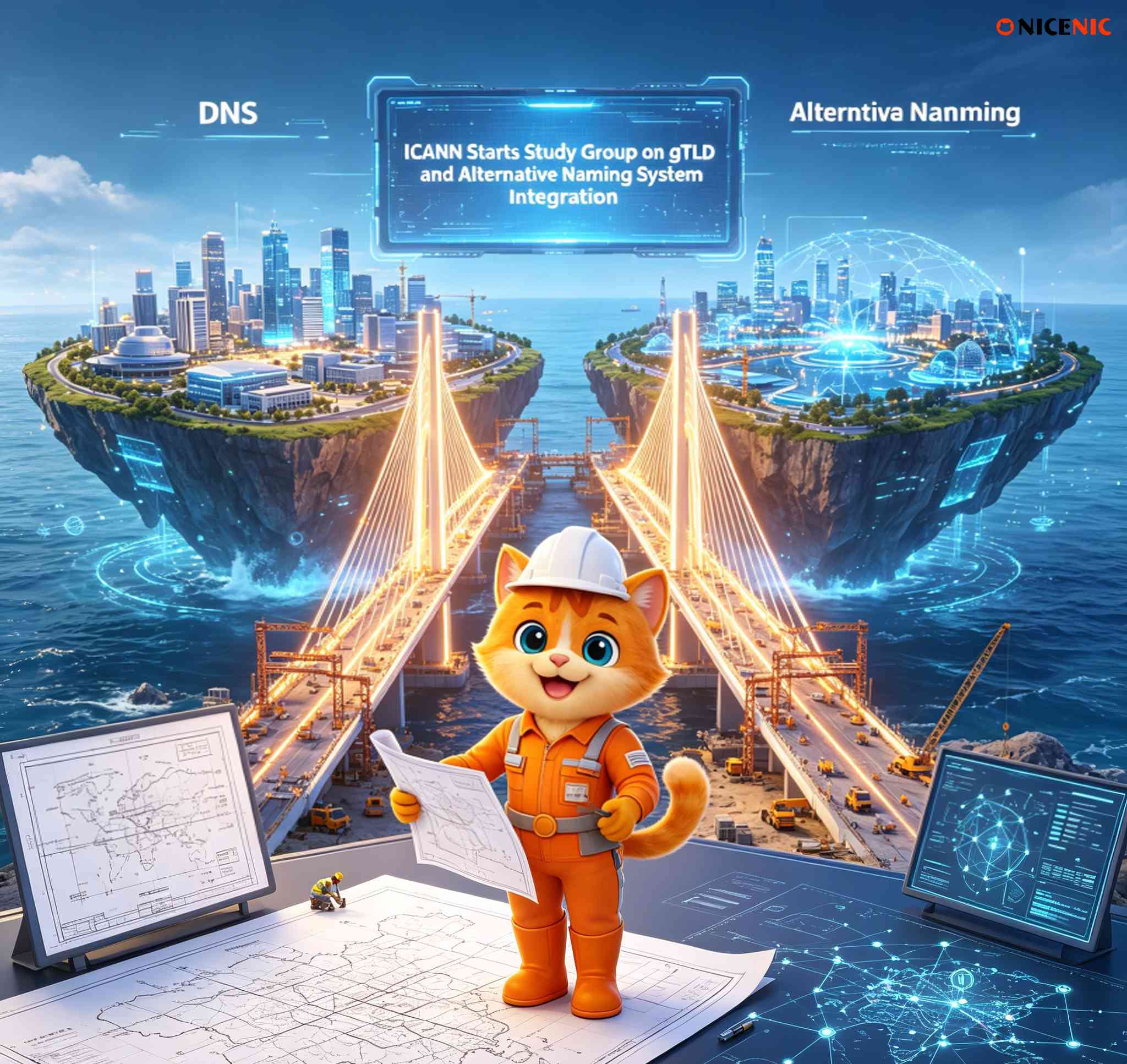
This is an important development for the domain industry because it touches several major issues at once: DNS stability, new gTLD applications, blockchain naming, name collision risk, user confusion, registry service evaluation, and the future of Internet identifiers.
For domain owners, resellers, agencies, hosting providers, and registrars, the key point is simple: alternative naming systems may create new ideas around digital identity, but the global DNS still depends on stability, uniqueness, predictable resolution, and clear accountability.
NiceNIC, an ICANN-accredited domain registrar since 2006, views this discussion from a registrar perspective. The question is not whether new naming models should be ignored. The question is how any new integration can be evaluated without weakening the reliability of the DNS that businesses and users depend on every day.
What ICANN Announced
ICANN has seated a Technical Study Group on New gTLD Integrations with Alternative Naming Systems. The group will study the potential security and stability impact of integrating a gTLD with the same name in an alternative naming system. ICANN has said this type of analysis is needed before moving forward with such a new registry service.
The study group is expected to meet regularly and produce a report for Public Comment. This timing matters because the 2026 New gTLD Program is already open. New gTLD applicants, registry operators, registrars, resellers, and brand owners are all watching how the next expansion of the namespace may develop.
What Are Alternative Naming Systems?
Alternative naming systems are naming systems that operate outside the traditional global Domain Name System. Some are connected to blockchain naming, decentralized identity, browser plugins, wallet systems, or application-specific resolution models. They may use familiar-looking names, but they are not always part of the globally delegated DNS root.
That distinction matters. A DNS domain name works because it is part of a coordinated global system. A user can type a domain into a normal browser, the domain resolves through the DNS, and the result is expected to be consistent across the public Internet. An alternative name may work only in specific tools, wallets, browsers, applications, or resolver environments. That can create innovation. It can also create confusion if users assume all names work the same way.
Why gTLD Integration Raises Serious Questions
A gTLD is not just a label. It is part of the public DNS namespace.
If a DNS gTLD and an alternative naming system use the same string, several questions appear:
- Who has authority over the name?
- Could users reach different destinations depending on the resolver or application?
- Could there be name collision or inconsistent resolution?
- How should disputes be handled?
- What happens if an alternative system has existing users before DNS delegation?
- Who is accountable for abuse, phishing, or misleading use?
- How should registrars explain the difference to customers?
- Could businesses misunderstand what they are buying or registering?
Stability Comes First
From a registrar perspective, the most important principle is DNS stability.
A registrar helps users register, transfer, renew, and manage domain names under recognized TLDs. Users expect those domains to work across normal DNS infrastructure. That expectation is central to the value of domain registration.
Innovation around naming systems can be useful, but it should not create unclear ownership, unpredictable resolution, or weaker accountability.
For businesses, a domain name is not only a marketing asset. It may support:
- websites
- business email
- DNS records
- SSL certificates
- customer login systems
- payment flows
- brand identity
- reseller and hosting workflows
What Domain Owners Should Understand
Most domain owners do not follow ICANN policy work closely. They usually care about practical questions:
- Can I register this domain?
- Will it work in normal browsers?
- Can I use it for email?
- Can I transfer it?
- Can I manage DNS records?
- Who controls the extension?
- What happens if there is a dispute?
- Will customers understand it?
Domain owners should not assume all naming systems provide the same level of universal resolution, policy structure, registrar support, or user recognition.
Before choosing any name, businesses should understand whether it is a DNS domain, an alternative name, or part of a specific application ecosystem.
What Resellers and Agencies Should Watch
Resellers and agencies need to pay close attention to this topic because customers may ask about new naming options before they understand the technical differences.
A client may see a name promoted in a wallet, browser extension, blockchain system, or alternative namespace and assume it works like a normal domain name.
That creates a support risk. Resellers and agencies should be ready to explain:
the difference between DNS domains and alternative names
whether a name resolves through the public DNS
whether email can work normally
whether the name can be transferred through a registrar
whether the name is subject to registry rules
how disputes and abuse reports are handled
what long-term renewal or control model applies
This is where registrar-level education becomes important.
NiceNIC's domain reseller program and Reseller API v2 support partners that need scalable domain operations, but resellers also need clear customer education when new naming concepts enter the market.
Why This Matters for the 2026 New gTLD Round
The 2026 New gTLD Round is already open, and new gTLD applicants may explore more specialized, branded, community, geographic, or technology-related strings.
If some applicants also want to connect DNS gTLDs with alternative naming systems, the industry needs clarity before those models become customer-facing products.
This includes clarity around:
security review
stability impact
user disclosure
registry service evaluation
resolver behavior
name collision
abuse handling
rights protection
customer support responsibilities
Without clear rules, users may not know what they are buying, registrars may face difficult support questions, and businesses may misunderstand the difference between DNS-based registration and alternative namespace claims.
What Makes DNS Different
The global DNS has value because it is coordinated. It is not perfect, but it provides a common system for resolving names across the public Internet.
That common system supports:
domain registration
websites
business email
SSL certificates
DNS management
domain transfers
registry policies
registrar obligations
abuse reporting
dispute processes
Alternative naming systems may offer new ideas, but they need to be evaluated against the expectations users already have for Internet names. If a name looks like a domain, many users will assume it behaves like a domain. That assumption must be handled carefully.
Conclusion
NiceNIC supports responsible innovation in domain naming, but innovation should not weaken DNS stability or confuse users.
As an ICANN-accredited registrar, NiceNIC believes that any integration between gTLDs and alternative naming systems should be evaluated through clear technical, operational, and policy standards.
The domain industry should ask:
- Does the integration protect DNS stability?
- Does it avoid inconsistent resolution?
- Does it reduce user confusion?
- Does it preserve accountability?
- Does it provide clear abuse handling?
- Does it protect registrants and end users?
- Can registrars and resellers explain it clearly?
The discussion around gTLD and alternative naming system integration shows that domain names are more than labels. They are part of global Internet infrastructure.
NiceNIC helps global users, businesses, agencies, hosting providers, and resellers manage domain names through domain registration services, domain transfer, DNS management, reseller tools, SSL certificates, Business Email, and API workflows.
If your business depends on domains, review your naming strategy, DNS setup, domain portfolio, and reseller workflow with long-term stability and user trust in mind.
ICANN Accredited Registrar mula pa noong 2006
Bumili at Magrehistro ng Iyong .COM Domain Ngayon
Suriin ang pagkakaroon ng .COM domain, magrehistro ng bagong .COM domain, maghanap ng maramihang pangalan nang sabay-sabay, o ilipat ang iyong kasalukuyang .COM domains sa NiceNIC. Ginawa para sa mga negosyo, mamumuhunan sa domain, ahensya, tagapagbigay ng hosting, at mga reseller.
I-renew: $17.99
I-market
$22.49 $14.99
unang taon
I-renew: $17.99
Pangunahing
$14.99
0% off
I-renew: $17.99
Sobrang
$14.99
0% off
I-renew: $16.99
VIP
$14.99
0% off
KAUGNAY NA BALITA:
Nakaraang Balita:
What Is .tt? Everything You Need to Know About .tt Domains
Susunod na Balita: What Is .xxx? Everything You Need to Know About .xxx Domains
Susunod na Balita: What Is .xxx? Everything You Need to Know About .xxx Domains


