


Mga Panonood:471
Oras:2026-05-18 15:03:33 May-akda: windy 
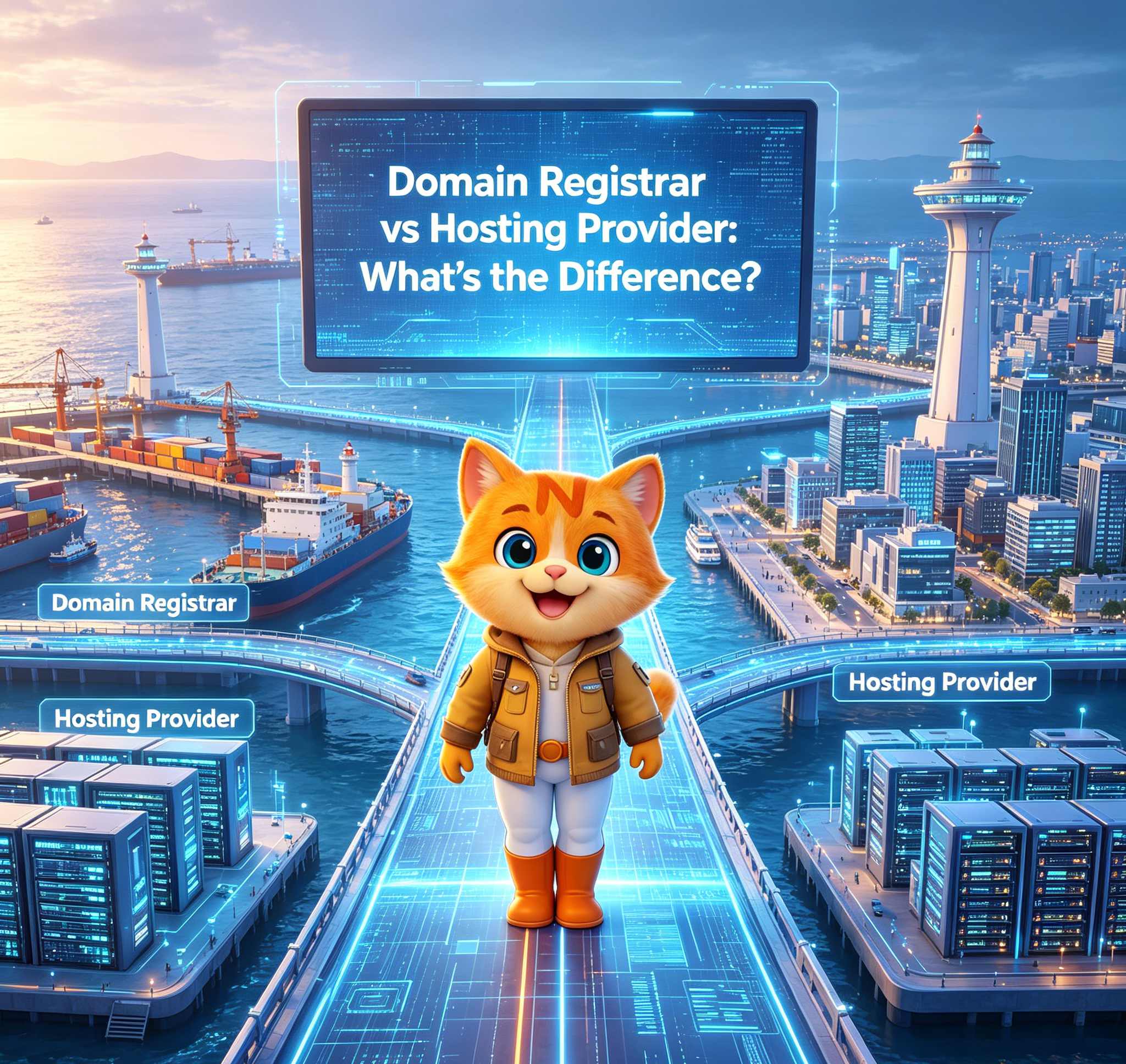
That distinction matters more than many people expect. When something goes wrong with a website, email, DNS, renewal, or transfer, users often contact the wrong company first because they never understood who controls what. That confusion slows down troubleshooting and creates avoidable risk around domain ownership.
If you want to manage your website more confidently, you need to separate three ideas clearly: the registrar, the registry, and the hosting provider.
This guide is for:
- business owners launching a website for the first time
- teams trying to understand who controls a domain
- agencies explaining infrastructure to clients
- users preparing for a transfer or hosting move
- anyone who has ever asked, "My website is down, who do I contact first?"
What a domain registrar does
A domain registrar is the company you use to register and manage a domain name.
That typically includes things like:
- domain registration
- renewal
- transfer handling
- nameserver settings
- contact or ownership-related domain controls
- privacy-related options where supported
In simple terms, your registrar is where your domain account lives. It is the management layer for the domain itself.
What a hosting provider does
A hosting provider stores and delivers your website content.
That means your hosting service usually handles:
- website files
- databases
- server resources
- application runtime
- website performance environment
If the registrar controls the name, the host controls the content behind that name.
This is why you can register a domain with one company and host the website with another. The two services interact through DNS, but they do not have to come from the same provider.
What a registry does
A registry operates the database behind a domain extension. For example, a registry manages the extension itself at the top level, while registrars are accredited to sell and manage names within that extension. Most ordinary domain buyers do not interact directly with the registry in daily management, but the registry still matters when extension-level rules, status codes, or higher-level restrictions come into play.
Understanding the registry layer helps explain why some domain issues are registrar-level and others are not.
Why people confuse registrar and hosting provider
The confusion happens because many companies offer both services in one account experience.
You may buy the domain and hosting from one brand, so the distinction stays invisible until something breaks. Then the differences suddenly matter:
- a renewal problem may be a registrar issue
- a site speed issue may be a hosting issue
- a DNS configuration issue may involve both
- a transfer issue is a registrar issue, not a hosting issue
- a server outage is a hosting issue, not a registrar issue
- If you know the service layers in advance, you solve the right problem faster.
Why this matters in practice
1. Website outages
If the server is down, hosting is the first place to check.
2. Domain expiration
If the domain expired, the registrar is the place to act first, so review the domain renewal and expiration issues before assuming the hosting provider caused the outage.
3. Transfer planning
A domain transfer changes the registrar, not the hosting service by itself.
4. DNS confusion
Nameserver and DNS settings often connect the two worlds. But even then, registrar control and hosting control are still separate.
5. Ownership protection
If you care about long-term business control, registrar choice matters because the domain is the asset that points users to everything else.
Why domain ownership clarity matters for businesses
For a business, the domain is not just a technical setting. It is the front door to your brand.
That is why it helps to keep the domain relationship clear and intentional. Businesses often regret not understanding this earlier, especially when:
- a former vendor controls the domain account
- access details are missing
- transfer timing becomes urgent
- DNS changes affect website or email continuity
- the wrong service provider is blamed for the wrong issue
Why NiceNIC's existing framing is useful
NiceNIC's current public explainer already does something important: it separates registrar, registry, and hosting into distinct control layers in plain language. That makes it more useful than a generic high-level definition page because it helps users connect the concept to real troubleshooting and ownership questions.
That framing also fits the way business users actually think once a domain is live: not as an abstract concept, but as a control question.
Common mistakes to avoid
1. Assuming the hosting company controls the domain
It may not. You need to know who the registrar is.
2.Assuming a domain transfer moves the website
It does not. A transfer changes registrar control, not hosting by itself.
3.Ignoring DNS as the bridge
Registrar and hosting are separate, but DNS links them operationally.
4.Not checking ownership access before a project grows
That often becomes a problem only when the website becomes important.
Conclusion
So, what is the difference between a domain registrar and a hosting provider?
A registrar manages the domain. A hosting provider runs the website. A registry operates the extension at the top level. If you understand those layers clearly, you can make better decisions about ownership, support, transfers, renewals, and troubleshooting.
FAQ
Q: Do I need both a registrar and a hosting provider?
A: Yes, if you want a working website with its own domain. They may come from one company or two different companies, but the roles are still different.
Q: Can I register a domain with one company and host with another?
A: Yes. That is very common.
Q: Who controls DNS?
A: DNS control depends on the setup, but registrar and hosting functions remain separate even when DNS connects them.
Q: Why does this difference matter for businesses?
A: Because ownership, continuity, transfer planning, and troubleshooting all depend on knowing which provider controls which part of the stack.
Before you launch, transfer, or troubleshoot a domain-based website, make sure you know who controls the domain and who runs the hosting environment. If domain ownership clarity matters to your business, review NiceNIC's domain management resources, transfer guidance, privacy information, and support resources with that goal in mind.
ICANN Accredited Registrar mula pa noong 2006
Bumili at Magrehistro ng Iyong .COM Domain Ngayon
Suriin ang pagkakaroon ng .COM domain, magrehistro ng bagong .COM domain, maghanap ng maramihang pangalan nang sabay-sabay, o ilipat ang iyong kasalukuyang .COM domains sa NiceNIC. Ginawa para sa mga negosyo, mamumuhunan sa domain, ahensya, tagapagbigay ng hosting, at mga reseller.
I-renew: $17.99
I-market
$22.49 $14.99
unang taon
I-renew: $17.99
Pangunahing
$14.99
0% off
I-renew: $17.99
Sobrang
$14.99
0% off
I-renew: $16.99
VIP
$14.99
0% off
KAUGNAY NA BALITA:
Nakaraang Balita:
Transfer Your Domain to NiceNIC: A Practical Guide for Better Domain Control
Susunod na Balita: What Q1 2026 Domain Growth Means for Resellers and Brand Owners
Susunod na Balita: What Q1 2026 Domain Growth Means for Resellers and Brand Owners


