


Quick Answer
A domain renewal price can be higher than the first-year registration price because many registrars and registries use promotional pricing for new registrations, while renewals are charged at the current standard rate.
Renewal prices can also change over time if a registry adjusts wholesale pricing or a registrar updates its retail pricing.
Before registering a domain, compare:
Registration price + Renewal price + Long-term holding cost
instead of looking only at the first-year offer.
You can compare current NiceNIC registration, renewal and restore prices before registering or renewing a domain.
Registration Price vs Renewal Price
A domain can have several different prices during its lifecycle.
They should not be treated as the same cost.
This is why a domain advertised at a very low first-year price can still become expensive to hold over several years.
Why Is Domain Renewal More Expensive Than Registration?
There are several common reasons.
1. First-Year Promotions
A registrar or registry may discount the initial registration to attract new customers.
That promotional price may apply only to the first year.
When the domain reaches renewal, the standard renewal price applies.
2. Standard Renewal Pricing
Registration and renewal are separate transactions.
A registrar may choose to discount one without discounting the other.
For long-term domain ownership, the renewal price is usually a better indicator of cost than the first-year promotional price.
3. Registry Wholesale Price Changes
Registrars obtain domain registrations through registries.
If a registry changes the wholesale price of a TLD, registrar pricing may also change.
This means a renewal price shown today should not automatically be treated as a permanent lifetime rate.
4. Registrar Pricing Changes
Registrars may also adjust retail pricing based on:
- wholesale cost changes
- operational costs
- pricing strategy
- account level
- promotions
- currency or tax conditions where applicable
That is why it is useful to check the current renewal price before committing to a domain for several years.
How to Find the Lowest Long-Term Renewal Cost
Searching for the cheapest domain renewal should not mean looking only for the lowest number on a registration banner.
Instead, compare these five things.
Current Renewal Price
Check what the registrar charges to keep the domain for another year.
This is often the biggest recurring cost.
First-Year vs Renewal Difference
A very low registration price can be attractive, but a much higher renewal price can make the domain more expensive over time.
Included Fees
Check whether applicable registry or ICANN-related fees are already included in the displayed price or charged separately.
Privacy Cost
Some registrars charge separately for domain privacy.
NiceNIC currently provides Domain Privacy at no separate charge for eligible TLDs.
Premium Pricing
Premium domains can use different registration and renewal pricing from standard domains.
Always check whether the renewal itself is Premium-priced before purchasing.
The most useful comparison is therefore:
What will this domain cost me over the period I actually plan to keep it?
How Much Does a Domain Cost Over 3 or 5 Years?
A simple long-term calculation can make the real cost much easier to understand.
Assume a domain has:
- First-year registration: $6
- Renewal price: $18 per year
3-Year Cost
$6 + $18 + $18 = $42
5-Year Cost
$6 + ($18 × 4) = $78
So a domain advertised as a $6 registration can become a $78 five-year domain if the renewal price remains $18.
This example is for illustration only. Actual prices can change.
A simple formula is:
Long-Term Domain Cost = First-Year Registration + Future Renewals
If you later transfer the domain, restore it after expiration, or buy a Premium name, those costs may need to be added separately.
You can use the NiceNIC Domain Prices page to compare current registration, renewal and restore pricing.
Can Domain Renewal Prices Change?
Yes.
A domain renewal price is not necessarily fixed forever.
It may change because of:
- registry wholesale price adjustments
- registrar pricing updates
- expired promotions
- Premium pricing rules
- currency or tax changes where applicable
This matters when estimating a 3-year or 5-year budget.
A calculator based on today’s prices can help you understand the current cost structure, but it cannot guarantee future registry or registrar pricing.
So when budgeting:
Use today's renewal price as an estimate, not a permanent promise.
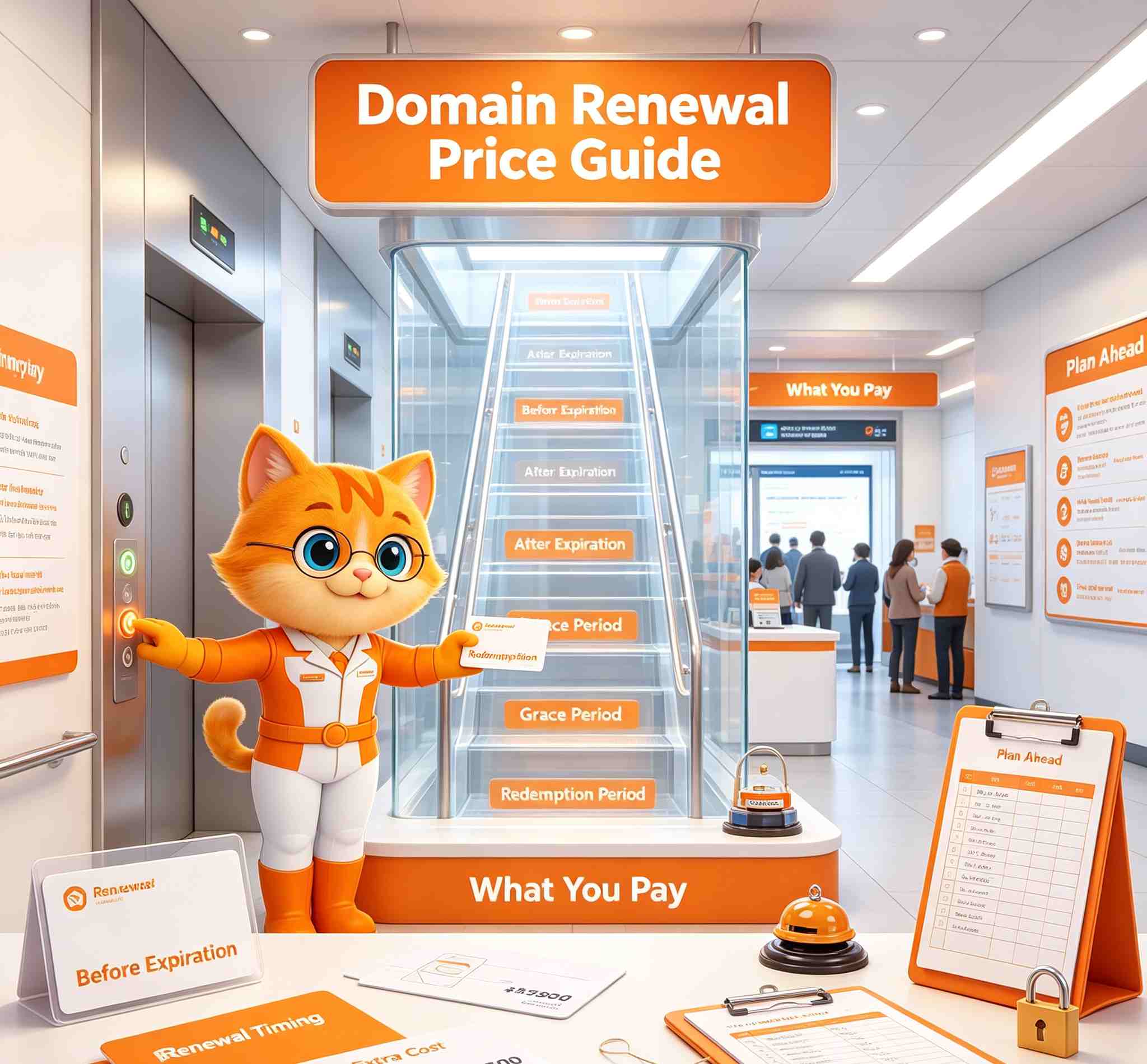
What Happens If You Miss the Renewal Date?
The cost of keeping a domain can increase significantly if you miss the normal renewal period.
The exact process depends on the TLD and registry rules.
Not every TLD follows the same timeline.
Some extensions may allow a post-expiration renewal period, while others have different registry rules.
The important point is:
Do not rely on an assumed grace period. Renew important domains before expiration whenever possible.
You can check current registration, renewal and restore pricing before taking action.
Should You Turn On Auto-Renew?
Auto-renew can reduce the risk of accidentally allowing an important domain to expire.
But it should not replace renewal planning.
Before relying on auto-renew, check:
- your payment method or account balance
- the current renewal price
- which domains should actually renew
- whether the TLD supports the expected renewal process
For a small number of domains, this may be easy to manage manually.
For a larger portfolio, renewal planning becomes more important.
How to Budget Renewals for Multiple Domains
If you manage many domains, calculate renewal cost by TLD rather than treating the portfolio as one number.
For example:
Then calculate:
Estimated Annual Renewal Budget = Sum of all TLD renewal groups
This makes it easier to identify:
- expensive extensions
- unnecessary domains
- upcoming renewal clusters
- portfolio carrying cost
For larger portfolios, renewal cost often matters more than registration cost because renewals repeat every year.
What About Domain Transfers?
Transfer pricing is separate from registration and renewal pricing.
For many TLDs, a successful transfer may include an additional registration term, subject to registry rules and eligibility.
This can sometimes make transferring useful for portfolio management, but you should always compare:
- transfer price
- current renewal price
- remaining registration term
- transfer eligibility
- TLD-specific rules
You can review the NiceNIC Domain Transfer service for current transfer options.
Final Answer: What Should You Compare Before Renewing a Domain?
Do not judge a domain’s cost only by the price shown when you first register it.
The more useful questions are:
What is the current renewal price? How different is it from the first-year registration price? Could the Registry or registrar change the price later? What would the domain cost over 3 or 5 years? What happens if I miss the normal renewal period?
For most standard domains renewed on time, the biggest long-term cost is usually the recurring renewal price.
That makes renewal one of the most important numbers to check before registering a domain.
You can compare current NiceNIC domain prices or search for an available domain before making a long-term decision.
Frequently Asked Questions
Why is domain renewal more expensive than registration?
Many registrars or registries offer promotional first-year registration prices, while renewal uses the current standard rate. Registry wholesale prices and registrar retail prices can also change over time.
How much does it cost to renew a domain?
It depends on the TLD, registrar, account level and whether the domain is standard or Premium. Check the current renewal price for the exact extension you own.
Which registrar has the cheapest domain renewal?
There is no single registrar that is cheapest for every TLD. Compare the current renewal price, included fees, privacy cost and long-term holding cost for the exact extension you need.
Can a domain renewal price increase?
Yes. Registry wholesale prices, registrar retail pricing and Premium-domain pricing can change.
What happens if I renew after expiration?
Depending on the TLD and expiration stage, normal renewal may still be possible or an additional restore/redemption fee may apply. Exact timelines vary by registry.
How do I calculate a domain's five-year cost?
Add the first-year registration price to four years of renewal.
For example:
5-Year Cost = Registration Price + (Renewal Price × 4)
Remember that future prices can change.
Check Your Actual Renewal Cost
Before registering or renewing, compare the numbers that matter over time.
Last verified: September 8, 2026. Domain registration, renewal, transfer and restore prices can change due to registry pricing, registrar pricing, promotions and TLD-specific rules. Check the current live price before making a purchase or renewal decision.


