


Zobrazení:94
Čas:2026-08-21 11:48:57 Autor: windy 
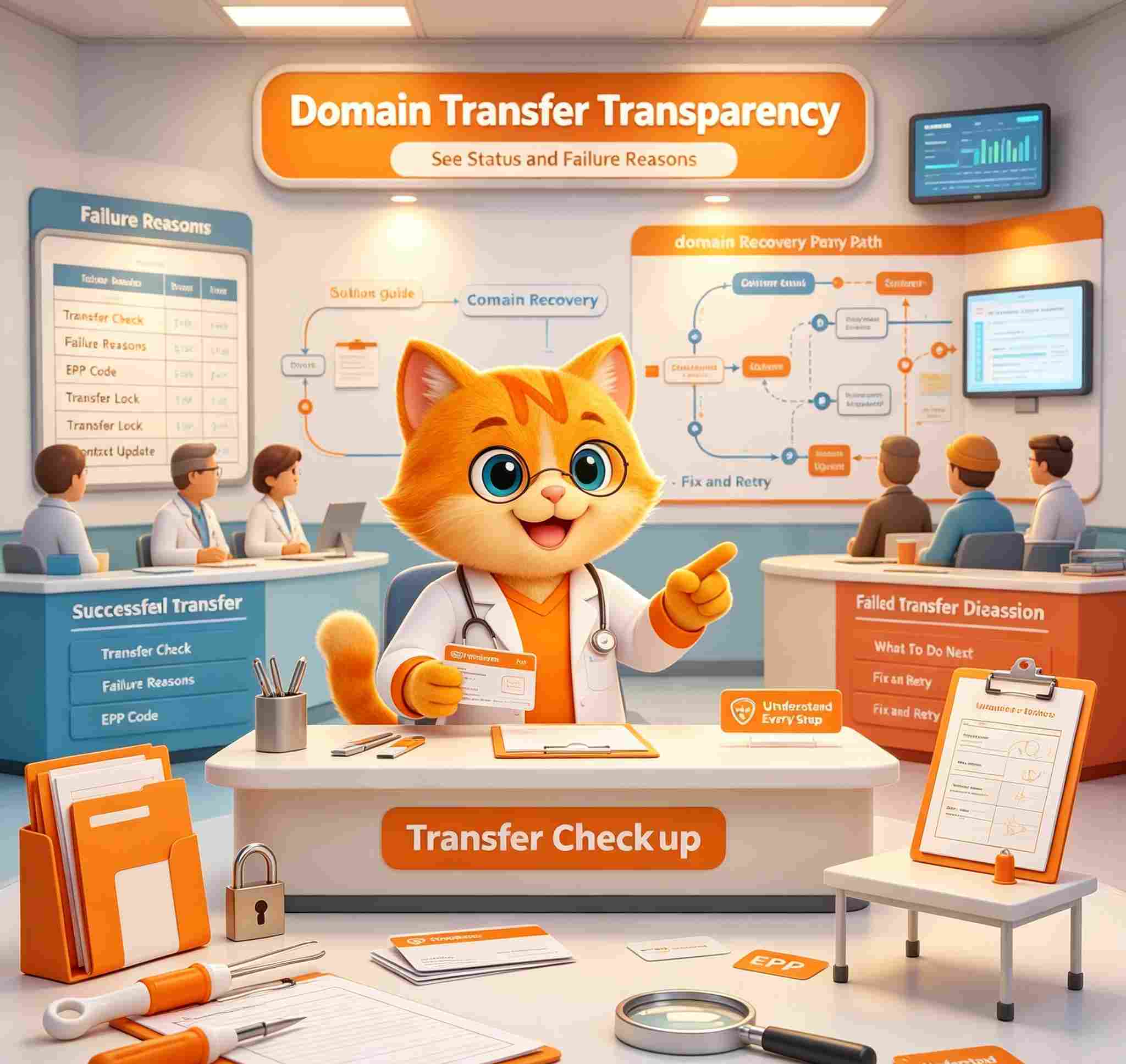
Many domain customers are not frustrated because a transfer takes time. They are frustrated because they do not know:
- whether the transfer is moving forward
- whether it is stuck
- why it failed
- what they should do next
That matters whether you are transferring one domain or managing a larger portfolio.
Quick Answer: What Does Transfer Transparency Mean?
Transfer Transparency means you can see more than just "submitted."
With NiceNIC, customers can see transfer-related status information directly in the account, including:
- when a transfer is pending
- when the transfer was submitted successfully
- when the transfer may complete automatically
- a transfer approval deadline
- when a transfer fails
- the failure reason
- the recommended next action
See When a Transfer Is Pending and What That Means
After a transfer is submitted, customers often want a simple answer:
Is it still moving, or is something wrong?
NiceNIC shows a Pending Transfer status directly in the domain list.
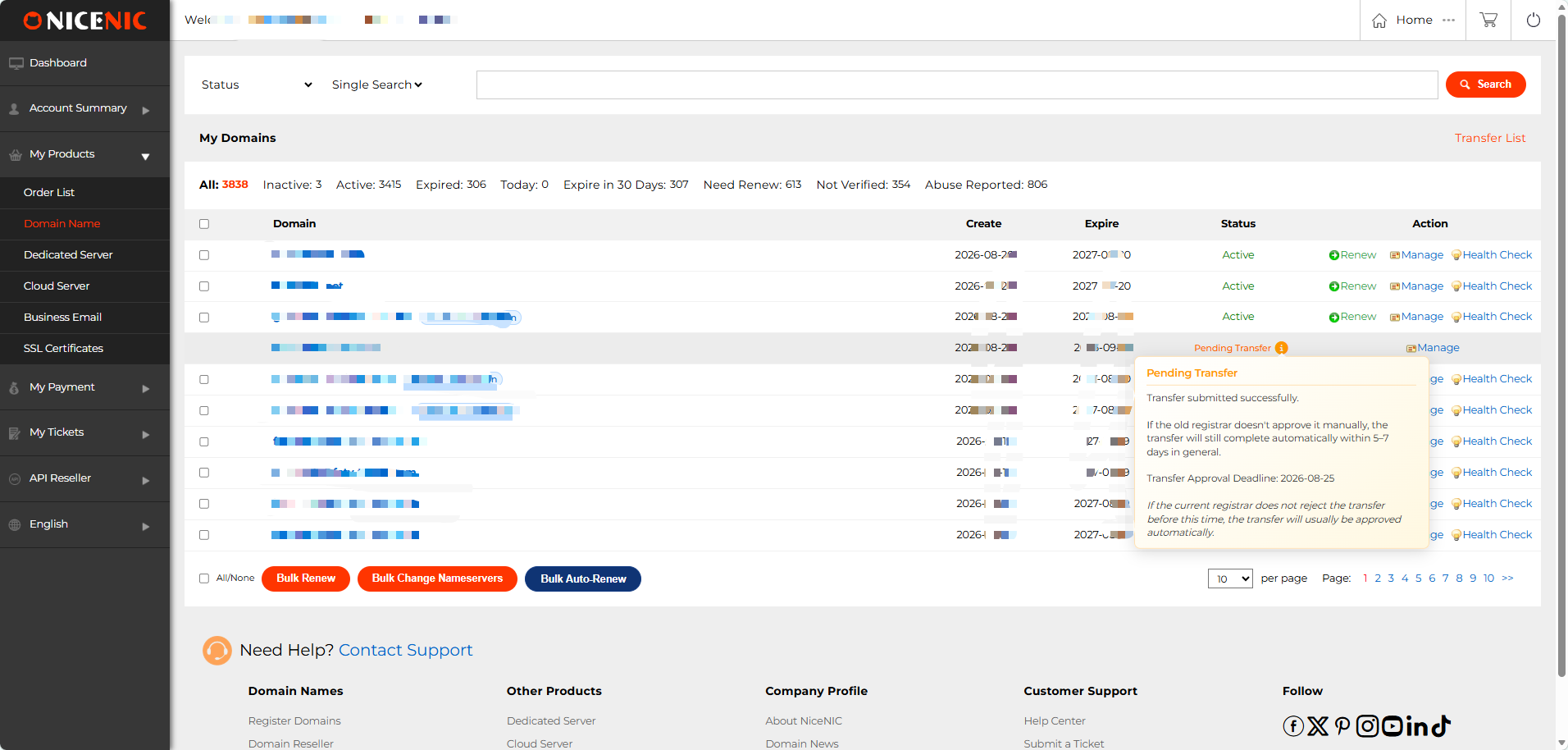
In the pending state, the account can show information such as:
- Transfer submitted successfully
- if the old registrar does not manually approve it, the transfer will usually complete automatically within 5–7 days
- a Transfer Approval Deadline
- a note: if the current registrar does not reject the transfer before that time, the transfer will usually be approved automatically
Instead of leaving the customer guessing, NiceNIC gives a clearer explanation of what the current state means.
See Why a Transfer Failed
One of the biggest pain points in domain transfers is failure without explanation.
That is where transfer transparency becomes especially valuable.
If a transfer fails, NiceNIC can show the failure state and explain the reason, helping the customer understand what happened and what should be fixed before trying again.
Example 1: Transfer Rejected by the Current Registrar
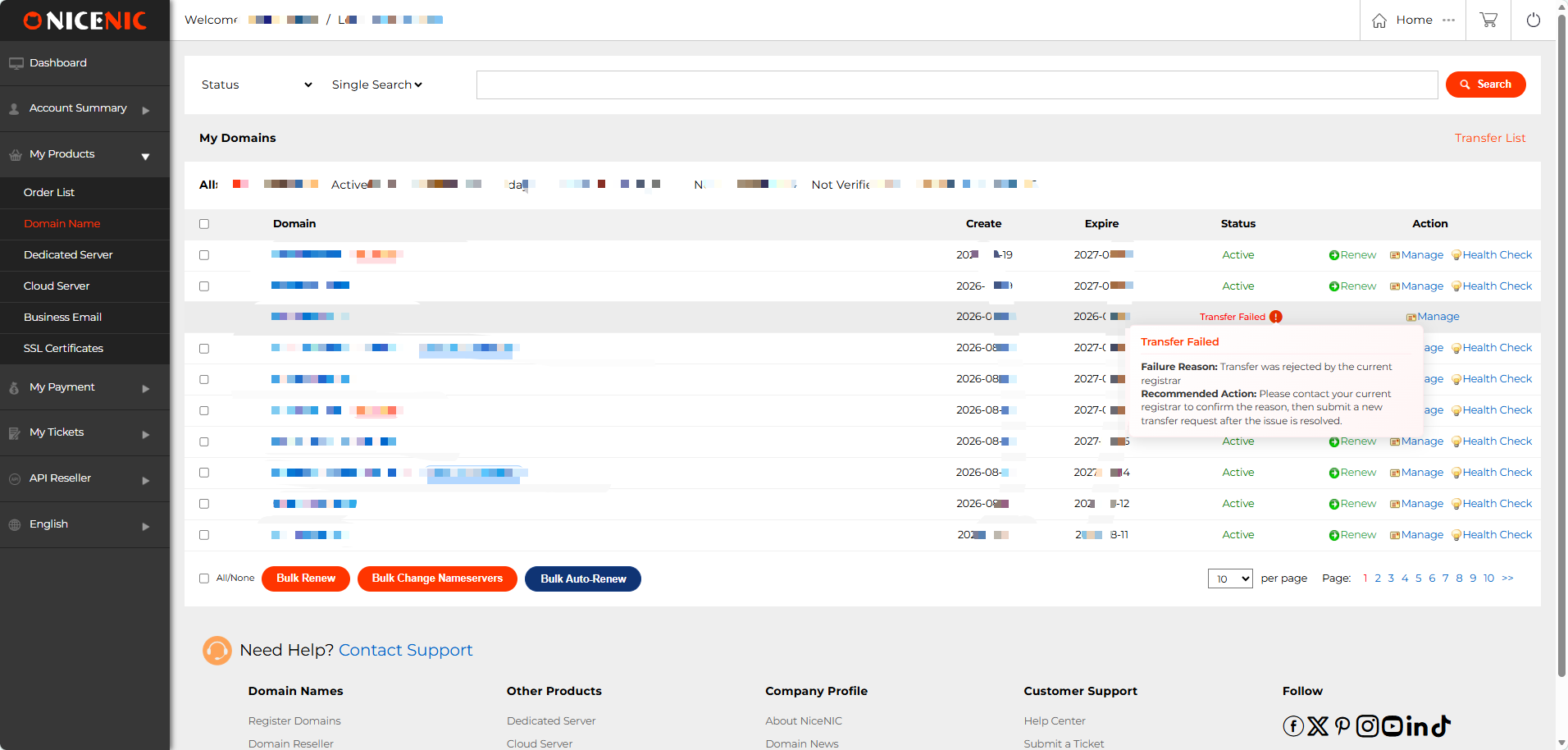
In this case, the transfer failure message clearly explains:
- Failure Reason: Transfer was rejected by the current registrar
- Recommended Action: Contact the current registrar to confirm the reason, then submit a new transfer request after the issue is resolved
Example 2: Domain Cannot Be Transferred / Transfer Not Eligible
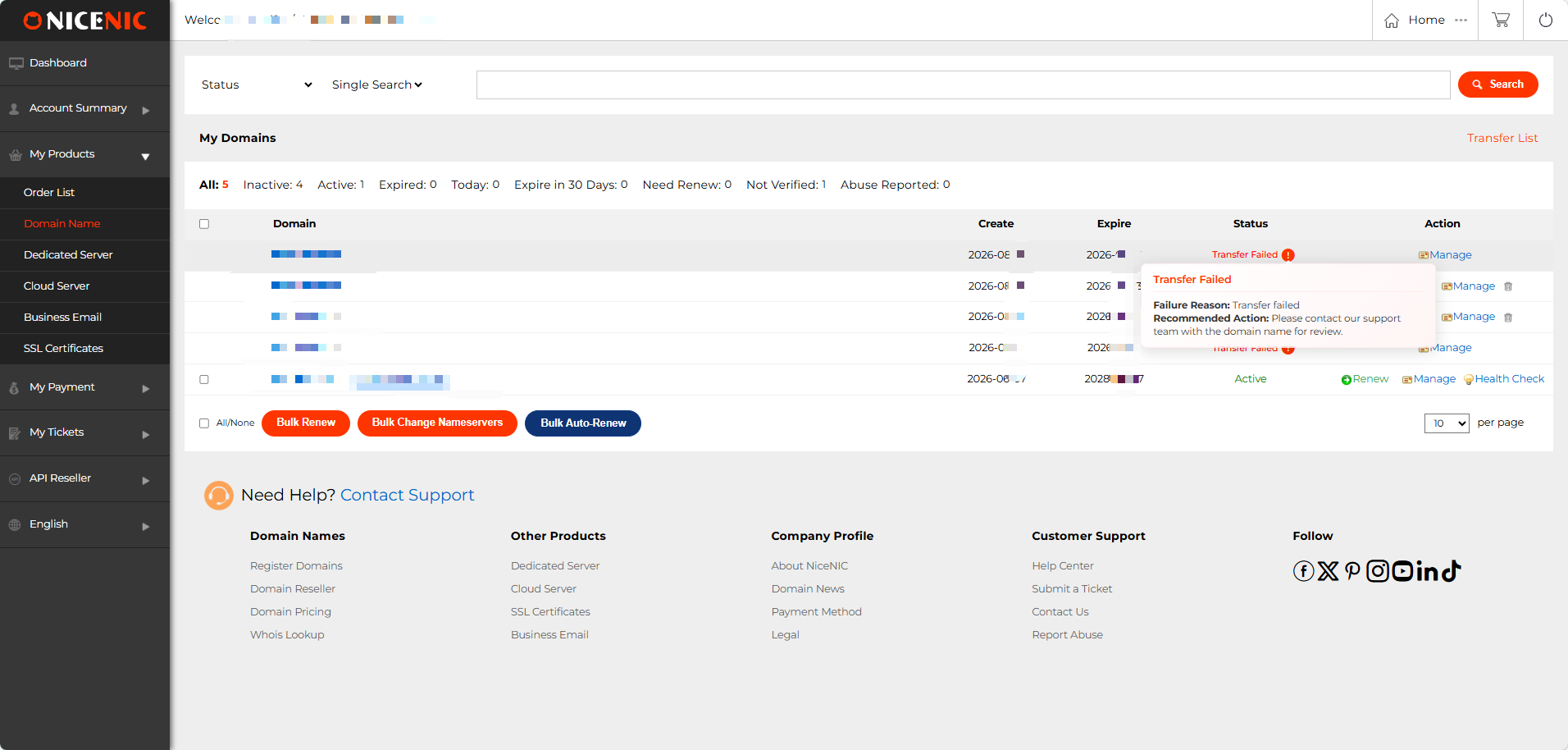
In some cases, the transfer may fail because the domain cannot currently be transferred.
For example, a transfer may not be eligible yet, or another blocking condition may still exist.
Instead of leaving the customer with a dead-end failure notice, the system points the customer toward the next step, including support review where needed.
Common Transfer Failure Reasons Customers Need to Understand
Based on real transfer handling, common transfer failure reasons can include:
- The current registrar rejected the transfer
- Invalid authorization information / invalid transfer code
- The domain was registered less than 60 days ago and cannot be transferred yet
- The transfer lock has not been removed
- The domain cannot currently be transferred
Transfer Transparency makes the process more practical because customers can move more quickly from:
failure → diagnosis → resolution → resubmission
instead of:
failure → confusion → support ticket → waiting → guessing
Why This Matters for Real Customers
The value of transfer transparency is not just "better wording on a status page."
It directly improves the customer experience in several ways.
1. Less Guessing
Customers can see whether a transfer is pending or failed instead of wondering if the order disappeared into a system queue.
2. Faster Troubleshooting
When a failure reason is visible, the customer is more likely to fix the real issue correctly the first time.
3. Fewer Repeated Explanations
A clearer transfer status reduces the need for customers to repeatedly contact support just to ask what happened.
4. Better Portfolio Management
For investors, agencies, hosting providers, and resellers, transfer clarity becomes even more important when managing many domains at once.
When several domains are being transferred, customers need to know which ones are progressing, which ones failed, and why.
What Happens If a Transfer Fails?
When a transfer fails, customers usually want to know two things right away:
- Can I see the reason?
- Do I need to pay again immediately?
That way, the customer can fix the issue, such as correcting the auth code, removing the transfer lock, or waiting until the 60-day rule is satisfied and then resubmit the transfer more cleanly.
Customers can also check their Order List to see whether the failed transfer order has already been refunded.
This is an important part of transfer transparency too.
A transfer failure should not leave the customer wondering whether the order is still active, whether the money is still locked, or whether they should submit another transfer request.
Transfer Transparency vs. Black-Box Transfers
| Transfer Experience | Low-Visibility Transfer Workflow | NiceNIC Transfer Transparency |
|---|---|---|
| Status visibility | Customer only sees a basic transfer state | Customer can see pending or failed transfer status more clearly |
| Failure reason | Failure may be unclear or delayed | Failure reason can be shown directly to the customer |
| Next action | Customer has to guess what to do next | Recommended action helps the customer move forward |
| Order clarity | Customer may not know whether to retry or wait | Customer can review transfer outcome and check the Order List if needed |
| Portfolio usefulness | Harder to manage many transfer cases | Better visibility across transferred domains |
Who Benefits Most from Transfer Transparency?
Domain Investors
A portfolio transfer should not become a guessing game. Investors need to know which domains are moving, which are blocked, and what to fix.
Agencies
Agencies transferring client domains need clearer status and failure visibility so they can communicate accurately with clients.
Hosting Providers
Hosting companies often move domains as part of migration or consolidation work. Clear transfer feedback helps reduce delays and support friction.
Domain Resellers
Resellers need workflows that scale. Transfer status visibility and clearer failure handling help make portfolio operations more manageable.
NiceNIC also provides a Domain Reseller Program and Reseller API v2 for businesses that want broader domain management and automation.
A Better Transfer Experience Starts Before the Transfer Completes
A good transfer experience is not only about the final outcome.
It is also about what the customer can see while the process is still happening.
Transfer transparency helps customers answer practical questions earlier:
- Is the domain still pending?
- Is it likely to complete automatically?
- Has the transfer failed?
- What caused the failure?
- Should I wait, fix something, or submit again?
- Was the order refunded after failure?
Ready to Transfer Domains with Better Visibility?
If you are transferring domains, the process should not leave you guessing.
NiceNIC Transfer Transparency helps customers see transfer status more clearly, understand failure reasons, and take the next step with less confusion.
Create Your NiceNIC Account
Ready to transfer a domain? Start a Domain Transfer to NiceNIC
Want to check the cost first? Compare Domain Transfer & Renewal Pricing
Running a larger domain business? Explore the NiceNIC Reseller Program
Frequently Asked Questions
1. What does Pending Transfer mean at NiceNIC?
It means the transfer request has been submitted and is still in progress. The account may also show additional information such as the approval deadline and the expected automatic completion window if the current registrar does not reject the transfer.
2. Can NiceNIC show why a transfer failed?
Yes. NiceNIC can show transfer failure status together with the failure reason and a recommended next action.
3. What are common transfer failure reasons?
Common reasons include registrar rejection, invalid authorization information, the domain being less than 60 days old, transfer lock not removed, or the domain not being eligible for transfer.
4. What should I do if my domain transfer fails?
Check the failure reason first. Depending on the cause, you may need to contact the current registrar, correct the auth code, remove the transfer lock, wait until the domain becomes transferable, or contact NiceNIC support for review.
5. Will I lose the order if a transfer fails?
Failed transfer orders are generally refunded so the issue can be resolved and the transfer can be submitted again. Customers can also check the Order List to confirm the order status.
6. Who is this feature useful for?
Transfer Transparency is especially useful for domain investors, agencies, hosting providers, resellers, and any customer who wants clearer visibility into transfer progress and failure handling.
Transfers are easier to manage when customers can actually see what is happening.
Create a NiceNIC Account
Akreditovaný registrátor ICANN od roku 2006
Kupte a zaregistrujte svou doménu .COM ještě dnes
Zkontrolujte dostupnost domény .COM, zaregistrujte novou doménu .COM, hromadně vyhledejte několik jmen nebo přesuňte své stávající domény .COM do NiceNIC. Vytvořeno pro firmy, investory do domén, agentury, poskytovatele hostingu a prodejce.
Obnovit: $17.99
Trh
$22.49 $14.99
první rok
Obnovit: $17.99
Základní
$14.99
0% off
Obnovit: $17.99
Super
$14.99
0% off
Obnovit: $16.99
VIP
$14.99
0% off
SOUVISEJÍCÍ ZPRÁVY:
Poslední novinky:
How to Register a Domain Name: Step-by-Step Guide, Costs, Requirements, and What Happens Next
Další novinky: Registering 5, 10 or 20 Domains? How NiceNIC Volume Pricing Works
Další novinky: Registering 5, 10 or 20 Domains? How NiceNIC Volume Pricing Works


