


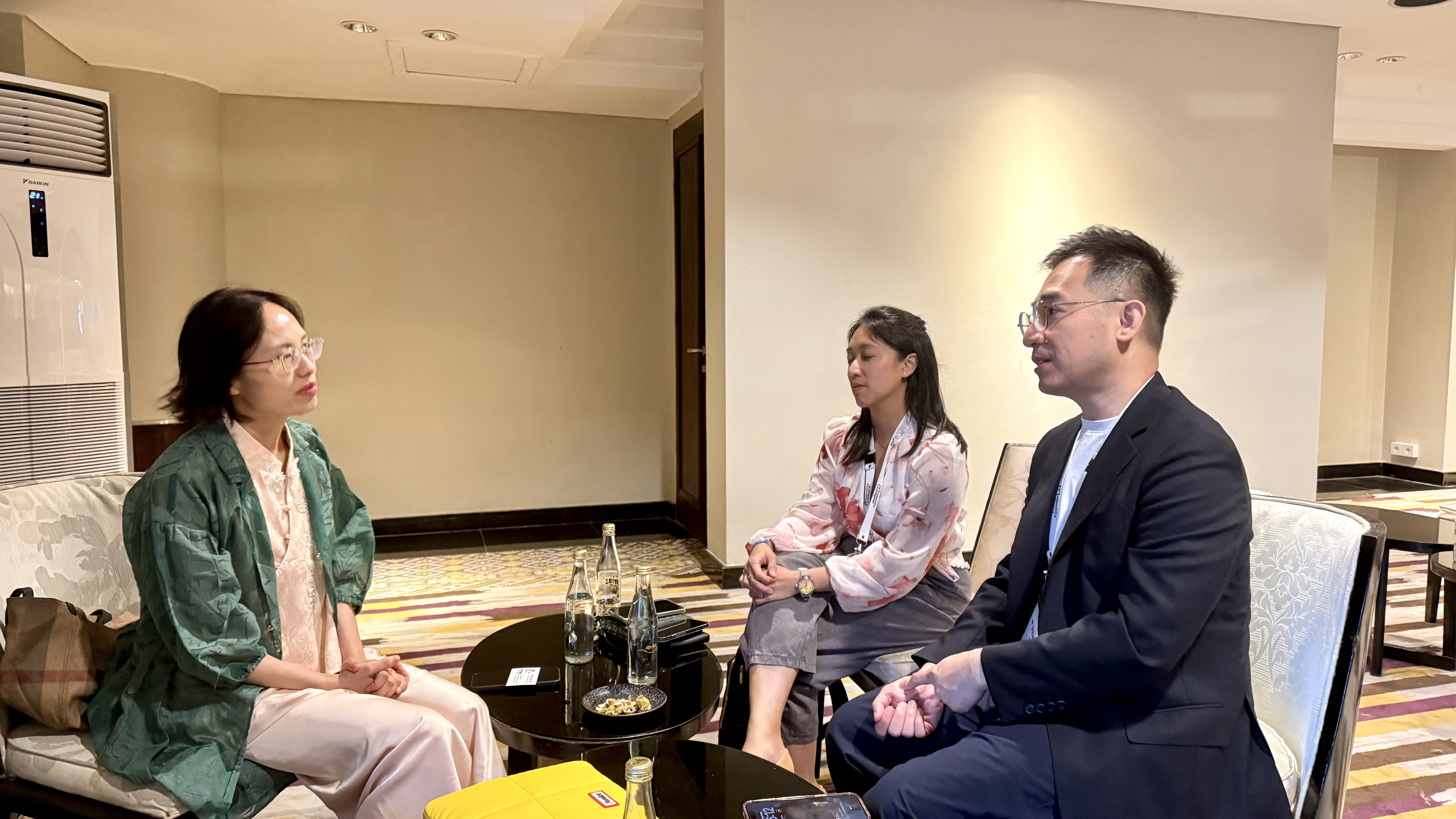
NiceNIC has officially joined the Trusted Notifier Network (TNN), becoming the network’s 17th partner in eight months. On November 16, 2026, NiceNIC signed a formal Memorandum of Understanding (MoU) with TNN, following discussions between NiceNIC CEO Helen He and TNN CEO Alban Kwan at ICANN87 in Bali, Indonesia.
The agreement advances a shared goal: make abuse reports more reliable and accountable without taking case decisions away from the registrar. Under TNN’s model, accredited Trusted Notifiers verify notices with affected victims, subject them to human review, and stand behind them through a contractual chain of indemnity. NiceNIC will receive these notices through a trusted channel integrated with its abuse-handling workflow. The technical teams are actively working on that integration, while NiceNIC retains independent authority over investigation and mitigation decisions.
TNN has independently confirmed the signed MoU and NiceNIC's status as its 17th partner in eight months in TNN's official partnership announcement.
NiceNIC is operated by NICENIC INTERNATIONAL GROUP CO., LIMITED, an ICANN-accredited registrar (IANA Registrar ID 3765) operating in the domain industry since 2006, with 20 years of experience. Its accreditation is independently verifiable in the IANA Registrar IDs directory. The cooperation builds on NiceNIC's existing abuse-review procedures, public reporting channels and monthly transparency reports.
From ICANN87 Discussions to a Signed MoU
The partnership follows a meeting at ICANN87 in Bali between Helen He and Alban Kwan, where the two organizations discussed a persistent challenge in domain governance: acting decisively against phishing, malware and other threats while avoiding unnecessary disruption to legitimate websites and businesses.
NiceNIC had already been publishing abuse-handling statistics and documenting how it evaluates evidence, applies domain restrictions and reviews remediation. The NiceNIC-TNN ICANN87 discussion report records those earlier discussions.
The November 16 MoU turns that dialogue into a formal partnership. As TNN’s 17th partner in eight months, NiceNIC joins a network that began in the Asia-Pacific region and is expanding cooperation among registries, registrars, trusted reporting organizations and other Internet intermediaries. Participation is free for intermediaries.
What Makes a TNN Notice Different?
Ordinary abuse reports may contain valuable evidence, but a registrar still has to determine whether the claim is substantiated, what harm is occurring and which action is appropriate. TNN is designed to improve the information and accountability behind a notice before it reaches the intermediary.
Its VINA standard brings together four requirements: Victim-verified, Fully indemnified, Non-automated and Accountable. Accredited Trusted Notifiers confirm the case with the affected victim or authorized party, apply human review, and are subject to ongoing accuracy and accreditation requirements. The framework is described in TNN's Trusted Notifier Model.
A distinctive feature is the contractual chain of indemnity:
Victim → Accredited Trusted Notifier → TNN → NiceNIC
The affected party stands behind the claim made on its behalf; the Trusted Notifier accepts responsibility to TNN; and TNN’s framework extends contractual protection to the intermediary acting in good faith on a qualifying notice. This is an accountability mechanism, not a promise that every submitted allegation will be correct or that every report requires domain suspension.
For NiceNIC, the benefit is a more structured basis for evaluating high-confidence reports, with identifiable responsibility behind the information received. For affected organizations, it provides a route for substantiated notices to reach the registrar through an established cooperation framework.
Trusted Intake, Independent Decisions
The MoU establishes how the two organizations intend to cooperate operationally. NiceNIC and TNN are now accelerating the technical connection so qualified notices can flow directly into NiceNIC’s existing abuse-handling systems, supporting efficient case intake and follow-up.
The signed agreement and the technical rollout are distinct milestones: the partnership is formalized; the integration is being implemented. NiceNIC will report operational progress based on completed deployment rather than treating the signed MoU itself as proof that every technical component is already live.
Crucially, TNN does not decide whether NiceNIC suspends a domain. NiceNIC retains discretion over case assessment, prioritization, appropriate mitigation and subsequent review, consistent with its Abuse Reporting & Handling Policy, applicable registry requirements and ICANN obligations.
An established business site affected by a compromised plugin, for example, may present a different technical situation from a domain deliberately registered for phishing. The evidence, seriousness of the threat, scope of the harm and practical mitigation options matter. Where immediate action is necessary, the registrar must still be able to act promptly; where the facts permit a targeted response, unnecessary collateral disruption should be considered.
Public Abuse Reporting and Registrant Review Remain in Place
Joining TNN adds a trusted reporting pathway; it does not replace NiceNIC's existing public channels. Individuals, brand owners and security researchers can continue reporting suspected abuse through NiceNIC's public abuse-reporting page or [email protected], without needing TNN accreditation or a NiceNIC account.
NiceNIC's independent obligations also remain unchanged. Under Section 3.18 of the ICANN Registrar Accreditation Agreement, registrars must receive, investigate and respond appropriately to abuse reports. Where there is actionable evidence of contractual DNS Abuse, they must promptly take appropriate mitigation action, considering the severity of the harm and potential collateral damage.
For gTLDs, ICANN’s contractual definition of DNS Abuse covers malware, botnets, phishing, pharming and spam when used to deliver the other specified threats. Other types of reports may be addressed under applicable policies, dispute procedures or law; they are not automatically classified as contractual DNS Abuse.
Domain holders affected by an abuse case can review available case information, provide technical explanations or remediation evidence, and request reconsideration through NiceNIC's published procedures. NiceNIC's Abuse Handling Manual describes the steps available to reporters and affected customers.
Building on Published Abuse-Handling Data
The TNN agreement adds an external cooperation framework to work NiceNIC has already made publicly visible. Its Domain Abuse Transparency Center publishes information on complaint handling, domain restrictions, remediation and review.
In the October 2026 gTLD reporting selection—filtered by complaint creation date from October 1-31 and reviewed in a November 2 dashboard snapshot—NiceNIC recorded 25,551 complaints involving 10,747 distinct domains. The same selection showed 6,129 paused domains and 129 recovered domains. Multiple complaints can concern the same domain; a complaint is not itself proof of confirmed abuse. The pause and recovery figures reflect the recorded status of domains in that selection, not necessarily actions completed during October. For the methodology and case categories, see the NiceNIC October 2026 Abuse Report.
Those figures describe the period before this MoU. They are a baseline for understanding NiceNIC’s existing transparency practices, not results attributable to the new TNN partnership. As the trusted-notice workflow comes online, the value of the cooperation can be assessed through real operational experience rather than assumptions made at the signing stage.
What This Means for Security Teams, Domain Owners and Resellers
For affected brands and security teams, a victim-verified, accountable notifier framework can improve the quality of information submitted for assessment. Reports are still evaluated according to the circumstances and the registrar’s responsibilities.
For legitimate domain holders, the principle remains that a trusted notice is evidence to assess, not an automatic order to suspend. Accurate identification of the threat, appropriately scoped action and a meaningful way to submit corrective evidence matter for business continuity.
For hosting providers and resellers, better visibility into abuse cases helps teams coordinate responses with customers. NiceNIC already provides a Get Domain Abuse Report API for authorized users to retrieve machine-readable domain-level complaint and hold status. This is an existing NiceNIC capability, separate from the TNN integration currently being implemented.
Together, these elements support a stronger operating model: credible notices reach the right team, action remains grounded in evidence, and affected registrants have a defined route to respond.
Frequently Asked Questions
Has NiceNIC officially signed an agreement with TNN?
Yes. NiceNIC signed a Memorandum of Understanding with the Trusted Notifier Network on November 16, 2026, becoming its 17th partner in eight months, as publicly confirmed in TNN's official partnership announcement. The agreement follows the leadership discussions at ICANN87 in Bali.
Are TNN notices already integrated with NiceNIC's systems?
Technical integration is actively underway. The signed MoU establishes the cooperation; the teams are working to connect the trusted-notice channel to NiceNIC’s existing case-handling workflow. The signing should not be confused with completion of every integration step.
Does a TNN notice automatically trigger clientHold or another suspension?
No. NiceNIC retains independent discretion over investigations and mitigation decisions. A TNN notice provides a qualified, accountable reporting pathway; the appropriate response depends on evidence, applicable rules and the circumstances of the case.
Can people still report abuse directly to NiceNIC?
Yes. The NiceNIC Abuse Reporting Channel remains open to individuals, organizations and researchers. TNN complements public reporting; it does not replace it.
A New Chapter in Accountable DNS Abuse Cooperation
The MoU marks a concrete step forward from the ICANN87 discussions. NiceNIC and TNN have moved from shared principles to a formal partnership, combining TNN’s victim-verified reporting and contractual accountability model with NiceNIC’s independent abuse review, transparency practices and established registrar responsibilities.
The immediate next step is technical integration. The longer-term objective is straightforward: help substantiated threats reach an accountable decision-maker while treating legitimate domain holders fairly.
Learn more about the Trusted Notifier Network, review NiceNIC's published policies in the NiceNIC Trust Center, or consult the Domain Abuse Transparency Center for current reporting and response information. Organizations evaluating registrars more broadly can also use NiceNIC's 12-Point Domain Registrar Selection Checklist.
Primary Sources
- TNN Official NiceNIC Partnership Announcement (LinkedIn) — TNN's public confirmation of the signed MoU, 17th-partner status, victim verification, indemnity model, and independent registrar discretion.
- IANA Registrar IDs — NiceNIC, ID 3765 — Independent verification of the accredited registrar's legal name and IANA number.
- Trusted Notifier Network — Official Website — Network purpose and participation.
- TNN — The Model and VINA Standard — Victim verification, accountability and contractual indemnity chain.
- TNN — FAQ for Intermediaries — Trusted intake, independent priority decisions and integration options.
- NiceNIC and TNN at ICANN87 — Earlier leadership meeting and cooperation discussions.
- ICANN Registrar Accreditation Agreement, Section 3.18 — Registrar abuse-reporting and DNS Abuse mitigation responsibilities.
- NiceNIC Abuse Reporting & Handling Policy — NiceNIC's handling and review procedures.
- NiceNIC October 2026 Abuse Report — Existing monthly transparency data.
- NiceNIC Get Domain Abuse Report API — Domain-level case status for authorized integrations.


