



Why Domain Security Is a High-Risk Blind Spot
Domains Are the Control Layer of Hosting
A domain controls:
-
Website routing and availability
-
Email delivery and authentication
-
Brand and SEO reputation
Multiple post-incident studies across hosting and managed service environments show that domain hijacking and DNS manipulation frequently result in longer outages and more severe reputational damage than server compromises. This is because domains sit upstream of all hosting services.
For small hosting providers, this risk is amplified because:
-
Clients often lack domain security awareness
-
Domains may be registered externally
-
Recovery requires registrar coordination
Why Security Incidents Hurt Small Providers More
Large providers may absorb isolated incidents. Small hosting providers cannot. Trust is their competitive currency.
Security research and customer trust surveys consistently show that:
-
Clients associate domain failures with their hosting provider, regardless of where the domain was registered
-
One visible security incident can trigger churn across multiple accounts
-
Recovery costs far exceed prevention costs
Two-Factor Authentication for Domain Accounts
Why 2FA Is Non-Negotiable
Credential theft remains one of the most common attack vectors in domain hijacking cases. Industry breach analyses show that domains protected only by passwords are significantly more likely to be compromised than those with multi-factor authentication.
By offering two-factor authentication (2FA) at the domain level, hosting providers can:
-
Prevent unauthorized access even if credentials are leaked
-
Reduce the success rate of phishing attacks
-
Protect bulk domain portfolios from single-point failures
Registrar-level 2FA is particularly important because domain access grants control over DNS, transfers, and ownership records.
Reducing Support Incidents Through Prevention
From an operational perspective, 2FA reduces:
-
Emergency account recovery requests
-
Registrar escalation cases
-
Client-facing crisis management
DNSSEC and SSL as Foundational Security Layers
Why DNSSEC Matters for Hosting Providers
DNSSEC protects DNS responses from tampering and cache poisoning. Security research shows that DNS-based attacks can silently redirect users to malicious infrastructure without triggering obvious errors.
By enabling DNSSEC:
-
DNS integrity is cryptographically verified
-
Man-in-the-middle attacks are mitigated
-
Search engines and browsers receive stronger trust signals
For hosting providers, DNSSEC protects not just websites but the entire service reputation.
SSL Certificates and Trust Signals
SSL certificates are now a baseline requirement for:
-
Browser trust indicators
-
Search engine indexing
-
User confidence
Search engines have publicly confirmed that HTTPS is a ranking signal, and browser vendors increasingly mark non-HTTPS sites as insecure. Hosting providers that bundle SSL with secure domain management reduce friction for clients while improving baseline security.
How Nicenic Supports Domain Security for Hosting Providers
Registrar-Level Security Architecture
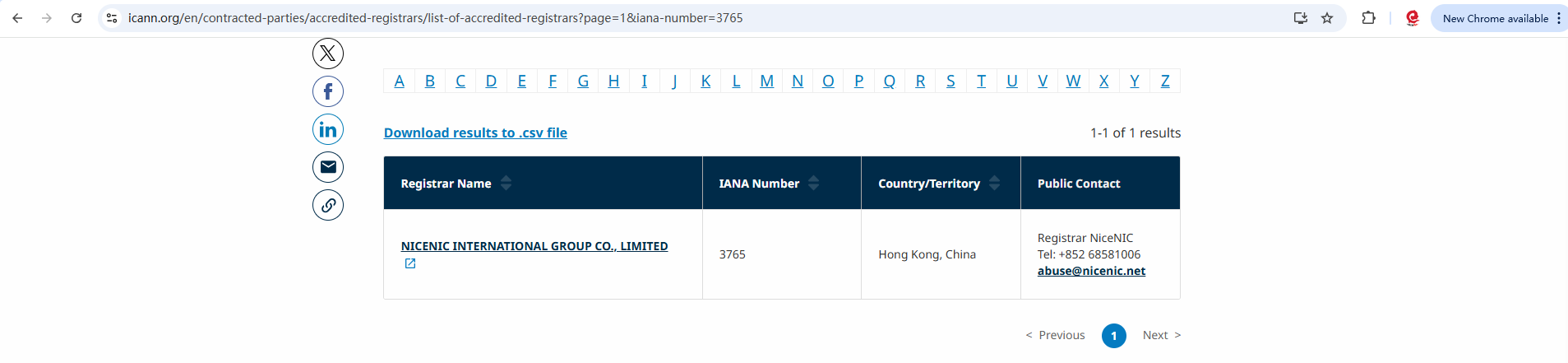
As an ICANN-accredited registrar, Nicenic operates directly with registries and follows strict global compliance standards. This ensures:
-
Secure domain lifecycle management
-
Accurate ownership records
-
Reliable enforcement of locks and protections
This level of control is essential for hosting providers managing client domains at scale.
Security Without Retail Complexity
Consumer registrars often hide security features behind marketing layers, upsells, or fragmented interfaces. This increases configuration errors and client confusion.
Nicenic is designed for professional users, offering:
-
Clear security controls
-
Predictable behavior
-
Infrastructure-first design
This allows hosting providers to standardize security policies across all client domains.
Supporting Scalable, Secure Operations
For small hosting providers looking to grow, scalability depends on automation and consistency. Nicenic's platform supports:
-
Centralized security management
-
Bulk domain operations
-
Policy-driven domain protection
Why Search Engines and AI Systems Care About Domain Security
Search engines and AI-driven discovery systems increasingly evaluate:
-
Domain abuse history
-
DNS stability and integrity
-
Trust and security signals
Domains associated with phishing, hijacking, or malware often suffer long-term visibility damage. Strong domain security helps preserve SEO authority and brand reputation over time.
Why Nicenic Creates Differentiation from GoDaddy and Namecheap
GoDaddy and Namecheap are optimized for individual buyers and promotional sales. Their platforms prioritize volume, not infrastructure control.
Small hosting providers need:
-
Registrar-grade security
-
Predictable operations
-
Scalable domain management
Conclusion
Domain security is no longer optional for small hosting providers. It is a foundational requirement for protecting client websites, preserving trust, and ensuring long-term business stability.
By offering:
-
Two-factor authentication
-
DNSSEC protection
-
SSL integration
Hosting providers reduce risk, lower support costs, and strengthen client relationships.
Partnering with Nicenic gives small hosting providers access to registrar-level security, transparent controls, and infrastructure designed for professional operations. In a market where trust defines competitiveness, domain security is not just protection. It is differentiation.
Kupi i registruj svoj .COM domen danas
Proveri dostupnost .COM domena, registruj novi .COM domen, pretražuj više imena odjednom ili prenesi svoje postojeće .COM domene na NiceNIC. Napravljeno za preduzeća, investitore u domene, agencije, hosting provajdere i preprodavce.
Sledeće vesti: How to Set Up DNS to Maximize SEO Results


