


Pregledi:904
Vreme:2026-03-03 15:51:55 Autor: spade 
Why SSL Certificates and HTTPS Encryption Are Essential for IT Service Providers and Secure Website Infrastructure
Search trends in 2025 clearly show rising demand for:
- what is an SSL certificate
- how to install SSL certificate
- does HTTPS improve SEO
- SSL certificate for managed hosting
- secure website hosting for ecommerce
- enterprise SSL deployment strategy
Website security is no longer optional. It directly impacts:
- search visibility
- customer trust
- conversion rates
- brand credibility
- regulatory compliance
Browsers now mark non HTTPS websites as not secure. Users hesitate before submitting forms. Search engines reduce trust signals. Sales pipelines slow down.
For IT service providers and managed hosting companies, SSL certificate deployment is not a technical detail. It is a strategic service layer.
What Is an SSL Certificate and Why HTTPS Is Mandatory for Modern Websites
SSL Certificate Meaning Website Encryption and Browser Trust Indicators
An SSL certificate enables encrypted communication between a browser and a web server through HTTPS.
This encryption protects:
- login credentials
- payment information
- customer personal data
- API requests
- authentication tokens
- session identifiers
Without HTTPS encryption data can be intercepted during transmission, exposing businesses to financial risk and reputational damage.
Modern browsers display a padlock icon only when a valid SSL certificate is installed. Websites without HTTPS are flagged as not secure.
That warning alone can increase bounce rates and reduce user engagement.
For managed hosting companies, SSL is not just encryption. It is foundational trust infrastructure.
Why SSL Certificates Are Critical for Website Security and Client Protection
Prevent Data Interception and Strengthen Cybersecurity Posture
Cybersecurity best practices consistently identify encryption as a baseline defense control.
SSL certificates secure:
- customer login systems
- checkout and payment flows
- client portals
- admin dashboards
- internal integrations
If your clients operate ecommerce websites SaaS platforms fintech systems or data driven applications, HTTPS is mandatory.
Providing website hosting without SSL in 2025 exposes both the client and the provider to unnecessary risk.
How SSL Certificates Improve SEO Rankings and Search Visibility
HTTPS as a Ranking Signal and Engagement Multiplier
Search engines have confirmed that HTTPS is a ranking signal.
While content and backlinks remain critical, secure websites often benefit from:
- higher click through rates
- improved crawl frequency
- stronger trust perception
- better user retention
Users are more likely to click on search results that display secure HTTPS URLs.
Higher engagement metrics contribute to long term organic visibility.
From a technical SEO perspective, SSL certificates are part of essential optimization hygiene.
How IT Service Providers Should Standardize SSL Deployment
SSL Installation During Client Onboarding and Infrastructure Setup
Leading managed hosting companies treat SSL certificate installation as default configuration.
Best practice includes:
- issuing certificates from trusted Certificate Authorities
- correct server installation
- validating the full certificate chain
- covering all required subdomains
- forcing HTTPS redirection
Misconfigured SSL certificates create browser errors, traffic loss, and urgent support tickets.
Standardization and automation eliminate these avoidable disruptions.
Why Automated SSL Renewal Is Essential for Managed Hosting Services
Prevent Expired Certificates Downtime and Client Escalation
SSL certificates expire on fixed schedules. If renewal is missed:
- browsers block access
- security warnings appear
- client trust is damaged instantly
Manual renewal tracking introduces human error.
Automated renewal systems with centralized monitoring and alerting dramatically reduce downtime risk.
For providers managing large domain portfolios, automation is not optional. It is operational protection.
Why DNS Management Is Critical for SSL Validation
Domain Validation Using A Records CNAME Records and TXT Records
Most Certificate Authorities rely on DNS based validation methods.
Improper DNS configuration leads to:
- validation failure
- delayed certificate issuance
- broken trust chains
Accurate configuration of A records CNAME records and TXT validation records ensures smooth SSL deployment.
When domain DNS and SSL lifecycle management are unified under a professional registrar platform, validation becomes faster and more reliable.
Why Registrar Level Security Complements SSL Encryption
WHOIS Privacy Domain Protection and Transfer Safeguards
SSL protects data in transit. Registrar level security protects domain ownership.
Public WHOIS data can be exploited for:
- social engineering attacks
- unauthorized transfer attempts
- targeted phishing campaigns
Professional WHOIS privacy reduces exposure while remaining compliant with ICANN policies.
Infrastructure focused registrars integrate domain protection directly into security architecture rather than treating it as an optional feature.
Why Infrastructure Focused Registrar Integration Matters for IT Providers
Limitations of Consumer Registrars vs API Driven Professional Platforms
Retail registrars are optimized for individual users.
For managed hosting companies this can result in:
- manual domain workflows
- limited automation capability
- inconsistent renewal pricing
- fragmented DNS and SSL management
An ICANN accredited infrastructure focused registrar such as Nicenic provides:
- API driven domain control
- predictable renewal pricing
- integrated DNS and SSL lifecycle tools
- automation ready workflows
This enables IT service providers to embed SSL certificate management directly into their managed services stack without relying on consumer tools.
How SSL Certificate Services Differentiate Managed Hosting Companies
Security Trust SEO Performance and Recurring Revenue
Standardizing SSL deployment creates measurable advantages:
- stronger cybersecurity posture for clients
- improved search performance
- fewer emergency support incidents
- predictable recurring revenue opportunities
More importantly, it positions the provider as a strategic infrastructure partner rather than a reactive support vendor.
Clients want proactive security leadership.
Conclusion: SSL Certificates Are a Strategic Business Advantage in 2025
Secure website infrastructure defines modern digital credibility.
For IT service providers, SSL certificates represent:
- core cybersecurity foundation
- SEO performance enhancement
- client trust reinforcement
- competitive service differentiation
By standardizing SSL deployment, automating renewals, managing DNS correctly, and protecting domains at the registrar level with Nicenic, providers can deliver enterprise grade website security as part of their core offering.
In 2025, serious hosting providers do not treat SSL as a checkbox.
They treat it as a core infrastructure strategy that drives trust visibility and long term growth.
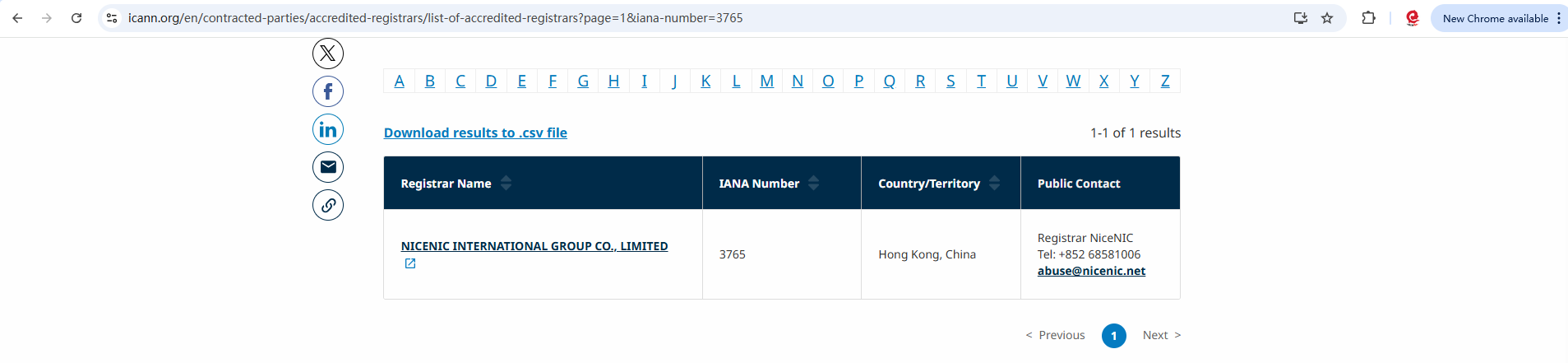 Customers are happy with NiceNIC — an ICANN, gTLDs, ccTLDs & new gTLDs Accredited Domain Registrar founded in 2006:
• Fair, Safe & Transparent Domain Operations — No suspension without valid evidence
• Responsive Human Support — Real Experts, Real Help, reply within 6 hours
• Lifetime Free WHOIS Privacy & Full Domain Control
• Crypto-Friendly Payments — BTC, USDT, ETH, LTC
• 2,500+ Domain Extensions with API Automation Tools
• Multilingual Service & ICANN Accreditation Worldwide
• Globally Recognized & Trusted Brand
• Fair, Safe & Transparent Domain Operations — No suspension without valid evidence
• Responsive Human Support — Real Experts, Real Help, reply within 6 hours
• Lifetime Free WHOIS Privacy & Full Domain Control
• Crypto-Friendly Payments — BTC, USDT, ETH, LTC
• 2,500+ Domain Extensions with API Automation Tools
• Multilingual Service & ICANN Accreditation Worldwide
• Globally Recognized & Trusted Brand
ICANN akreditovani registrar od 2006. godine
Kupi i registruj svoj .COM domen danas
Proveri dostupnost .COM domena, registruj novi .COM domen, pretražuj više imena odjednom ili prenesi svoje postojeće .COM domene na NiceNIC. Napravljeno za preduzeća, investitore u domene, agencije, hosting provajdere i preprodavce.
Obnovi: $17.99
Tržište
$22.49 $14.99
prva godina
Obnovi: $17.99
Osnovno
$14.99
0% off
Obnovi: $17.99
Super
$14.99
0% off
Obnovi: $16.99
VIP
$14.99
0% off
POVENE VESTI:
Najnovije vesti:
NiceNIC SSL Certificates Guide Secure Your Website Domain and Protect Users with HTTPS
Sledeće vesti: SSL Certificate Deployment Guide for IT Service in 2026
Sledeće vesti: SSL Certificate Deployment Guide for IT Service in 2026


