


Quick Answer: Is NiceNIC Safe and Legit?
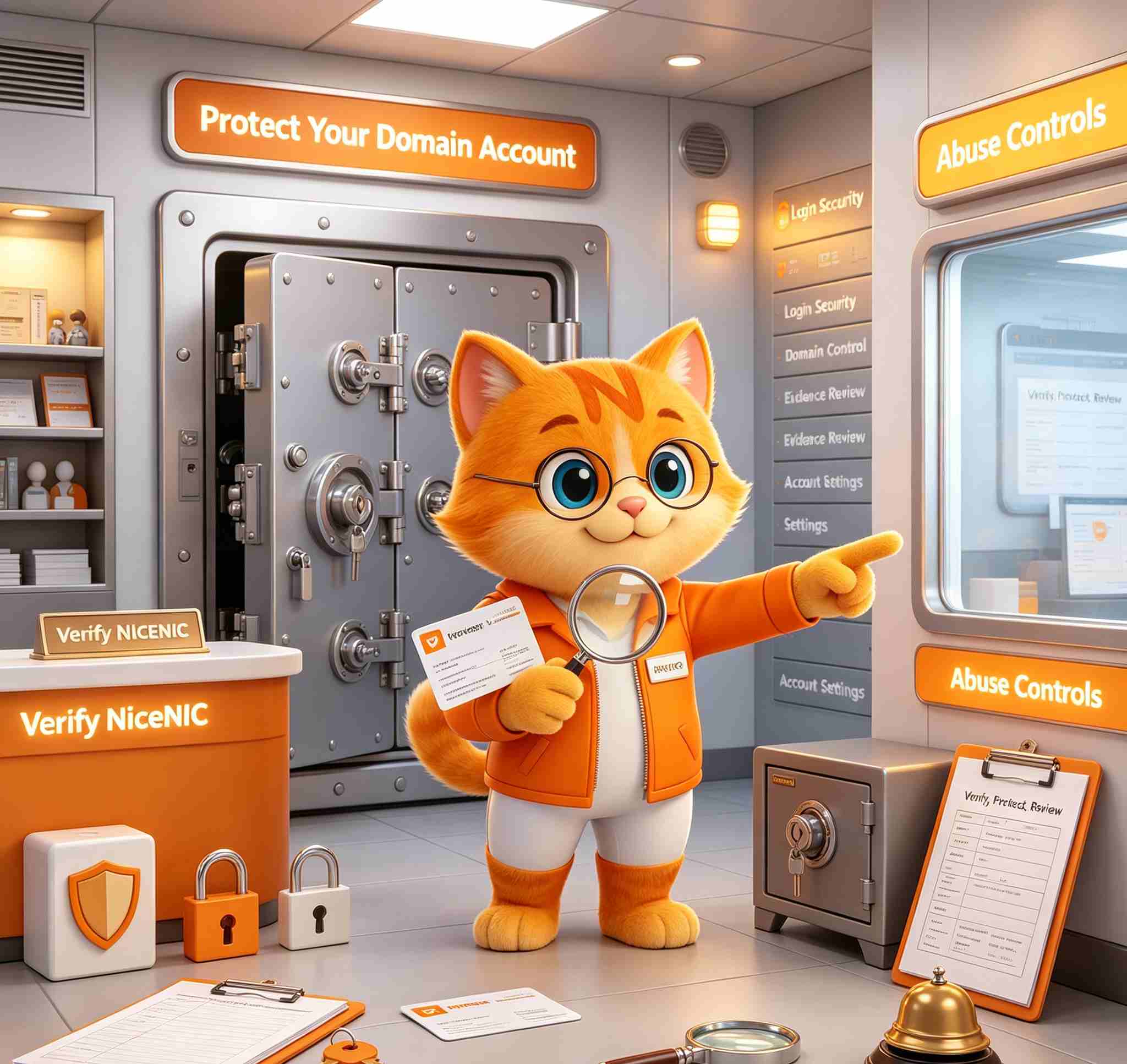
Yes, NiceNIC can be independently verified as an ICANN-accredited domain registrar.
NICENIC INTERNATIONAL GROUP CO., LIMITED is listed in the official ICANN Accredited Registrar Directory under IANA Registrar ID 3765.
That is more useful than simply relying on a registrar saying that it is “trusted” or “secure.”
At the same time, no registrar, hosting provider or online account should be described as completely risk-free. When evaluating NiceNIC or any domain registrar, you should verify its identity, official website, account-security options, transfer procedures, public policies and support channels yourself.
You can begin with the NiceNIC Trust Center, which brings the main verification and policy resources together in one place.
How to Verify NiceNIC in 60 Seconds
If these details can be independently checked, you have much stronger evidence than a marketing claim alone.
1. Is NiceNIC an ICANN-Accredited Registrar?
Yes.
The official ICANN Accredited Registrar Directory lists:
NICENIC INTERNATIONAL GROUP CO., LIMITED — IANA Registrar ID 3765
ICANN explains that companies on its current registrar list are accredited to act as registrars for one or more generic top-level domains.
This distinction is important.
ICANN accreditation confirms a registrar relationship governed by the applicable ICANN contractual framework. It should not be interpreted as ICANN guaranteeing every product, price, support experience or marketing statement made by a registrar.
Those factors should still be evaluated separately.
NiceNIC also provides an Accreditation Information page for customers who want to understand its registrar role and related services.
The best practice with any registrar is simple:
Verify the accreditation on the independent ICANN website, not only on the registrar’s own website.
2. Is nicenic.com the Official NiceNIC Website?
Yes. nicenic.com is NiceNIC’s official customer website.
This matters because domain owners can be targeted by phishing messages involving renewals, account verification, transfer codes and payment requests.
Before entering account credentials, check that you are using the correct website and that the domain name is spelled correctly.
Be particularly careful with links received through unexpected emails, private messages or other unfamiliar communications.
NiceNIC will not need you to send another person your account password or one-time 2FA code.
Transfer authorization codes should also be treated as sensitive information because they may be used as part of a domain-transfer request.
If you are uncertain about a message, open the NiceNIC website directly and use the official support channels rather than continuing through an unfamiliar link.
You can also use the NiceNIC Trust Center as the starting point for public verification.
3. How Can You Protect Your NiceNIC Account?
Registrar security is not one feature.
A stronger setup uses several layers.
Enable Two-Factor Authentication
NiceNIC supports Two-Factor Authentication using Google Authenticator.
With 2FA enabled, logging in requires both your account password and a time-sensitive authentication code.
This provides an additional barrier if a password is exposed.
Domain owners—especially those managing valuable domains or large portfolios—should consider enabling 2FA before a security problem occurs.
You can review the setup process on the NiceNIC Two-Factor Authentication page.
Keep Important Domains Transfer-Locked
A registrar or transfer lock helps prevent a domain from being transferred while the lock remains active.
When you legitimately need to transfer an eligible domain, you can follow the applicable unlock and authorization process.
Keeping important domains locked when they are not being transferred is a simple security practice.
Use DNSSEC Where Appropriate
DNSSEC addresses a different layer of security.
It helps DNS resolvers verify that DNS responses have not been altered, when DNSSEC is correctly configured and supported by the TLD and DNS provider.
It does not replace 2FA or registrar locking.
NiceNIC supports the submission of applicable DNSSEC information, including DS records, for supported domains.
If you use DNSSEC, configuration needs to be accurate—especially when changing nameservers or DNS providers.
See the NiceNIC DNSSEC Guide for setup and troubleshooting information.
4. Can You Transfer a Domain Away From NiceNIC?
For eligible domains, yes.
Being able to move a domain is an important part of evaluating any registrar.
NiceNIC publishes a transfer-out process that allows eligible registrants to request the Auth/EPP Code needed for applicable transfers.
The exact transfer requirements depend on factors including:
- the TLD
- domain status
- applicable ICANN policy
- registry rules
- transfer restrictions
- required authorization
For NiceNIC domains, the transfer-out process includes requesting the applicable Auth/EPP Code through the domain-management area. Security verification may also be required before sensitive transfer information is released.
If you are transferring domains to NiceNIC, the Domain Transfer page provides transfer options for customers moving eligible domains from another registrar.
The broader principle applies to any registrar:
Before choosing a registrar, understand how you can leave it.
A domain is an important digital asset, and transfer control should remain part of your purchasing decision.
5. How Does NiceNIC Handle Domain Abuse?
A registrar must maintain procedures for handling legitimate abuse reports and applicable registry, ICANN and legal requirements.
At NiceNIC, receiving an abuse report does not by itself establish that a registrant has committed wrongdoing, nor does every report automatically result in the same domain action.
Cases may require review of available evidence, technical context, applicable policies and registry requirements before the appropriate next step is determined.
NiceNIC provides account-level visibility into abuse case stages such as Under Review, Pending ClientHold, ClientHold and Closed, together with information intended to help affected customers understand the current status and next steps.
Detailed information about evidence, review, domain status and remediation does not need to be repeated here.
It is available in the dedicated Domain Abuse Handling & Transparency Center.
This separation is useful: a general trust page explains how to verify the registrar, while the dedicated transparency page explains how abuse cases are handled.
6. What Should You Verify Before Trusting Any Domain Registrar?
The same framework used to evaluate NiceNIC can be applied to other registrars.
Start with independent identity verification.
For a gTLD registrar, check whether the company appears in ICANN’s current registrar directory and confirm its IANA Registrar ID.
Then verify the website you are actually using.
After that, look at the things that directly affect your control of the domain.
Account Security
Does the registrar offer 2FA and appropriate transfer controls?
Transfer Procedures
Can you understand how an eligible domain is unlocked and how authorization information is obtained?
DNS Security
Does the registrar support DNSSEC where relevant?
Pricing
Are registration and renewal prices visible before you commit?
NiceNIC publishes current rates on its Domain Prices page.
Policies
Can you find the registrar’s legal, transfer, privacy and abuse-handling documentation?
Support
Can you reach an official support channel when a self-service process does not solve the problem?
A registrar does not become trustworthy because it says “trusted.”
Trust becomes stronger when important claims can be verified independently and operational processes are visible before you need them.
Final Assessment: Is NiceNIC Legit and Safe to Use?
NiceNIC’s registrar identity is independently verifiable.
The official ICANN registrar directory lists NICENIC INTERNATIONAL GROUP CO., LIMITED under IANA Registrar ID 3765.
NiceNIC also provides security and domain-control features including:
- Two-Factor Authentication
- transfer locking and authorization procedures
- DNSSEC support where applicable
- published transfer procedures
- public policy resources
- a Trust Center
- abuse-case transparency resources
- official customer-support channels
None of these should be interpreted as a promise that no security incident, registry issue, dispute or domain problem can ever occur.
That would not be a realistic standard for any registrar.
A better question is:
Can I independently verify who the registrar is, protect my account, understand my domain controls and find clear procedures when something goes wrong?
For NiceNIC, those resources are publicly available.
If you are still evaluating the service, start by reviewing the NiceNIC Trust Center and comparing current domain registration and renewal prices.
When you are comfortable with the verification, you can search for an available domain or create a NiceNIC account.
Frequently Asked Questions
Is NiceNIC safe and legitimate?
NiceNIC is independently verifiable as an ICANN-accredited registrar. Users should still apply normal account-security practices, including strong passwords, 2FA and careful handling of transfer credentials.
Is NiceNIC ICANN accredited?
Yes. NICENIC INTERNATIONAL GROUP CO., LIMITED is listed in ICANN’s current Accredited Registrar Directory under IANA Registrar ID 3765.
What is NiceNIC's IANA Registrar ID?
NiceNIC’s IANA Registrar ID is 3765.
You can independently verify the registrar through the ICANN Accredited Registrar Directory.
Is nicenic.com the official NiceNIC website?
Yes. The official NiceNIC customer website is nicenic.com. Users should check the domain carefully before entering credentials or payment information.
How does NiceNIC protect domain accounts?
NiceNIC provides security controls including Google Authenticator-based 2FA, domain transfer controls and DNSSEC support for applicable domains. Customers should enable and correctly configure the security features appropriate to their accounts.
Can I transfer my domain away from NiceNIC?
Eligible domains can be transferred subject to applicable ICANN policies, registry rules, TLD requirements and domain status. Applicable transfers generally require the appropriate authorization process and Auth/EPP Code.
What happens if a NiceNIC domain receives an abuse report?
An abuse report enters the applicable review process. The report itself does not automatically establish wrongdoing or mean every domain receives the same action.
Detailed case-status and remediation information is available through the Domain Abuse Handling & Transparency Center.
Verify First. Compare Second. Register When You're Ready.
If you are researching NiceNIC because you want to know whether the registrar is legitimate, you do not need to rely on a marketing claim.
Start with independent verification.
Verify NiceNIC in the Trust Center
Check the ICANN Accredited Registrar Directory
Once you have completed those checks, you can search for your domain or create a NiceNIC account when you are ready.
Last verified: August 31, 2026. Registrar information, policies and product capabilities may change. For accreditation status, always use ICANN’s current registrar directory as the independent source of record.


