


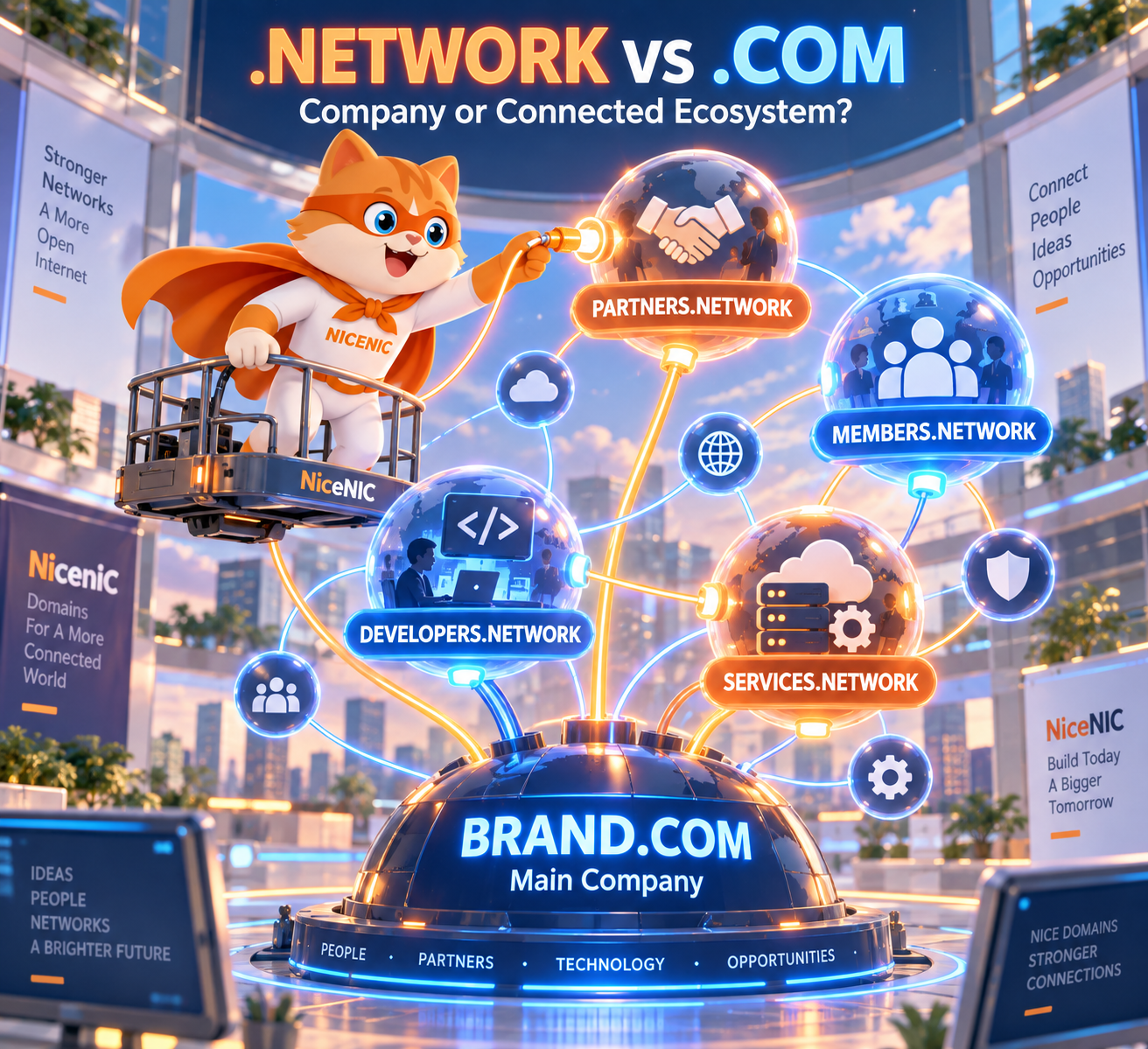
A network can mean very different things.
For an IT company, it may mean infrastructure, connectivity, systems, or managed services.
For a professional organization, it may mean members, partners, experts, or businesses connected around a common purpose.
For a platform, it may mean an ecosystem of customers, developers, resellers, suppliers, or service providers.
That makes .NETWORK and .COM useful for different reasons.
Choose .COM when you want one broad, flexible domain that can represent the entire company as its products and business model evolve.
Choose .NETWORK when connection, membership, infrastructure, partnerships, or an ecosystem is genuinely central to the project and the extension helps explain that role.
For some organizations, both can have distinct jobs:
company.com → main corporate website
partners.network → partner ecosystem
members.network → membership community
developer.network → developer or technical community
The stronger choice depends on what is actually being connected and whether “network” will remain relevant to the project over time.
Direct Answer: .NETWORK vs .COM
Choose .COM for a broad company identity.
Choose .NETWORK when the website itself represents a network of people, organizations, services, systems, or partners.
.NETWORK can be a natural fit for:
- IT service providers
- Managed service providers
- Telecom-related projects
- Professional networks
- Membership organizations
- Partner ecosystems
- Reseller communities
- Developer communities
- Industry networks
- Creator networks
- SaaS ecosystems
- Infrastructure resources
- Associations
- Collaborative platforms
- Service directories
The central question is:
Is the network itself part of what users are joining, using, or interacting with?
If yes, .NETWORK can add useful context.
If the domain needs to represent the entire company regardless of how its products or communities change, .COM may provide more flexibility.
Check Your Name in .NETWORK and .COM
Before comparing the extensions in theory, compare the actual names you want.
Check .NETWORK Domain Availability
Check .COM Domain Availability
At publication, NiceNIC currently shows:
.NETWORK Market Account: $7.99 first year, $69.99 renewal
.COM Market Account: $14.99 first year, $17.99 renewal
Account level, registry pricing, Premium classification, transfer pricing, and promotions can change.
Always confirm the current domain registration and renewal prices before completing an order.
The current .NETWORK first-year price is lower.
Its renewal price is substantially higher than .COM.
That makes the intended lifetime of the project an important part of the decision.
What Is the Main Difference Between .NETWORK and .COM?
The main difference is connection-focused positioning versus broad company identity.
.COM is neutral.
A company using:
northstar.com
could operate as:
- An IT provider
- A software company
- A consultancy
- A marketplace
- A telecom business
- A professional association
- A media company
- A hosting provider
without the extension defining how the organization works.
.NETWORK adds a more specific idea.
A domain such as:
northstar.network
may suggest that the project connects:
- People
- Businesses
- Systems
- Members
- Partners
- Services
- Infrastructure
- Communities
That can be useful when connection is part of the actual value proposition.
It can be less useful when the company later expands into products or services where the concept of a network is no longer central.
"Network" Can Mean People or Technology
This is one of the most important strengths of .NETWORK.
The word works in at least two broad contexts.
Technical network
Examples include:
- IT infrastructure
- Connectivity
- Managed networks
- Monitoring
- Telecom
- Systems integration
- Network operations
- Hosting infrastructure
- Developer infrastructure
Human or business network
Examples include:
- Professional communities
- Industry associations
- Partner ecosystems
- Member organizations
- Creator groups
- Alumni networks
- Business communities
- Reseller networks
That dual meaning gives .NETWORK a wider range of use cases than a purely technical term.
But the domain should make the intended meaning clear through the rest of the name and the website itself.
When Should You Choose .COM?
Choose .COM when:
- You are building the permanent corporate website.
- Your company may expand into unrelated products or industries.
- The network is only one part of the business.
- You want one central brand identity.
- Customers, investors, partners, and employees all use the same site.
- The business may later move beyond infrastructure or community services.
- You expect to keep the domain for many years.
-
A suitable matching
.COMis available.
Imagine an IT services company.
Today it may offer:
- Network management
- Connectivity
- Monitoring
- Managed infrastructure
Later it may add:
- Cybersecurity
- Software
- Consulting
- Training
- Hardware
- Cloud services
- Data products
A .COM domain can continue representing the whole organization without tying the company identity to one service category.
If this matches your plans, check whether your preferred .COM domain is available.
When Does .NETWORK Make More Sense?
.NETWORK becomes more relevant when connection itself is central to the project.
Strong use cases can include:
- IT networks
- Professional networks
- Business networks
- Partner ecosystems
- Membership communities
- Telecom projects
- Industry associations
- Developer communities
- Reseller programs
- Creator networks
- Service networks
- Alumni groups
- Supplier networks
- Collaborative platforms
- Infrastructure resources
Illustrative naming structures might include:
partners.network
developers.network
members.network
business.network
creators.network
services.network
security.network
global.network
These examples illustrate naming structures only.
Actual availability and Premium pricing must be checked before registration.
If that naming structure fits your project, check whether your preferred .NETWORK domain is available.
.NETWORK Can Work Especially Well for Partner Ecosystems
Partner programs often become larger than a single landing page.
They may include:
- Partner directory
- Training
- Resources
- Certification information
- Marketing materials
- Deal registration
- Events
- Community discussions
- Support
- Partner login
A company might use:
company.com → main business
and:
partners.network → partner ecosystem
This gives the partner program a distinct identity while keeping the company website broad.
For organizations with distributors, resellers, integrators, affiliates, consultants, or technology partners, the idea of a network can fit naturally.
Is .NETWORK Good for a Professional Network?
It can be one of the clearest use cases.
A professional network may connect:
- Consultants
- Engineers
- Designers
- Developers
- Founders
- Investors
- Researchers
- Industry specialists
- Local businesses
- Service providers
The site may include:
- Member profiles
- Directories
- Discussions
- Events
- Job opportunities
- Knowledge sharing
- Introductions
- Resources
A domain such as:
founders.network
could naturally communicate a network of founders.
The extension describes the structure of the community.
It does not tell users how large, active, selective, or valuable that community actually is.
Those qualities depend on the project itself.
Does .NETWORK Prove That a Community Is Large?
No.
The word “network” describes a concept.
It does not certify:
- Number of members
- Geographic reach
- Activity level
- Industry influence
- Partner count
- Membership quality
- Community engagement
A newly launched community can use .NETWORK.
A large international organization can also use .NETWORK.
If scale matters to users, show accurate information separately.
For example:
- Member count
- Countries represented
- Active chapters
- Partner organizations
- Event history
The domain communicates positioning.
The website provides the evidence.
Is .NETWORK Good for Membership Organizations?
Yes, particularly when the value of the project comes from connecting members.
Possible examples include:
- Trade groups
- Alumni communities
- Founder groups
- Professional communities
- Local business groups
- Industry associations
- Specialist communities
A membership project might use:
organization.com → organization
and:
members.network → member environment
The .NETWORK domain can help distinguish the community experience from the public corporate website.
A smaller organization may prefer to keep everything under one .COM.
There is no requirement to create a separate domain.
Use one when the separation improves the user experience or brand architecture.
Is .NETWORK Good for IT Services?
It can be highly relevant when networking technology is central to the service.
Potential projects include:
- Managed network services
- Network monitoring
- Connectivity services
- Network consulting
- Systems integration
- Infrastructure management
- Network documentation
- Network operations
For example:
company.com → IT company
managed.network → managed network service
or:
company.com → parent company
monitor.network → monitoring product
This allows the technical service to have a category-specific identity without limiting the parent company.
Does .NETWORK Mean a Website Operates a Real Computer Network?
Not necessarily.
The domain is a naming choice.
Owning:
example.network
does not by itself prove that the operator:
- Runs physical networking infrastructure
- Owns routers or data centers
- Operates a telecom network
- Provides internet connectivity
- Runs autonomous systems
- Maintains network operations centers
The website could represent:
- A community
- A directory
- A professional group
- A software platform
- A content project
If technical infrastructure is part of the service, describe it accurately on the website.
The extension does not verify the underlying architecture.
Is .NETWORK Good for MSPs?
Managed service providers often work across networking, infrastructure, security, cloud, and support.
A .NETWORK domain can be useful for a specific network-focused service.
For example:
msp.com → full company
managed.network → network management
or:
msp.com → company
support.network → service community or support ecosystem
An MSP that expects to remain strongly focused on networking may also consider .NETWORK for its main identity.
A provider with a wider service portfolio may value .COM flexibility.
What About Telecom Companies?
Telecom and connectivity projects can also fit .NETWORK.
Potential uses include:
- Connectivity services
- Business communications
- Network services
- Telecom communities
- Infrastructure portals
- Partner networks
However, a .NETWORK domain does not prove that an operator holds a telecommunications license or regulatory authorization.
If licensing matters in a market, the organization should provide the required legal and regulatory information separately.
The domain describes the business concept.
Regulatory status comes from the relevant authority.
.NETWORK Can Work for Developer Communities
Developer ecosystems often connect:
- Developers
- APIs
- Documentation
- Partners
- Integrations
- Open-source contributors
- Support communities
A technology company might use:
company.com → corporate site
developers.network → developer community
or:
platform.com → product
builder.network → ecosystem of developers and partners
The domain can work especially well when the project is more than documentation and actually involves people, integrations, or collaboration.
For documentation alone, another structure such as:
docs.company.com
may be simpler.
Is .NETWORK Good for Reseller Programs?
Potentially.
A reseller network may include:
- Hosting resellers
- Domain resellers
- Software partners
- Agencies
- Consultants
- Distributors
- Channel partners
A company could use:
company.com → public website
reseller.network → reseller program
That program might contain:
- Partner resources
- Pricing information
- Onboarding
- Documentation
- Sales materials
- Training
- Community
- Support
The extension can reinforce the idea that participants are part of a wider ecosystem.
.NETWORK Can Work for Supplier and Vendor Ecosystems
Large businesses often interact with many suppliers, vendors, contractors, and service providers.
A dedicated network-oriented site could potentially support:
- Vendor onboarding
- Resource sharing
- Partner directories
- Procurement information
- Training
- Announcements
- Collaboration
For example:
company.com → corporate website
supply.network → supplier ecosystem
Whether a separate domain is appropriate depends on the organization’s branding, security architecture, and operational requirements.
A domain should not be used to obscure who operates a portal.
Clear company identification is especially important for supplier and partner systems.
Is .NETWORK Good for Creator Communities?
Yes, when creators are connected around a shared platform or audience.
Potential projects include:
- Artist networks
- Creator communities
- Podcast networks
- Video creators
- Writers
- Designers
- Influencers
- Independent media producers
A creator platform might use:
company.com → company
creators.network → creator community
The value of the domain comes from the idea of participation and connection.
It does not guarantee that the community has active creators or a large audience.
Podcast Network vs Podcast Company
Podcasting provides a useful example.
A media company may own multiple shows.
Its website could be:
media.com
A dedicated network of shows could use:
podcast.network
if the name fits the project.
This can communicate that multiple programs are connected under one umbrella.
However, a company producing only one podcast may not gain much from emphasizing the concept of a network.
Use the extension when the structure of the project supports the name.
Is .NETWORK Good for Associations?
It can be.
Associations often exist specifically to connect members.
Possible examples include:
- Trade associations
- Professional groups
- Industry alliances
- Business communities
- Regional organizations
A .NETWORK domain may work well when the association wants to emphasize connection and participation.
Other extensions such as .ORG or .COM can also fit depending on the organization.
There is no universal rule that associations should use one specific TLD.
Choose based on the full name and role of the website.
Does .NETWORK Mean the Site Is a Social Network?
No.
A social network is only one possible use case.
.NETWORK can also represent:
- Technical networks
- Business communities
- Partner ecosystems
- Associations
- Infrastructure services
- Directories
- Professional groups
Do not assume that users will automatically interpret every .NETWORK website as a social-media platform.
The first part of the domain and the website content should make the purpose clear.
.NETWORK vs .NET: Are They the Same?
No.
.NETWORK and .NET are separate top-level domains.
They should not be treated as interchangeable addresses.
For example:
example.network
and:
example.net
are two different domain registrations.
.NETWORK spells out the word directly and can create an explicit network-related name.
.NET is shorter and has a much longer history of general internet use.
If both are relevant to your brand, compare the complete domains rather than assuming one is simply a longer version of the other.
Also check:
- Availability
- Renewal pricing
- Audience familiarity
- Brand fit
- Long-term use
Should You Register .NETWORK If the .COM Is Taken?
Not automatically.
An available alternative extension can be useful.
But availability alone should not decide the brand.
Before registering:
brand.network
when:
brand.com
is already owned, review:
-
Who owns the matching
.COM - Whether it is an active business
- Relevant trademarks
- Similar products or services
- Possible customer confusion
-
Whether the
.NETWORKmeaning genuinely fits your project
A technically available domain may still be a poor choice if users are likely to confuse your project with an established brand.
Choose a name that can stand clearly on its own.
Is a Short .NETWORK Better Than a Long .COM?
Sometimes.
Compare:
partners.network
with:
globalbusinesspartnernetwork.com
The .NETWORK version is significantly shorter.
Now compare:
partners.network
with:
partners.com
If both were available at suitable prices, the right choice would depend on the project.
A broad business may value .COM flexibility.
A membership or partner ecosystem may find .NETWORK more descriptive.
Compare complete domains based on:
- Length
- Meaning
- Pronunciation
- Audience familiarity
- Brand positioning
- Registration price
- Renewal price
- Premium status
- Expected ownership period
Shorter is useful only when the shorter name is also clear.
Can .NETWORK Be Used for Blockchain or Web3 Projects?
It can, particularly when the concept of a distributed network is genuinely central to the project.
Potential projects include:
- Protocol communities
- Node ecosystems
- Developer groups
- Validator communities
- Infrastructure platforms
However, the extension itself does not prove that a project is:
- Decentralized
- Blockchain-based
- Open source
- Permissionless
- Secure
- Community governed
Those characteristics come from the actual technology and governance model.
If decentralization is an important product claim, explain how the system works rather than relying on the domain name.
Does .NETWORK Prove Decentralization?
No.
This distinction is particularly important for Web3 and blockchain projects.
A conventional centralized website can use .NETWORK.
A decentralized protocol can use .NETWORK.
The extension does not determine the architecture.
If the project claims to be decentralized, users may reasonably want information about:
- Governance
- Node operation
- Validator distribution
- Code
- Infrastructure
- Ownership
- Control
The domain can support naming.
Technical transparency supports the claim.
Can .NETWORK Be Used for an Internal Company Portal?
Technically, a publicly registered domain can be used as part of an organization’s portal architecture.
For example, a company may consider structures such as:
partners.brand.network
or:
members.brand.network
depending on its DNS and application setup.
However, sensitive internal systems should not rely on the domain name itself as a security mechanism.
Access control should be handled through:
- Authentication
- Authorization
- 2FA
- Network security
- Application security
- Identity management
A professional-looking domain does not make an internal system private.
Does .NETWORK Make a Site More Secure?
No.
A domain extension cannot guarantee website security.
.NETWORK does not automatically provide:
- HTTPS
- Encryption
- Firewall protection
- DDoS protection
- Secure authentication
- Network monitoring
- Backups
Those capabilities must be implemented separately.
The same applies to .COM.
Choose the domain for naming and positioning.
Choose security controls based on the actual technical requirements.
Does .NETWORK Prove Technical Expertise?
No.
The domain can communicate a technical theme.
It does not certify:
- Engineering skill
- Professional qualifications
- Vendor certifications
- Service quality
- Infrastructure ownership
An IT company using .NETWORK should still support its claims with appropriate information.
That might include:
- Service descriptions
- Case studies
- Technical documentation
- Certifications where relevant
- Customer support information
- Company identity
The extension sets the context.
The business provides the substance.
Can .NETWORK Support Subdomains?
Yes.
After registering a domain such as:
brand.network
the owner can create subdomains through DNS configuration.
Examples might include:
members.brand.network
partners.brand.network
docs.brand.network
status.brand.network
api.brand.network
These are not separate top-level domain registrations.
They are subdomains under the registered brand.network.
This can be useful for an ecosystem with several distinct functions.
Whether this architecture is appropriate depends on branding, security, authentication, DNS management, and long-term maintenance.
Could .NETWORK Work as an Ecosystem Domain?
Yes.
This may be one of the strongest use cases.
Imagine a software company with:
company.com → corporate site
and:
ecosystem.network → connected community
The .NETWORK project could bring together:
- Customers
- Developers
- Integrators
- Resellers
- Technology partners
- Consultants
This is different from simply using .NETWORK because it sounds technical.
The project actually functions as a network.
That alignment between the name and the user experience is what makes the extension useful.
Think About Login and Account Domains Carefully
Some community and partner networks require user accounts.
A login could appear on:
members.network
or:
login.brand.network
depending on the project architecture.
Before choosing a login domain, consider:
- Customer familiarity
- Authentication
- HTTPS
- SSO
- Cookie scope
- Phishing risk
- Certificate management
- Long-term stability
The domain extension itself does not make authentication more secure.
Users should be able to clearly recognize who operates the service.
Think About Business Email
A .NETWORK domain can also be used for email.
Examples include:
or:
A partner or member program may find a separate email identity useful.
A company may also prefer keeping all formal communication under its main .COM.
Consider:
- Customer recognition
- Partner onboarding
- Support workflows
- Long-term maintenance
- Brand consistency
There is no requirement to use the website domain for every email function.
Does .NETWORK Improve Email Deliverability?
The extension itself should not be treated as an email-deliverability advantage.
Email performance can depend on:
- SPF
- DKIM
- DMARC
- Sending reputation
- IP reputation
- Message content
- Sending behavior
- Recipient engagement
- Mail-provider filtering
Using .NETWORK does not automatically improve delivery.
Using .COM does not guarantee delivery.
Configure the email domain correctly and follow responsible sending practices.
Does .NETWORK Rank Better for Networking Searches?
No automatic Google ranking advantage comes from using .NETWORK.
Google states that top-level domains do not determine a site’s performance in Google Search.
That means .NETWORK does not automatically rank higher for searches involving:
- network
- IT network
- professional network
- business network
- partner network
- developer network
.COM also does not receive guaranteed rankings because it is .COM.
Search performance depends much more on:
- Helpful original content
- Query relevance
- Technical crawlability
- Website structure
- Internal linking
- Relevant external links
- Page performance
- Mobile usability
- Brand signals
- User experience
Choose .NETWORK because it makes the project easier to understand.
Build SEO through the quality of the website.
Does Having "Network" in the Extension Help Google Understand the Site?
A descriptive domain can help users understand what the project is about.
It should not be treated as a ranking mechanism.
For example:
developers.network
clearly suggests some kind of developer network to a person.
That does not guarantee better rankings for “developer network.”
The same applies to:
business.network
partners.network
security.network
The domain supports communication.
Search performance still depends on the pages and overall website.
Does .NETWORK Automatically Improve Credibility?
No.
A .NETWORK domain can communicate a connection-oriented or technical identity.
Credibility depends on the organization behind the site.
Useful trust signals may include:
- Clear ownership
- Company information
- Contact details
- Member information
- Professional biographies
- Policies
- Technical documentation
- Relevant certifications
- Secure website access
The extension can introduce the project.
The organization builds credibility through what it actually provides.
Does .NETWORK Mean Better Connectivity?
No.
This can sound obvious, but it matters for technical marketing.
Using .NETWORK does not improve:
- Latency
- Bandwidth
- Routing
- Uptime
- Network coverage
- Internet speed
- Availability
Those are characteristics of actual infrastructure and service design.
A connectivity company can use .NETWORK as a relevant brand.
Performance claims should still be supported separately.
First-Year Price vs Long-Term Cost
At publication, NiceNIC currently shows:
.NETWORK: $7.99 first year, $69.99 renewal
.COM: $14.99 first year, $17.99 renewal
The current .NETWORK first-year price is lower.
Its renewal price is substantially higher.
Before registering, compare:
- First-year registration
- Renewal price
- Transfer price
- Premium-domain status
- Expected ownership period
Review the latest figures on the NiceNIC Domain Prices page before ordering.
A temporary partner campaign and a professional network intended to operate for ten years have very different cost profiles.
For a Permanent Network, Look Beyond the First Year
A low first-year registration price can make launching a new project easier.
A successful professional, partner, developer, or service network may keep the same domain for many years.
Before registering, ask:
- Is this a permanent network or a temporary initiative?
- Will the concept of a network remain central?
- Is this the company domain or a dedicated ecosystem?
- What is the renewal price?
-
Is a suitable
.COMavailable? - Would owning both names serve a useful purpose?
These questions provide a more realistic long-term comparison than the initial price alone.
What About Premium .NETWORK Domains?
Some short, generic, or desirable .NETWORK names may have Premium pricing.
The exact name you want may therefore cost differently from the standard TLD price.
Before building a project around a domain:
- Search the exact name.
- Confirm availability.
- Check whether Premium pricing applies.
- Review the registration price.
- Review the applicable renewal price.
Do this before committing to:
- Branding
- Advertising
- Member onboarding
- Partner materials
- Software interfaces
- Documentation
- Printed material
The same principle applies to .COM and other extensions.
Should You Register Both .NETWORK and .COM?
For an important brand, owning both may make sense when both names are available and the cost fits the plan.
One structure could be:
brand.com → company
brand.network → network project
Another:
company.com → parent organization
partners.network → partner ecosystem
Another:
company.com → business
developers.network → developer community
Another:
organization.com → public organization
members.network → member portal
There is usually little reason to publish identical websites on both domains.
Choose one primary address or give each domain a clearly defined role.
Check Existing Brands Before Registering
A domain being available does not automatically make it a suitable brand choice.
Before registering a .NETWORK version of a name, review:
- Existing companies
- Trademarks
- Professional organizations
- Networks
- Platforms
-
Matching
.COM - Relevant social accounts
- Possible customer confusion
This is especially important for industry groups, partner networks, communities, and platforms.
Choose a name that clearly identifies your own project.
.NETWORK Can Be Useful for Agencies, Hosting Providers, and Platforms
Agencies, MSPs, hosting providers, SaaS platforms, and resellers may manage domains for many network-oriented customers.
Projects can include:
- Professional communities
- IT services
- Partner ecosystems
- Developer networks
- Membership groups
- Associations
- Infrastructure services
- Reseller communities
Instead of checking names one by one, use NiceNIC Bulk Domain Search to compare multiple .NETWORK, .COM, and other domain ideas.
Platforms, hosting providers, agencies, and resellers that want supported domain operations inside their own systems can explore the NiceNIC Domain API for availability checks, registration, renewal, transfer, DNS, pricing, and related supported operations.
For larger portfolios, also plan for:
- Renewal dates
- Customer ownership
- DNS control
- Account access
- Billing
- Business Email
- Nameserver management
- Client handover
- Portfolio organization
As the number of customer domains grows, operational management becomes as important as the initial registration.
Already Own a .NETWORK Domain Elsewhere?
You can transfer an existing domain to NiceNIC when the domain meets the applicable transfer requirements.
Typical preparation includes:
- Confirm that the domain is eligible for transfer.
- Unlock the domain at the current registrar where required.
- Obtain the Auth Code or EPP Code.
- Confirm access to the relevant account or registrant email.
- Submit the transfer.
- Monitor the transfer until completion.
Before moving an active community, IT service, partner portal, or platform domain, also review:
- Nameservers
- DNS records
- Email records
- DNSSEC status where applicable
- Authentication dependencies
- Domain expiration date
- Transfer timing
Avoid combining unrelated registrar, DNS, application, and hosting changes at the same time unless necessary.
Separating changes can make troubleshooting easier.
.NETWORK vs .COM: Quick Comparison
Choose .NETWORK when you prioritize:
- Professional networks
- Partner ecosystems
- Membership communities
- IT or networking services
- Developer communities
- Reseller networks
- Associations
- Connected platforms
- A project whose value comes from connecting people, companies, or systems
- A name where "network" contributes naturally to the concept
Choose .COM when you prioritize:
- A permanent corporate website
- Broad company identity
- Multiple products and services
- Expansion into unrelated business categories
- One central corporate brand
- Long-term flexibility
- A neutral domain if the business model changes
- Broad audience familiarity
Current NiceNIC Market pricing at publication:
.NETWORK
- First year: $7.99
- Renewal: $69.99
.COM
- First year: $14.99
- Renewal: $17.99
Pricing can change, and individual Premium domains may have different pricing. Check the live price before registration.
.NETWORK or .COM: Which Should You Choose?
Choose .COM if:
- You are building the permanent corporate website.
- Your company may expand beyond network-related services.
- You want one identity across several business categories.
- The network is only one part of the organization.
- Broad familiarity matters.
- You expect to keep the domain for many years.
-
A suitable matching
.COMis available. - Long-term renewal cost is important.
Choose .NETWORK if:
- Connecting people, partners, members, businesses, or systems is central to the project.
- You are building a professional, developer, partner, membership, or reseller network.
- You provide network-oriented IT or infrastructure services.
- "Network" contributes naturally to the complete domain name.
- You are creating a dedicated ecosystem alongside an existing company website.
- You have checked registration, renewal, and Premium pricing.
- The network positioning is likely to remain relevant over time.
Consider both when:
.COM will represent the permanent company
and
.NETWORK will represent a partner ecosystem, developer community, membership network, IT service, association, or connected platform.
Final Verdict
.COM remains a strong option when an organization needs one broad domain to represent the entire company over the long term.
.NETWORK has a more specific role.
It works particularly well when the project is genuinely built around connections between people, businesses, partners, members, services, or technical systems.
Its strongest value comes from semantic fit.
A good .NETWORK domain tells users that connection is part of the project’s structure.
It does not automatically prove:
- Technical expertise
- Network ownership
- Community size
- Security
- Decentralization
- Service quality
- Connectivity performance
- Search ranking advantage
Those characteristics come from the actual organization, infrastructure, and website.
Long-term cost also deserves attention.
At publication, .NETWORK has a lower NiceNIC Market first-year price than .COM, while its renewal price is substantially higher.
Before choosing, ask five questions:
What exactly is being connected?
Is the network itself central to the project?
Is this the company domain or a dedicated ecosystem?
Will the word “network” still describe the project several years from now?
Does the long-term cost fit the plan?
Then choose the domain that best fits the audience, network structure, brand architecture, and expected lifetime of the project.
How to Register a .NETWORK or .COM Domain at NiceNIC
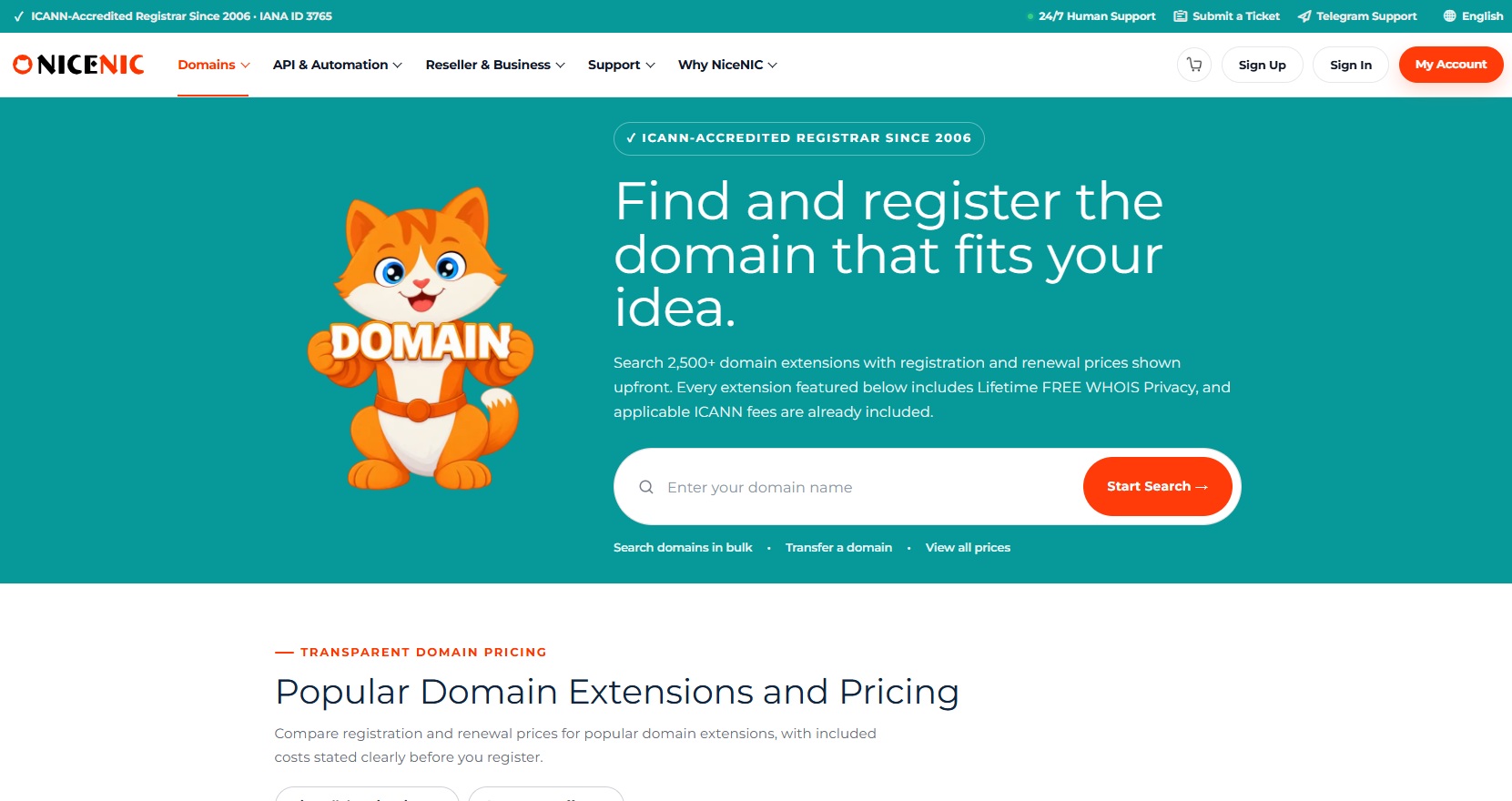
Step 1: Search Your Domain
Enter your IT service, professional network, membership group, partner ecosystem, developer community, company, or platform name and compare availability under .NETWORK, .COM, or both.
Step 2: Compare the Complete Names
Review:
- Domain length
- Memorability
- Network relevance
- Audience familiarity
- Brand flexibility
- Registration price
- Renewal price
- Premium-domain status
- Project structure
- Long-term purpose
Check the latest domain registration and renewal prices before making the final decision.
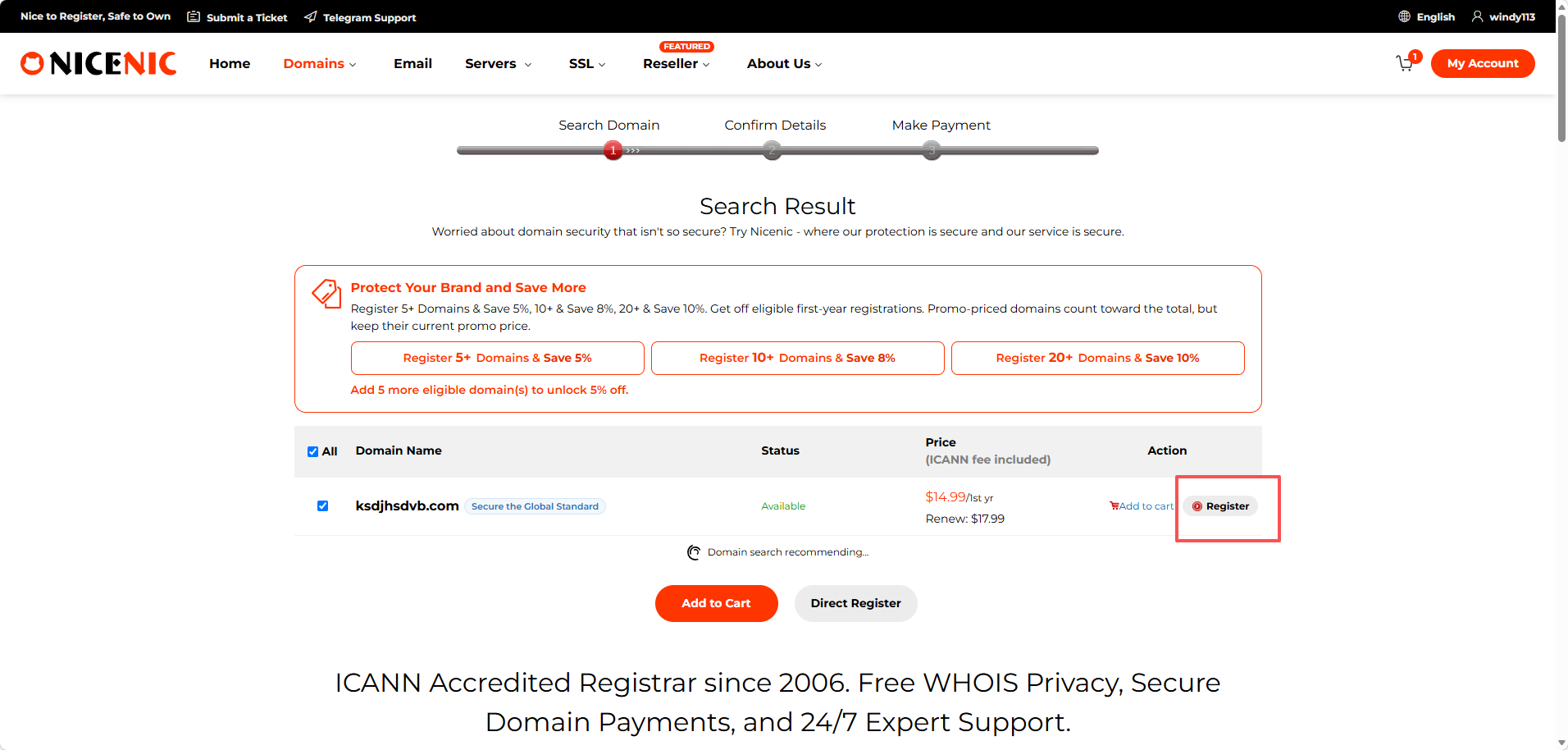
Step 3: Complete Registration
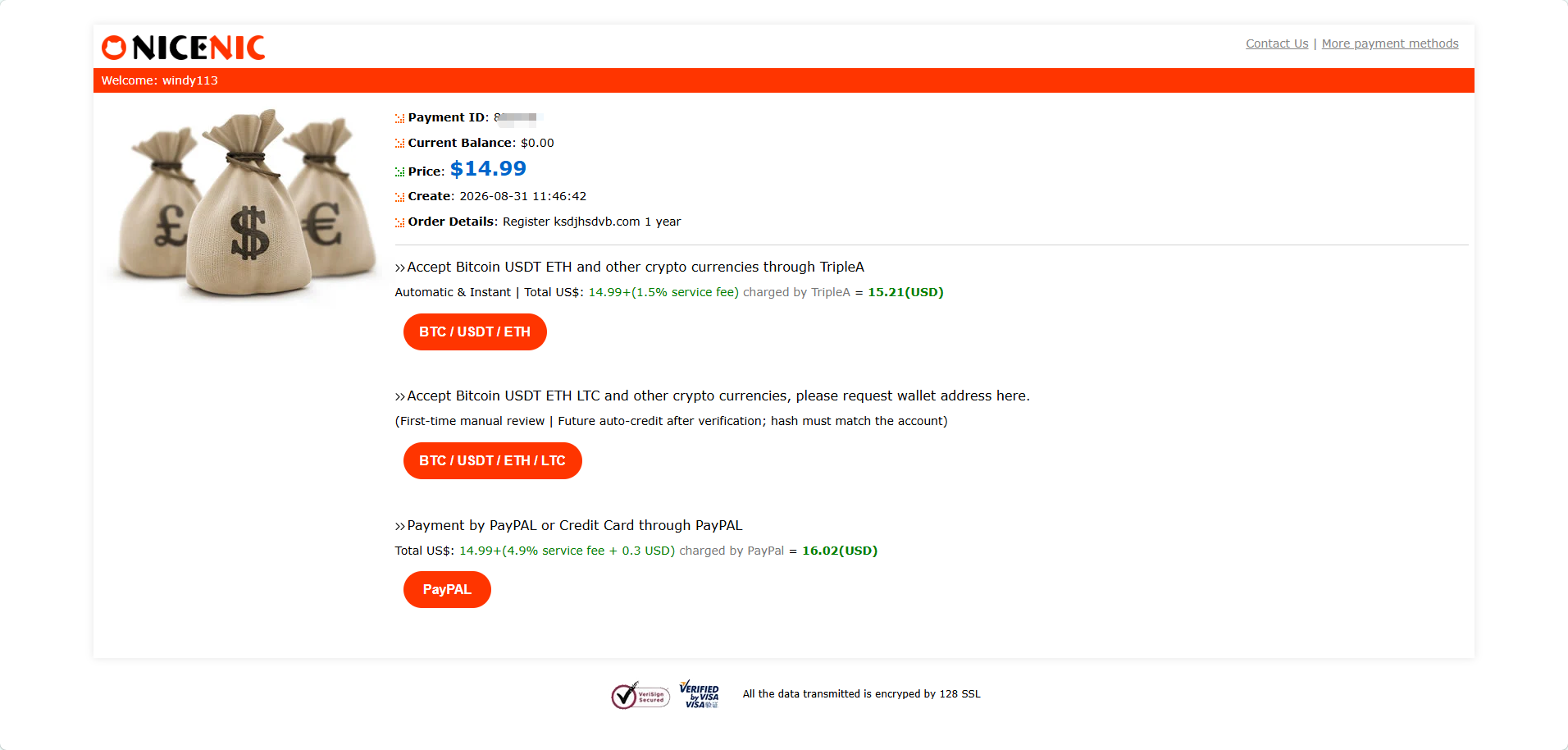
Add the selected domain to your order, confirm the registration information, choose an available payment method, and complete payment.
After registration, the domain can be managed from your NiceNIC account.
Check Your Name in .NETWORK and .COM
Ready to compare the actual name you want?
Checking several community, IT, partner, or client names? Use NiceNIC Bulk Domain Search.
Managing customer domains or integrating domain services into your own platform? Explore the NiceNIC Domain API.
Already own the domain elsewhere? Start with NiceNIC Domain Transfer.
Planning to keep the domain long term? Compare current registration and renewal prices before ordering.


