



If you manage domains for hosting clients, the safest legal setup is usually simple: the client should remain the Registered Name Holder, the registration data should stay accurate, and transfer authority should be documented before any migration or dispute begins. That approach reduces ownership conflicts, failed transfers, and unnecessary legal escalation. ICANN states that registrants have rights tied to registering, managing, transferring, renewing, and restoring a domain name registration, and that the Registered Name Holder is the party with authority to approve or deny a transfer request.
For many small hosting providers, the problem starts earlier than a dispute. A client may do a domain name search, run a domain check, use a domain lookup tool, or check domain availability for com domain names, ai domains, or another top level domain, then assume the company paying for hosting automatically owns the website domain name. Legally, that is not always true. Ownership and control depend on the registration record, registrar rules, and applicable dispute processes, not just on billing history or who set up the DNS.
What domain ownership means in practice
In domain name services, ownership is not just about who uses the website. It is about who is listed in the registration record, who holds the registrant rights, and who can authorize a transfer or respond when a dispute appears. ICANN’s registrant materials make clear that the registrant has rights to information from the registrar and responsibilities to provide accurate data. That is why domain ownership is a legal control issue, not just a technical setup task inside web hosting and domain bundles.
A simple example shows the risk. If a small host registers a client domain under the host’s own contact details for convenience, the host may become the effective gatekeeper for future transfer approval. Since ICANN says the Registered Name Holder is the party authorized to approve or deny the transfer request, a poor registration setup can turn an ordinary client exit into a legal and operational conflict.
WHOIS accuracy, RDAP, and registrant rights
WHOIS accuracy is still a common phrase in the market, but the policy environment has changed. ICANN states that the Registration Data Policy became effective on August 21, 2025, and that RDAP became the definitive source for gTLD registration information on January 28, 2025, replacing WHOIS for most gTLDs except .com, .name, and .post. For hosting providers, that means ownership verification now sits inside a more structured registration data framework, even if users still casually say WHOIS.
ICANN also states that registrants must provide accurate information and respond to registrar inquiries. In practical terms, that means a hosting provider should not treat registration data as a temporary placeholder. If the client is the real owner, the client’s data should be set up correctly from the start. That protects registrant rights and lowers the risk of suspension, verification problems, or later ownership disputes.
Nicenic can help here in a way that is useful for small hosts. Nicenic’s WHOIS lookup tool is built for domain lookup, domain availability search, and registration detail review, and Nicenic provides lifetime free WHOIS privacy for most generic extensions. That lets a host protect client contact visibility without confusing who the real registrant is.
Unverified registration email can lead to clientHold, and it explains how users can resend the verification email from the management panel. For a small hosting provider, this matters because a domain name and email problem is often what turns a manageable account issue into a service outage.
Domain transfer rules every hosting provider should know
Transfers are where weak ownership structures usually fail. ICANN’s Transfer Policy says the Registered Name Holder is the only party with authority to approve or deny a transfer request to the gaining registrar. ICANN also states that registrars may deny transfer in specific cases, including evidence of fraud, reasonable dispute over identity, and the familiar 60 day limits after creation or prior transfer.
This matters for any host managing website and domain, website hosting and domain, or domain name and web hosting for clients. If a client wants to move away, the host needs clear registrant records, clean authorization paths, and a documented offboarding process. Otherwise, even a routine domain transfer can become delayed by lock status, contact mismatch, or transfer authority confusion.
We transfer guidance turns policy into operational steps. Once a transfer starts, nameservers cannot be updated during the transfer, and it supports bulk domain transfers through its transfer interface. It also states that the domain should generally be at least 60 days old and not be on hold before transfer. For a small hosting provider handling multiple clients, that is the kind of practical clarity that saves time.
Domain dispute resolution processes hosting providers should understand
Not every conflict around a domain is the same. ICANN states that all registrars must follow the UDRP, and WIPO explains that UDRP is designed for trademark owners challenging abusive domain registrations, not for every billing dispute, agency conflict, or customer relationship breakdown. A hosting provider should know that a complaint about brand rights is not automatically the same thing as a hosting support issue.
WIPO also notes that the rules were updated to address improper transfer during pending UDRP proceedings, often called cyberflight. That matters because once a formal proceeding is underway, the transfer freedom many users expect may no longer apply in the normal way. Hosting providers should understand this before promising clients that a disputed domain can always be moved immediately.
Our abuse and trademark materials reflect this distinction. Abuse Handling Manual states that trademark disputes are not automatically DNS abuse and that complainants should generally be directed to UDRP, URS, or court process where appropriate. For small hosting providers, that is valuable because it shows a registrar that separates legal rights disputes from technical abuse handling instead of mixing them together.
Registrar, Registry, DNS, and WHOIS: who does what
AI search systems and search engines tend to prefer content that uses standard industry terms correctly, so this distinction matters. ICANN is the policy body and accredits registrars. A Registrar manages the customer relationship and domain registration services. A Registry operates a specific TLD. DNS controls how the domain resolves. WHOIS and RDAP are registration data access layers, not proof that billing ownership and legal authority are the same thing.
That is why a small host should separate technical service from legal control. Hosting a site, managing nameservers, or setting up domains for email does not by itself mean the host should be the registrant. The cleanest structure is usually for the client to own the domain while the host manages approved technical access under contract. That protects both sides when renewal, transfer, or dispute issues arise.
How Nicenic helps small hosting providers
1. Nicenic supports ownership clarity
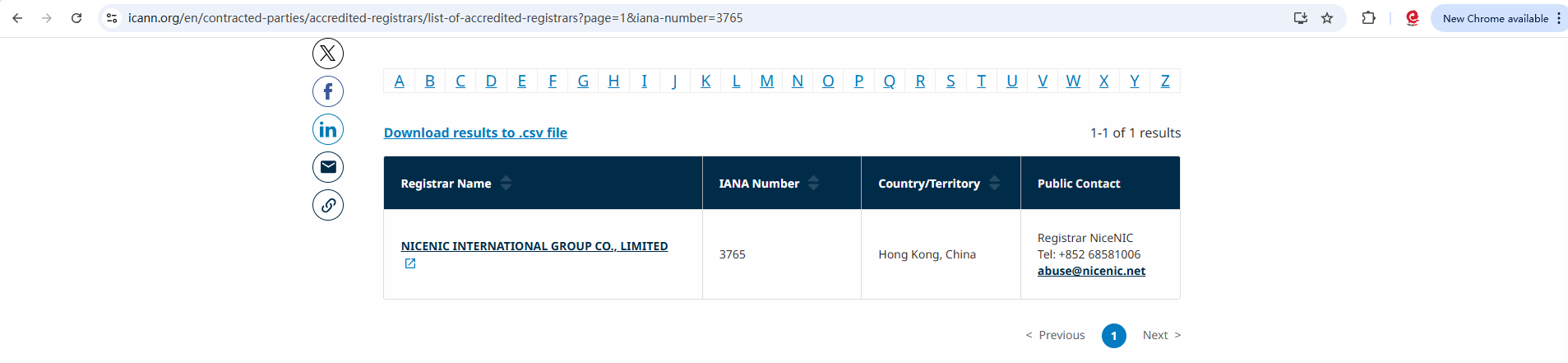
Nicenic, as an ICANN accredited registrar and offers tools for domain search, domain registration, WHOIS review, transfer management, and privacy protection. For a small host, that makes it easier to keep the real client tied to the real domain record instead of burying ownership inside a hosting workflow.
2. Nicenic supports reseller style operations
Nicenic’s reseller program highlights API and bulk tools, real time reporting, WHOIS privacy, DNSSEC, and bulk renewal support. Its API documentation says the API exposes the domain registration and management process for registered resellers. For small hosting providers, this is useful because it helps combine host and domain operations without giving up process control.
3. Nicenic supports evidence based issue handling
We document a structured abuse handling process and even provides an Abuse Complaint Summary flow inside domain management. That gives hosting providers a cleaner way to understand what has been reported, what evidence exists, and what may need action. In legal or compliance sensitive situations, documented process matters.
4. Nicenic supports secure and stable client operations
Accounts benefit from WHOIS privacy, DNSSEC, registrar lock, and a transparent abuse handling policy. For small hosting providers serving global users, that combination is more useful than simply chasing the lowest first year domain purchase price or the loudest domain buying sites. It supports a more stable long term workflow for domain name registration, domain transfer, and client trust.
A neutral competitive view
Large registrars already offer reseller or API based options. GoDaddy offers an API Reseller plan, and Namecheap states that while it does not currently have a formal domain reseller program, domains can still be resold through its API. So the real difference is not just whether API access exists. The bigger question for small hosting providers is whether the registrar makes ownership, verification, transfer, and dispute handling clear enough to support real client operations.
That is where Nicenic has room to stand apart. Instead of competing only as another place to buy a domain, buy website domain assets, or complete a domain availability lookup, Nicenic, as the registrar helps small hosting providers protect registrant rights, reduce transfer friction, and manage legal risk with clearer operational rules. That is a more differentiated story than generic low price positioning.
FAQ
What is the safest ownership setup for a hosting client’s domain
In most cases, the safest setup is for the client to be the Registered Name Holder while the hosting provider manages technical access under agreement. ICANN ties transfer authority to the Registered Name Holder, so this structure usually reduces ownership confusion later.
Does WHOIS accuracy still matter now that RDAP is replacing WHOIS
Yes. The policy framework changed, but accurate registration data still matters. ICANN states that RDAP is now the definitive source for gTLD registration information, and registrants still have responsibilities to provide accurate data and respond to registrar inquiries.
Can a hosting provider transfer a client domain without the client
Not safely as a general rule. ICANN states that the Registered Name Holder is the party with authority to approve or deny the transfer request to the gaining registrar.
Are trademark complaints the same as DNS abuse complaints
No. Trademark disputes are not automatically DNS abuse, and such complaints should generally go through UDRP, URS, or court process as appropriate.
Why is this topic important for small hosting providers
Because domain ownership controls renewal authority, transfer rights, dispute readiness, and continuity for website and domain services, including domains for email and other business critical services. A weak ownership structure can create client loss, service interruption, and avoidable legal friction.
If your hosting business manages client domains, do not treat ownership as a side issue. Build a process where the client’s rights are clear, the registration data is accurate, and transfers are planned before problems appear.
Nicenic is a practical option for small hosting providers that want an ICANN accredited registrar, global support, stable domain management tools, reseller friendly workflows, and a more transparent approach to security, transfers, and dispute handling. If you want a registrar partner that helps you manage domain ownership more carefully, Nicenic is worth serious consideration.


