


Peržiūros:121
Laikas:2026-07-27 14:00:25 Autorius: windy 
ICANN has opened the 2026 New gTLD Round. This means qualified organizations can apply to operate a new domain extension, such as .brand, .city, .industry, or another eligible string.
For brand owners, this does not mean every company needs to apply for its own domain extension.
But it does mean one thing clearly:
Brands should pay attention.
New domain extensions can create new branding opportunities, new defensive registration needs, and new monitoring risks.
The ICANN 2026 New gTLD Round allows organizations to apply for new top-level domains.
The application window opened on April 30, 2026 and closes on August 12, 2026 at 23:59 UTC. Late applications will not be accepted.
Brand owners should ask three simple questions:
What Is a New gTLD?
A gTLD is the part after the dot in a domain name.
Examples include:
In the previous 2012 application round, more than 1,200 new gTLDs were introduced, including brand extensions, geographic extensions, and general industry terms.
The 2026 round creates another chance for new extensions to enter the domain market.
Why Brand Owners Should Care
A new gTLD round can affect brand owners in several ways.
1. Brand Control
Large companies may consider applying for their own .brand extension.
For example, a company might want domains such as:
However, applying for and operating a new gTLD is a serious commitment. It is not the same as registering a normal domain name.
2. Brand Protection
Even if a company does not apply for its own extension, it should still watch new TLD launches.
When new extensions become available, third parties may try to register names that match or resemble existing brands.
Brand owners may need to monitor:
3. New Marketing Opportunities
Some new extensions may create useful naming options.
A business may use a new TLD for:
Should Your Company Apply for a .Brand?
Applying for a .brand extension may make sense for some large organizations.
It may be worth considering if your company:
These businesses usually benefit more from registering and protecting strong second-level domains, such as names under .com, country-code domains, or selected new extensions after launch.
If You Are Not Applying, What Should You Do?
Most brand owners do not need to apply for a new gTLD.
But they should still prepare.
Here is a practical plan:
1. List Your Important Brand Names
Prepare a list of names to monitor.
Include:
2. Review Current Domain Portfolio
Check which domains you already own.
Review:
3. Watch New TLD Launches
New extensions may launch with different phases and rules.
There may be:
4. Check Trademark and Abuse Risk
New extensions may create both opportunity and risk.
Watch for:
5. Keep Domain Management Organized
A domain strategy only works if the account is secure and organized.
Make sure:
What Brand Owners Should Not Assume
Do not assume:
How NiceNIC Helps Brand Owners
NiceNIC helps users search, register, transfer, renew, secure, and manage domains from one account.
For brand owners, agencies, resellers, and investors, NiceNIC supports:
But NiceNIC can help customers manage domain registrations, renewals, transfers, DNS, privacy options, and portfolio workflows more clearly.
FAQ
1. What is the ICANN 2026 New gTLD Round?
It is ICANN's 2026 application round for new generic top-level domains. Qualified organizations can apply to operate new extensions such as brand, community, geographic, or industry-related TLDs.
2. Does every brand need to apply for a .brand?
No. Most businesses do not need their own extension. Many only need to monitor new TLD launches and protect important brand names where necessary.
3. When does the 2026 application window close?
The application window closes on August 12, 2026 at 23:59 UTC. ICANN says late submissions will not be accepted.
4. What should small businesses do?
Small businesses should review their current domains, renew important names, monitor relevant new extensions, and register useful brand-protection names when appropriate.
5. Can NiceNIC override registry or ICANN rules?
No. Registrars must follow applicable ICANN and registry policies. NiceNIC can help users understand and manage domain-related workflows, but it cannot override registry-level rules.
6. How can NiceNIC help?
NiceNIC helps users search, register, transfer, renew, secure, and manage domains, including DNS, WHOIS privacy where available, SSL certificates, Business Email, reseller tools, API v2, and WHMCS-compatible workflows.
Conclusion
The ICANN 2026 New gTLD Round may create new brand opportunities and new domain-protection needs.
Most brand owners do not need to apply for their own extension, but they should review their domain portfolio, monitor important names, and prepare for future TLD launches.
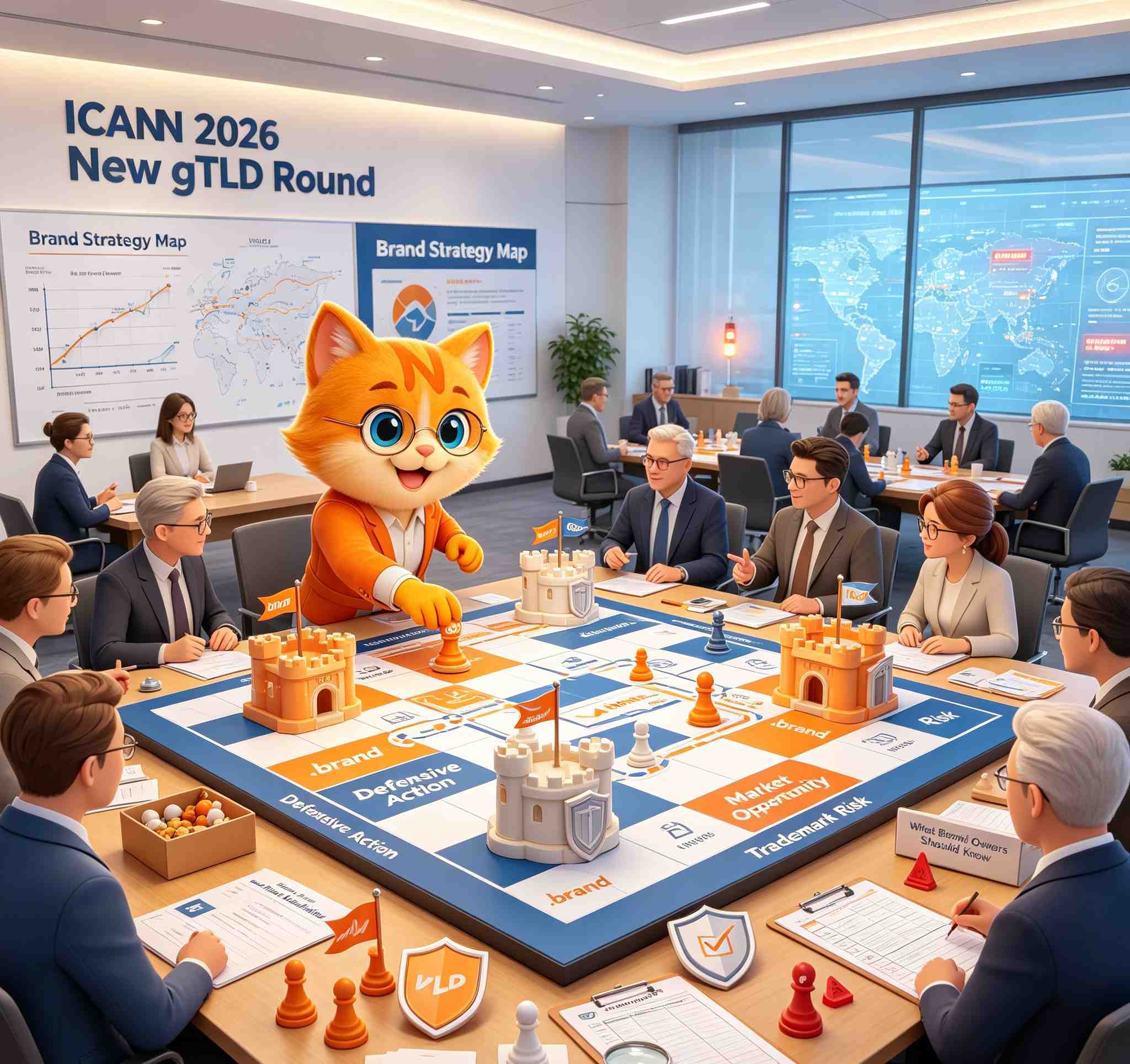
For brand owners, this does not mean every company needs to apply for its own domain extension.
But it does mean one thing clearly:
Brands should pay attention.
New domain extensions can create new branding opportunities, new defensive registration needs, and new monitoring risks.
The application window opened on April 30, 2026 and closes on August 12, 2026 at 23:59 UTC. Late applications will not be accepted.
Brand owners should ask three simple questions:
- Do we need our own .brand extension?
- Do we need to monitor new extensions that may affect our brand?
- Do we need to prepare defensive registrations when new TLDs launch?
What Is a New gTLD?
A gTLD is the part after the dot in a domain name.
Examples include:
- .com
- .net
- .shop
- .app
- .brand
- .city
In the previous 2012 application round, more than 1,200 new gTLDs were introduced, including brand extensions, geographic extensions, and general industry terms.
The 2026 round creates another chance for new extensions to enter the domain market.
Why Brand Owners Should Care
A new gTLD round can affect brand owners in several ways.
1. Brand Control
Large companies may consider applying for their own .brand extension.
For example, a company might want domains such as:
- login.brand
- support.brand
- careers.brand
- partners.brand
However, applying for and operating a new gTLD is a serious commitment. It is not the same as registering a normal domain name.
2. Brand Protection
Even if a company does not apply for its own extension, it should still watch new TLD launches.
When new extensions become available, third parties may try to register names that match or resemble existing brands.
Brand owners may need to monitor:
- Main brand names
- Product names
- Campaign names
- Common misspellings
- Regional brand variations
- Industry-related terms
3. New Marketing Opportunities
Some new extensions may create useful naming options.
A business may use a new TLD for:
- Product launches
- Campaign landing pages
- Regional websites
- Community projects
- Shorter brand URLs
- Industry-specific positioning
Should Your Company Apply for a .Brand?
Applying for a .brand extension may make sense for some large organizations.
It may be worth considering if your company:
- Has a strong global brand
- Needs high control over digital identity
- Manages many websites or services
- Wants a private brand namespace
- Has budget for registry-level operation
- Can handle long-term policy and technical requirements
- Has legal, security, IT, and marketing support
These businesses usually benefit more from registering and protecting strong second-level domains, such as names under .com, country-code domains, or selected new extensions after launch.
If You Are Not Applying, What Should You Do?
Most brand owners do not need to apply for a new gTLD.
But they should still prepare.
Here is a practical plan:
1. List Your Important Brand Names
Prepare a list of names to monitor.
Include:
- Company name
- Product names
- Service names
- App names
- Campaign names
- Main abbreviations
- Common misspellings
2. Review Current Domain Portfolio
Check which domains you already own.
Review:
- Main brand domains
- Country-code domains
- Defensive domains
- Product domains
- Campaign domains
- Domains close to expiration
- Domains with high renewal costs
3. Watch New TLD Launches
New extensions may launch with different phases and rules.
There may be:
- Sunrise periods
- Trademark holder priority phases
- Early access periods
- General availability
- Premium pricing
- Reserved names
- Eligibility rules
4. Check Trademark and Abuse Risk
New extensions may create both opportunity and risk.
Watch for:
- Brand impersonation
- Phishing domains
- Fake login pages
- Customer support scams
- Similar-looking names
- Unauthorized reseller or partner names
5. Keep Domain Management Organized
A domain strategy only works if the account is secure and organized.
Make sure:
- Important domains are renewed on time
- 2FA is enabled
- Recovery email is secure
- DNS records are backed up
- Ownership records are clear
- Invoices and approvals are saved
- Agency or reseller access is documented
What Brand Owners Should Not Assume
Do not assume:
- Every new extension is worth registering
- Every brand needs its own .brand
- A new gTLD application is the same as buying a normal domain
- A registrar can override ICANN or registry policy
- A domain is safe just because it is available
- Privacy rules are the same for every TLD
- Premium pricing will be the same as standard pricing
- A late application can be submitted after the ICANN deadline
How NiceNIC Helps Brand Owners
NiceNIC helps users search, register, transfer, renew, secure, and manage domains from one account.
For brand owners, agencies, resellers, and investors, NiceNIC supports:
- Domain search
- Bulk Domain Search
- Domain registration
- Domain transfer
- Domain renewal
- DNS management
- WHOIS privacy where available
- SSL certificates
- Business Email
- Reseller tools
- API v2
- WHMCS-compatible workflows
- Flexible payment options where available
- Global support
But NiceNIC can help customers manage domain registrations, renewals, transfers, DNS, privacy options, and portfolio workflows more clearly.
1. What is the ICANN 2026 New gTLD Round?
It is ICANN's 2026 application round for new generic top-level domains. Qualified organizations can apply to operate new extensions such as brand, community, geographic, or industry-related TLDs.
2. Does every brand need to apply for a .brand?
No. Most businesses do not need their own extension. Many only need to monitor new TLD launches and protect important brand names where necessary.
3. When does the 2026 application window close?
The application window closes on August 12, 2026 at 23:59 UTC. ICANN says late submissions will not be accepted.
4. What should small businesses do?
Small businesses should review their current domains, renew important names, monitor relevant new extensions, and register useful brand-protection names when appropriate.
5. Can NiceNIC override registry or ICANN rules?
No. Registrars must follow applicable ICANN and registry policies. NiceNIC can help users understand and manage domain-related workflows, but it cannot override registry-level rules.
6. How can NiceNIC help?
NiceNIC helps users search, register, transfer, renew, secure, and manage domains, including DNS, WHOIS privacy where available, SSL certificates, Business Email, reseller tools, API v2, and WHMCS-compatible workflows.
Conclusion
The ICANN 2026 New gTLD Round may create new brand opportunities and new domain-protection needs.
Most brand owners do not need to apply for their own extension, but they should review their domain portfolio, monitor important names, and prepare for future TLD launches.
ICANN akredituotas registratorius nuo 2006 m.
Įsigykite ir užregistruokite savo .CITY domeną šiandien
Patikrinkite .CITY domeno prieinamumą, užregistruokite naują .CITY domeną, ieškokite kelių vardų iš karto arba perkelkite savo esamus .CITY domenus į NiceNIC. Skirta verslams, domenų investuotojams, agentūroms, talpinimo paslaugų teikėjams ir perpardavėjams.
Atnaujinti: $44.48
Rinka
$11.99 $7.99
pirmieji metai
Atnaujinti: $39.48
Pagrindinis
$7.99
0% off
Atnaujinti: $38.48
Super
$7.99
0% off
Atnaujinti: $38.48
VIP
$7.99
0% off
SUSIJUSIOS NAUJIENOS:
Paskutinės naujienos:
What Happens After You Buy a Premium Domain? Payment, Transfer and Activation Explained
Naujausi naujienos: 401.6 Million Domains: What Q2 2026 Reveals About the Domain Market
Naujausi naujienos: 401.6 Million Domains: What Q2 2026 Reveals About the Domain Market


