


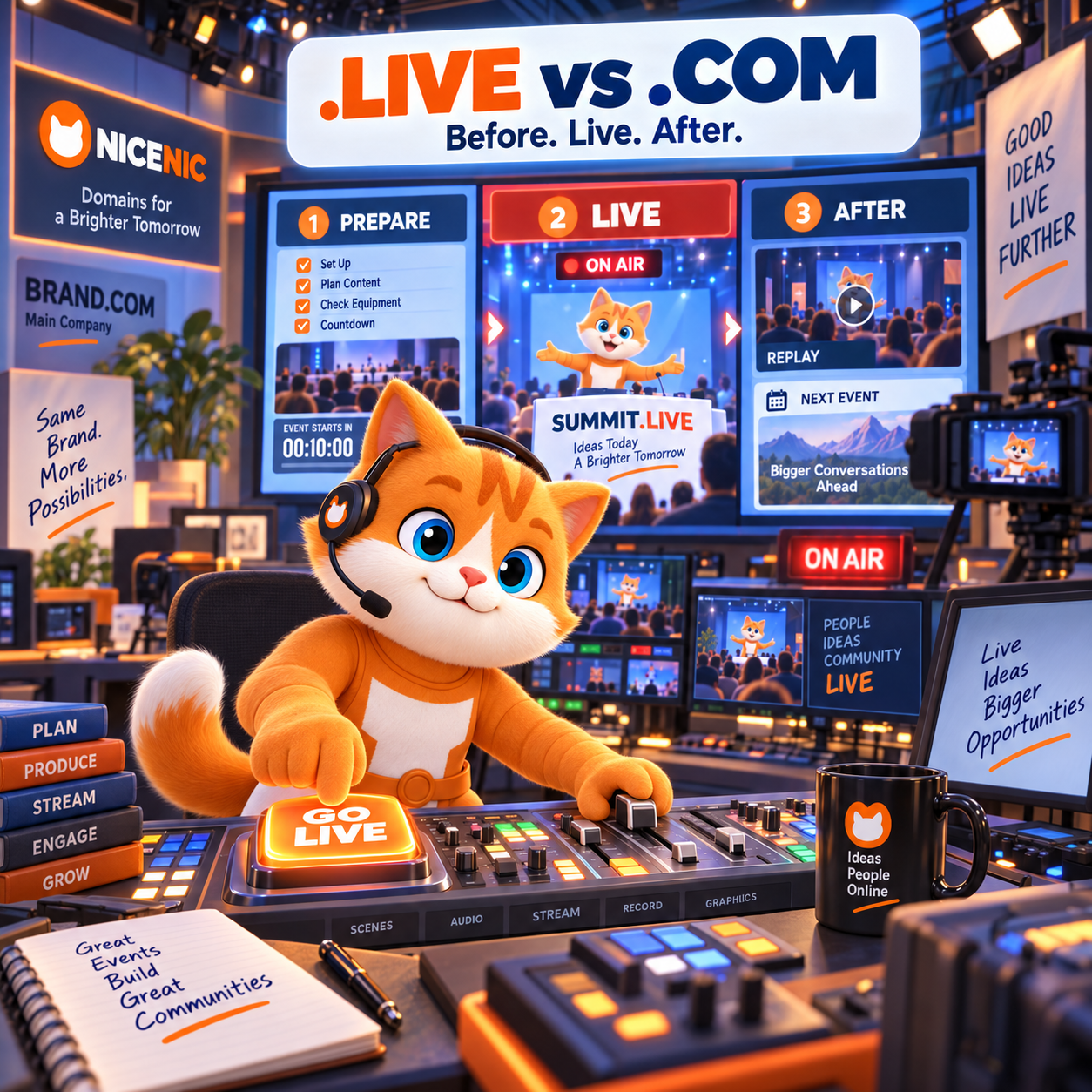
A website for a live event has a different job from a permanent company website.
A corporate domain may need to represent the same organization for ten or twenty years.
A livestream, webinar series, product launch, conference, creator broadcast, or recurring event may need a domain that immediately communicates what is happening now.
That makes .LIVE and .COM useful in different ways.
Choose .COM when you want a familiar, flexible primary domain that can represent the entire company before, during, and after individual events.
Choose .LIVE when live programming, streaming, events, broadcasts, webinars, or real-time participation is central to the project and the extension helps create a clear, memorable address.
For some organizations, both can have clear roles:
brand.com → main company website
launch.live → product launch
conference.live → event experience
creator.live → livestream or creator hub
The stronger choice depends on whether the domain needs to represent a permanent organization or a live experience.
.LIVE vs .COM: The Quick Answer
.COM offers broad brand flexibility.
It can represent almost any type of business and remain relevant even when the company changes products, formats, or customer channels.
.LIVE communicates something more specific.
The word “live” can naturally connect with:
- Livestreaming
- Virtual events
- Conferences
- Webinars
- Product launches
- Creator broadcasts
- Entertainment projects
- Live classes
- Community events
- Performances
- Event series
- Live interviews
- Online shows
- Broadcast projects
- Real-time audience experiences
The key question is:
Is the live experience itself an important part of the identity?
If yes, .LIVE can add useful context.
If the website needs to represent a broad organization regardless of whether anything is currently live, .COM may provide more flexibility.
Check Your Name in .LIVE and .COM
Before comparing the extensions in theory, compare the names you can actually register.
Check .LIVE Domain Availability
Check .COM Domain Availability
At publication, NiceNIC currently shows:
.LIVE Market Account: $3.99 first year, $54.99 renewal
.COM Market Account: $14.99 first year, $17.99 renewal
Account level, registry pricing, Premium classification, transfer pricing, and promotions can change.
Always confirm the current domain registration and renewal prices before completing an order.
The current .LIVE first-year price is lower.
Its renewal price is higher than .COM.
That difference matters especially for recurring events and creator brands that may keep the same domain for many years.
What Is the Main Difference Between .LIVE and .COM?
The main difference is live-experience positioning versus broad brand identity.
.COM is neutral.
A company using:
northstar.com
could operate as:
- A media company
- An event organizer
- A software business
- A retailer
- A creator brand
- A consultancy
- A streaming platform
- An education company
without the extension defining the format of the website.
.LIVE adds a stronger expectation.
A name such as:
northstar.live
may suggest that the website is connected to an event, stream, broadcast, performance, or other live experience.
That can be useful when the expectation matches the project.
It can be less useful when the same domain needs to represent a company whose activities extend far beyond live content.
One of the Strongest Uses of .LIVE: Give an Event Its Own Destination
A live event often needs more than one page.
It may require:
- Registration
- Schedule
- Speaker information
- Livestream access
- Sponsor information
- Event updates
- Replay links
- Audience questions
- Resources
- Post-event content
A dedicated domain can give all of those elements one clear destination.
For example:
company.com → company website
conference.live → conference experience
or:
brand.com → permanent brand
launch.live → product launch
or:
organization.com → organization
summit.live → annual summit
These examples illustrate possible naming structures only. Actual availability and Premium status must be checked before registration.
The value comes from giving the event a clear identity, not from the extension alone.
When Should You Choose .COM?
Choose .COM when:
- You are building the permanent company website.
- The organization operates beyond live events or streaming.
- Your business may expand into several products or industries.
- You want one main corporate identity.
- Customers use the website year-round.
- Broad audience familiarity is important.
- The domain must remain relevant between events.
-
A suitable matching
.COMis available.
Imagine a company that produces conferences today.
Later, it may also offer:
- Software
- Research
- Training
- Consulting
- Media
- Membership
- Sponsorship services
A .COM domain can continue representing the entire organization as those activities grow.
If this matches your plans, check whether your preferred .COM domain is available.
When Does .LIVE Make More Sense?
.LIVE becomes more relevant when the live experience is central to the project.
Strong use cases can include:
- Livestream channels
- Conferences
- Webinars
- Virtual events
- Product launches
- Creator broadcasts
- Live classes
- Performance events
- Music projects
- Interviews
- Community broadcasts
- Annual summits
- Online shows
- Live demos
- Event campaigns
Illustrative examples might include:
launch.live
conference.live
creator.live
studio.live
summit.live
academy.live
show.live
These examples are for naming illustration only.
A suitable .LIVE name can make the purpose of the destination clearer before a visitor arrives.
If that fits your project, check whether your preferred .LIVE domain is available.
Is .LIVE Good for Livestreaming?
Yes, livestreaming is one of the clearest naming contexts for .LIVE.
A livestream project may need a destination for:
- Current stream
- Upcoming schedule
- Previous broadcasts
- Creator information
- Membership
- Viewer resources
- Community links
- Sponsor information
- Notifications
For example:
brand.com → overall brand
brand.live → livestream destination
This structure can be useful when the livestream is one part of a larger business.
A creator whose entire identity revolves around live broadcasting may also consider .LIVE as the primary domain.
The right choice depends on whether the live format is one channel or the whole brand.
.LIVE Can Work Well for Webinars
Webinar programs often need a focused address that can be reused.
A webinar domain might contain:
- Upcoming sessions
- Registration
- Speaker profiles
- Calendar information
- Join links
- Recording archive
- Slides
- Follow-up resources
One structure could be:
company.com → company website
webinars.live → webinar program
Another could be:
company.com → main business
academy.live → recurring live training
A .LIVE domain can be particularly useful when webinars form a recognizable program rather than an occasional page on the company website.
If webinars are only a small part of the business, keeping them under .COM may be simpler.
Is .LIVE Good for Product Launches?
It can be.
Product launches are often time-sensitive.
A launch site may need:
- Countdown
- Product reveal
- Livestream
- Demo
- Signup
- Press information
- Purchase links
- Event schedule
- Replay
For example:
product.com → permanent product site
product.live → launch event
This gives each domain a different role.
The .LIVE domain can be used for the period when the event is active.
Afterward, it can redirect visitors to the permanent product site if that makes sense for the campaign.
.LIVE Can Give an Annual Event a Stable Identity
A temporary event and a recurring event need different domain strategies.
A one-time launch may only need a domain for several months.
An annual conference may use the same address for many years.
For example:
summit.live
could be reused each year.
The site could update:
- Dates
- Speakers
- Schedule
- Registration
- Sponsors
- Recordings
without changing the domain.
In that case, renewal cost becomes much more important.
A domain that starts as an inexpensive first-year registration may become a long-term operating asset.
That is why annual-event organizers should compare several years of ownership cost before choosing.
What Happens After the Event Ends?
This is one of the most important questions for a .LIVE domain.
A live experience has a natural end point.
The domain does not have to disappear when the stream stops.
After an event, a .LIVE site can become:
- Replay archive
- Event recap
- Resource library
- Waitlist for next year
- Registration page for the next event
- Speaker archive
- Media gallery
- Redirect to the main company site
For example:
Before event:
conference.live → registration and schedule
During event:
conference.live → livestream and live updates
After event:
conference.live → recordings and next-event signup
Planning this lifecycle before launch makes the domain more useful.
Do Not Let a .LIVE Domain Look Abandoned After the Stream Ends
The word “live” creates an expectation of activity.
If visitors arrive months after an event and see an expired countdown, broken stream, or old registration form, the experience can become confusing.
After the live period ends, update the page deliberately.
Possible options include:
Event finished
Show:
- Replay
- Highlights
- Resources
- Next date
Project finished permanently
Redirect visitors to the relevant page on the main website.
Recurring program
Clearly show the next scheduled event.
A .LIVE domain works best when the site’s status is obvious.
Is .LIVE Good for Creators?
It can be, particularly for creators whose work includes regular live interaction.
Possible uses include:
- Livestream schedule
- Live interviews
- Classes
- Q&A sessions
- Community broadcasts
- Product demonstrations
- Membership events
- Live performances
A creator could use:
creator.com → overall personal brand
and:
creator.live → live content
This keeps the main identity flexible while giving the live program its own destination.
A creator whose entire brand centers on livestreaming could also consider .LIVE as the main domain when the complete name works well.
Can .LIVE Work for Podcasts?
Sometimes.
The key question is whether the podcast actually has a meaningful live component.
A conventional prerecorded podcast may gain little from emphasizing “live.”
A podcast that regularly includes:
- Live recording sessions
- Audience Q&A
- Livestream episodes
- Live tours
- Interactive shows
may have a clearer reason to use .LIVE.
For example:
show.com → main podcast brand
show.live → live episode schedule and tickets
The domain should reflect the actual experience being offered.
Is .LIVE Good for Performers and Musicians?
It can fit projects centered around performances.
Potential uses include:
- Concert schedules
- Livestream concerts
- Tour events
- Ticket campaigns
- Fan broadcasts
- Album-launch events
- Festival streams
- Performance archives
For example:
artist.com → artist’s permanent website
artist.live → concerts or live broadcasts
This allows the permanent brand and live-performance identity to coexist.
For a performer whose website also needs to cover merchandise, biography, press, licensing, and other activities, .COM may remain useful as the main domain.
What About Sports and Competitive Events?
.LIVE can be relevant for event-focused sports projects where real-time participation or broadcasting is central.
Possible uses include:
- Event streams
- Tournament hubs
- Match schedules
- Results
- Commentary
- Live coverage
- Fan events
However, a .LIVE domain does not imply that the site owns broadcast rights, represents a league, or is an official event source.
If a project discusses or covers third-party teams, leagues, trademarks, or events, branding and content should avoid implying an affiliation that does not exist.
Clear publisher identification helps users understand who operates the site.
Can a Business Use .LIVE for Live Shopping?
Potentially.
Live shopping combines ecommerce with livestreaming or real-time product demonstrations.
A retailer might use:
brand.com → main ecommerce website
brand.live → live shopping events
The .LIVE page could contain:
- Event schedule
- Featured products
- Stream
- Host information
- Product links
- Replay
- Future-event signup
This allows the main ecommerce domain to remain stable while .LIVE represents a specific sales channel.
.LIVE Can Work as a Campaign Domain
Not every live experience needs to become a permanent brand.
A company might use:
company.com → main business
and:
launch.live → product reveal
or:
company.com → organization
event.live → campaign
or:
brand.com → permanent website
demo.live → livestream demonstration
When the campaign finishes, the .LIVE domain can redirect to the most relevant permanent page.
This gives the extension a clear job without requiring it to carry the whole company identity.
Should a Company Move Its Main Website From .COM to .LIVE?
Only when that change fits the long-term identity of the organization.
If the entire company exists around:
- Streaming
- Live entertainment
- Events
- Broadcasting
- Real-time experiences
a .LIVE primary domain may make sense.
If the company also operates:
- Ecommerce
- Consulting
- Software
- Manufacturing
- Education
- Research
- Physical locations
a more neutral .COM may provide broader positioning.
The decision should be based on what the company expects the domain to represent over time.
Is a Short .LIVE Better Than a Long .COM?
Sometimes.
Compare:
northstar.live
with:
northstarliveeventscompany.com
The .LIVE version is shorter.
Now compare:
northstar.live
with:
northstar.com
If both are available at suitable prices and the domain needs to represent an entire multi-purpose company, .COM may provide more flexibility.
Compare the complete domain names rather than the extensions alone.
Consider:
- Length
- Memorability
- Meaning
- Spoken clarity
- Event relevance
- Registration price
- Renewal price
- Premium status
- Expected ownership period
Shorter is useful when the shorter name also makes sense.
Think About the Domain Before You Announce the Event
Event domains often appear on marketing materials very early.
Before publishing:
- Posters
- Tickets
- Videos
- Press releases
- Social campaigns
- Sponsor decks
- Event signage
- QR codes
confirm that the exact domain has been registered successfully.
Also check whether the name:
- Conflicts with an existing brand
- Uses another company's trademark
- Could imply an affiliation that does not exist
- Has unexpected Premium pricing
- Fits the planned renewal budget
Changing the domain after a campaign begins can create unnecessary confusion.
Think About Spoken Use
Live events are often promoted verbally.
A domain may be mentioned in:
- Livestreams
- Podcasts
- Stage presentations
- Video
- Radio
- Interviews
- Conferences
- Community announcements
Imagine saying:
“Go to summit dot live.”
If the address is easy to hear and remember, that can be useful.
If customers frequently default to typing .COM, owning the matching .COM may also be worth considering when available and appropriate.
Test the complete domain aloud before committing to it.
Think About Email Too
A .LIVE domain can also be used for event-related email.
Examples include:
or:
A separate event-domain email identity can be useful for:
- Speakers
- Sponsors
- Attendees
- Event support
- Registration
A company may still prefer the main .COM email for continuity and recognition.
Both approaches can work.
The important part is consistency.
Does .LIVE Rank Better for Live Searches on Google?
The extension itself should not be treated as an automatic ranking advantage.
Using .LIVE does not guarantee higher rankings for searches containing words such as:
- live
- livestream
- live event
- webinar
- broadcast
Similarly, .COM does not receive guaranteed higher rankings simply because it is .COM.
Search visibility depends much more on:
- Helpful original content
- Search relevance
- Website structure
- Crawlability
- Internal linking
- Relevant external links
- Page performance
- Mobile usability
- Content freshness
- Brand signals
- User experience
For event-related searches, accurate dates, schedules, event details, and current content can be particularly useful to users.
Choose .LIVE because it improves the name or event positioning.
Build SEO through the actual website.
Does .LIVE Automatically Increase Click-Through Rate?
That should not be assumed.
A relevant domain may help a user understand what a page is about.
Actual click behavior depends on many factors, including:
- Search query
- Brand recognition
- Page title
- Search snippet
- User intent
- Competition
- Reputation
- Relevance
.LIVE may communicate a live-event context.
That does not guarantee a particular click-through rate.
Use the extension when its meaning supports the project.
First-Year Price vs Long-Term Cost
At publication, NiceNIC currently shows:
.LIVE: $3.99 first year, $54.99 renewal
.COM: $14.99 first year, $17.99 renewal
The current .LIVE first-year registration price is lower.
Its renewal price is higher.
Before registering, compare:
- First-year registration
- Renewal price
- Transfer price
- Premium-domain status
- Expected ownership period
Review the latest figures on the NiceNIC Domain Prices page before ordering.
A one-time product launch and an annual conference have very different cost profiles.
For a Recurring Event, Look Beyond the First Year
A low first-year price may be useful for launching an event.
A successful conference, webinar program, creator channel, or annual show may keep the same domain for many years.
Before registering, ask:
- Is this a one-time event or recurring program?
- Will the domain remain useful after the event ends?
- Is "live" central to the long-term identity?
- What is the renewal price?
-
Is a suitable
.COMalso available? - Should the domain become an archive between events?
These questions are more useful than comparing only the first registration price.
What About Premium .LIVE Domains?
Some short, generic, or desirable .LIVE names may carry Premium pricing.
The exact domain you want can therefore cost differently from the standard TLD price.
Before building a campaign around a domain:
- Search the exact name.
- Confirm availability.
- Check whether Premium pricing applies.
- Review registration pricing.
- Review the applicable renewal pricing.
Do this before producing:
- Posters
- Videos
- Tickets
- Advertising
- Event signage
- Merchandise
- Sponsor material
The same principle applies to .COM and other extensions.
Should You Register Both .LIVE and .COM?
For an important brand or event, owning both can make sense when both names are available and the cost fits the plan.
One structure could be:
brand.com → permanent website
brand.live → live channel
Another:
company.com → company
summit.live → annual event
Another:
product.com → product
launch.live → launch event
Another:
creator.com → overall creator identity
creator.live → livestream destination
There is usually little reason to publish identical websites on both domains.
Choose one primary address or give each domain a clearly defined role.
Check Existing Brands Before Registering an Event Name
A domain being available does not automatically make it safe or sensible to use as a brand.
Before registering a .LIVE name, review:
- Existing companies
- Trademarks
- Event names
- Creator names
-
The matching
.COM - Relevant social profiles
- Possible audience confusion
This is particularly important for conferences, entertainment events, sports projects, and branded broadcasts.
Choose a name that makes ownership and affiliation clear.
.LIVE Can Be Useful for Agencies and Event Platforms
Agencies, event companies, streaming platforms, hosting providers, and resellers may manage domains for many live projects.
Those projects can include:
- Conferences
- Webinars
- Livestreams
- Product launches
- Creator events
- Virtual training
- Entertainment projects
- Customer events
- Annual summits
Instead of checking names individually, use NiceNIC Bulk Domain Search to compare multiple .LIVE, .COM, and other domain ideas.
Platforms, agencies, hosting providers, and resellers that want supported domain operations inside their systems can explore the NiceNIC Domain API for availability checks, registration, renewal, transfers, DNS, pricing, and related supported operations.
For larger event portfolios, also plan for:
- Renewal dates
- Customer ownership
- DNS management
- Account access
- Billing
- Event lifecycle
- Client handover
- Redirect strategy after events
A domain strategy should cover what happens after the event as well as what happens on launch day.
Already Own a .LIVE Domain Elsewhere?
You can transfer an existing domain to NiceNIC when the domain meets the applicable transfer requirements.
Typical preparation includes:
- Confirm that the domain is eligible for transfer.
- Unlock the domain at the current registrar where required.
- Obtain the Auth Code or EPP Code.
- Confirm access to the relevant account or registrant email.
- Submit the transfer.
- Monitor the transfer until completion.
Before moving an active event or streaming domain, also review:
- Nameservers
- DNS records
- Email records
- DNSSEC status where applicable
- Domain expiration date
- Event schedule
- Transfer timing
Avoid making unrelated infrastructure changes immediately before a major live event if they are not necessary.
Keeping registrar transfer, DNS migration, hosting changes, and livestream changes separate can make troubleshooting easier.
.LIVE vs .COM: Quick Comparison
Choose .LIVE when you prioritize:
- Livestream or event positioning
- Webinars
- Conferences
- Creator broadcasts
- Product launches
- Virtual events
- Annual event branding
- A dedicated live-content destination
- A domain where "live" contributes naturally to the name
Choose .COM when you prioritize:
- A permanent company website
- Broad brand flexibility
- Multiple products and services
- Online and offline business activities
- One central company identity
- Long-term use beyond individual events
- Broad audience familiarity
Current NiceNIC Market pricing at publication:
.LIVE
- First year: $3.99
- Renewal: $54.99
.COM
- First year: $14.99
- Renewal: $17.99
Pricing can change, and individual Premium domains may have different pricing. Check the live price before registration.
.LIVE or .COM: Which Should You Choose?
Choose .COM if:
- You are building the permanent company website.
- The organization operates beyond events or streaming.
- The domain must remain relevant year-round.
- You want a neutral brand identity.
- Broad familiarity is important.
- You expect to keep the domain for many years.
-
A suitable matching
.COMis available. - Long-term renewal cost matters.
Choose .LIVE if:
- Live programming is central to the project.
- You are building a livestream, event, webinar, or broadcast destination.
- The extension makes the complete name clearer.
- You need a dedicated domain for an annual or recurring event.
- You are creating a product-launch or event campaign.
- You have a plan for what happens after the event ends.
- You understand the registration and renewal costs.
Consider both when:
.COM will represent the permanent company
and
.LIVE will represent a livestream channel, conference, product launch, webinar program, annual event, or live campaign.
Final Verdict
.COM remains a strong option for organizations that need one flexible domain to represent the entire business over time.
.LIVE has a more focused role.
It works particularly well when streaming, events, broadcasts, webinars, launches, or live participation are central to the project.
The strongest .LIVE domains do more than signal that something is happening now.
They give the live experience a memorable destination before, during, and after the event.
That lifecycle deserves planning.
A successful .LIVE domain may begin as a registration page, become the live-event hub, and later turn into an archive or the signup page for the next event.
Long-term cost matters too.
At publication, .LIVE has a lower NiceNIC Market first-year price than .COM, while its renewal price is higher.
Before choosing, ask five questions:
Is live participation central to this project?
Is this the permanent company domain or a dedicated event destination?
Does .LIVE make the complete name clearer or more memorable?
What should visitors see after the event ends?
Does the long-term cost fit the expected lifecycle?
Then choose the domain that best fits the audience, event strategy, brand, and expected lifetime of the project.
How to Register a .LIVE or .COM Domain at NiceNIC
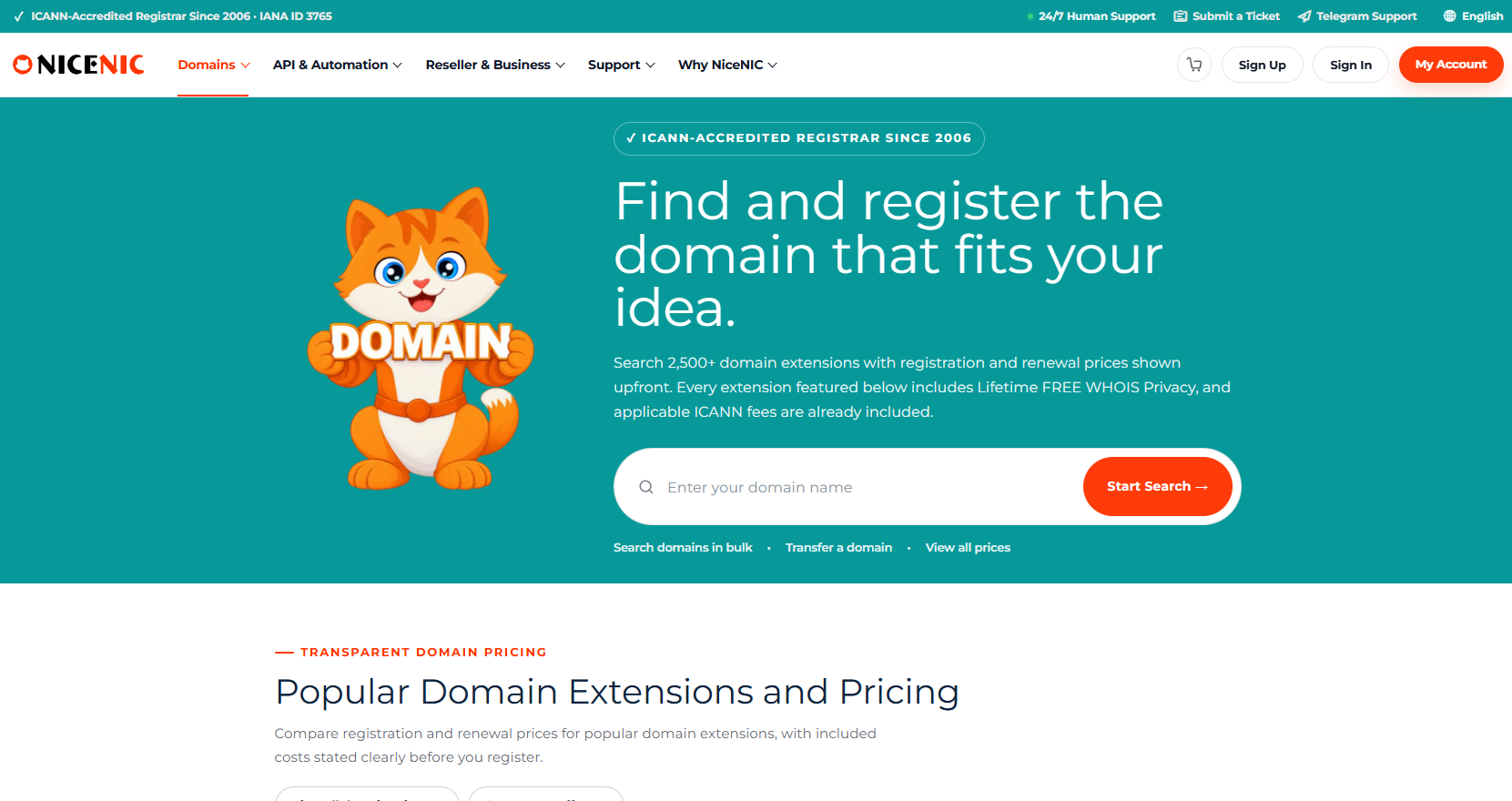
Step 1: Search Your Domain
Enter your event, livestream, webinar, creator, product-launch, company, or brand name and compare availability under .LIVE, .COM, or both.
Step 2: Compare the Complete Names
Review:
- Domain length
- Memorability
- Live-event relevance
- Spoken clarity
- Brand flexibility
- Registration price
- Renewal price
- Premium-domain status
- Event lifecycle
- Long-term purpose
Check the latest domain registration and renewal prices before making the final decision.
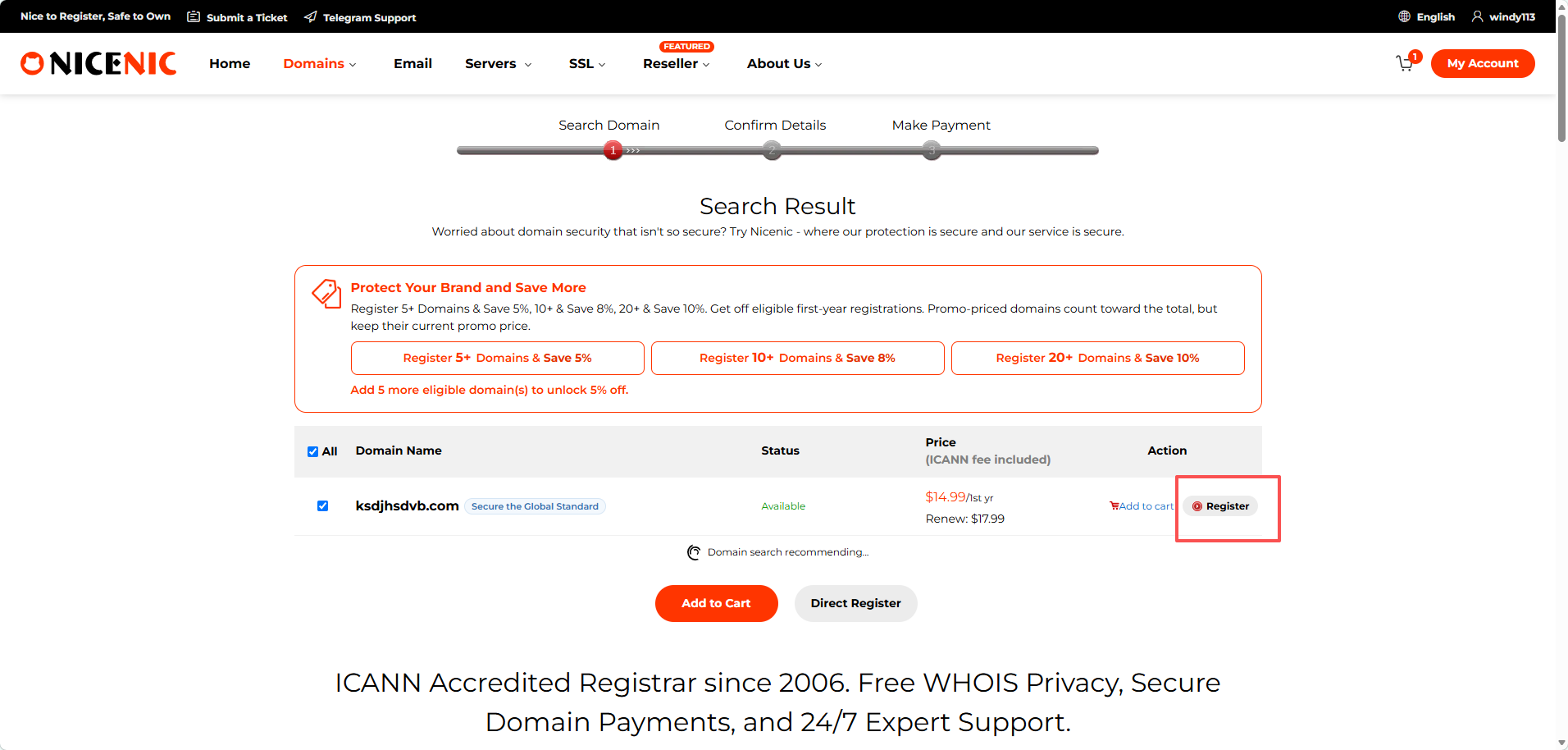
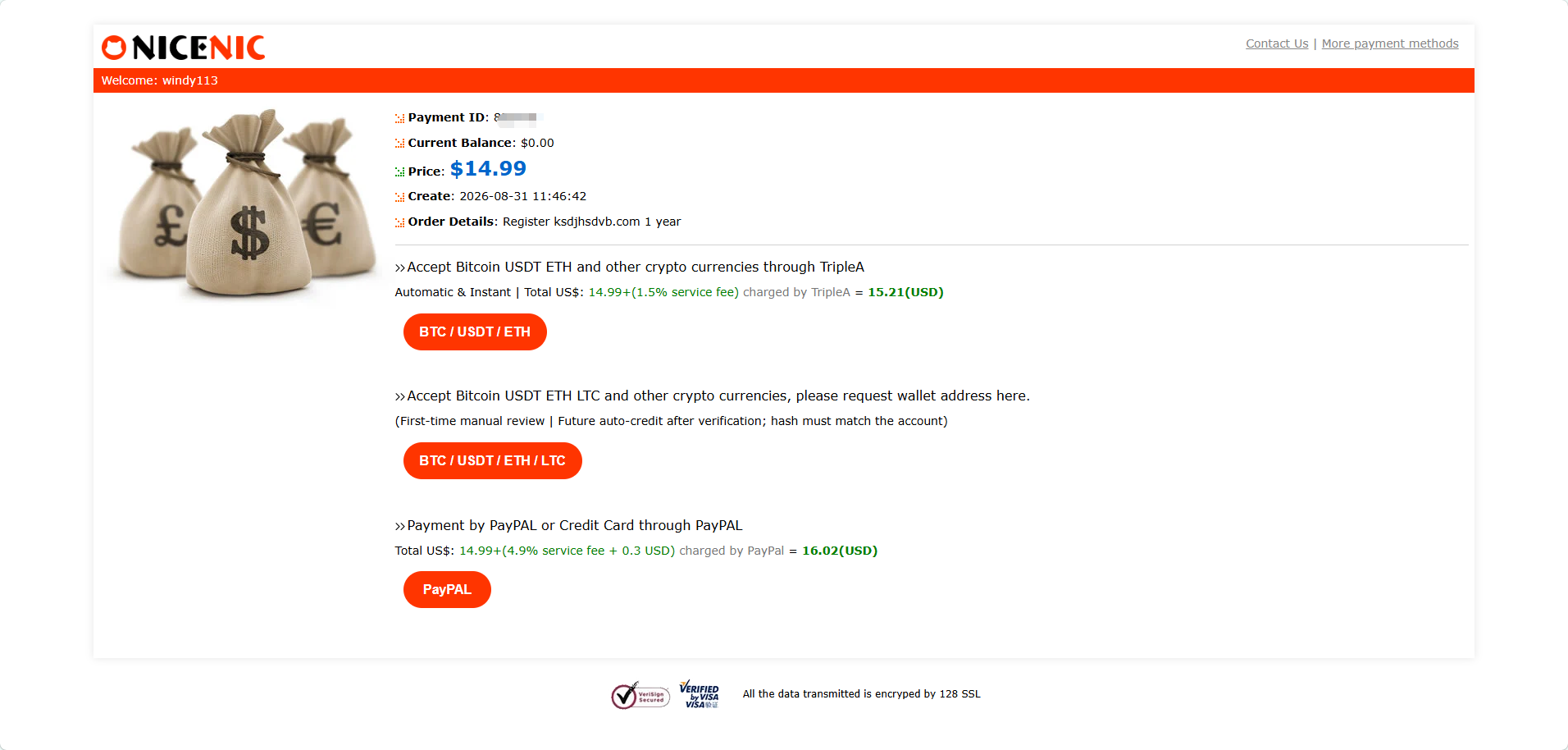
Step 3: Complete Registration
Add the selected domain to your order, confirm the registration information, choose an available payment method, and complete payment.
After registration, the domain can be managed from your NiceNIC account.
Check Your Name in .LIVE and .COM
Ready to compare the actual name you want?
Checking several event, creator, or client names? Use NiceNIC Bulk Domain Search.
Managing customer domains or integrating domain services into your platform? Explore the NiceNIC Domain API.
Already own the domain elsewhere? Start with NiceNIC Domain Transfer.
Planning to keep the domain long term? Compare current registration and renewal prices before ordering.


