


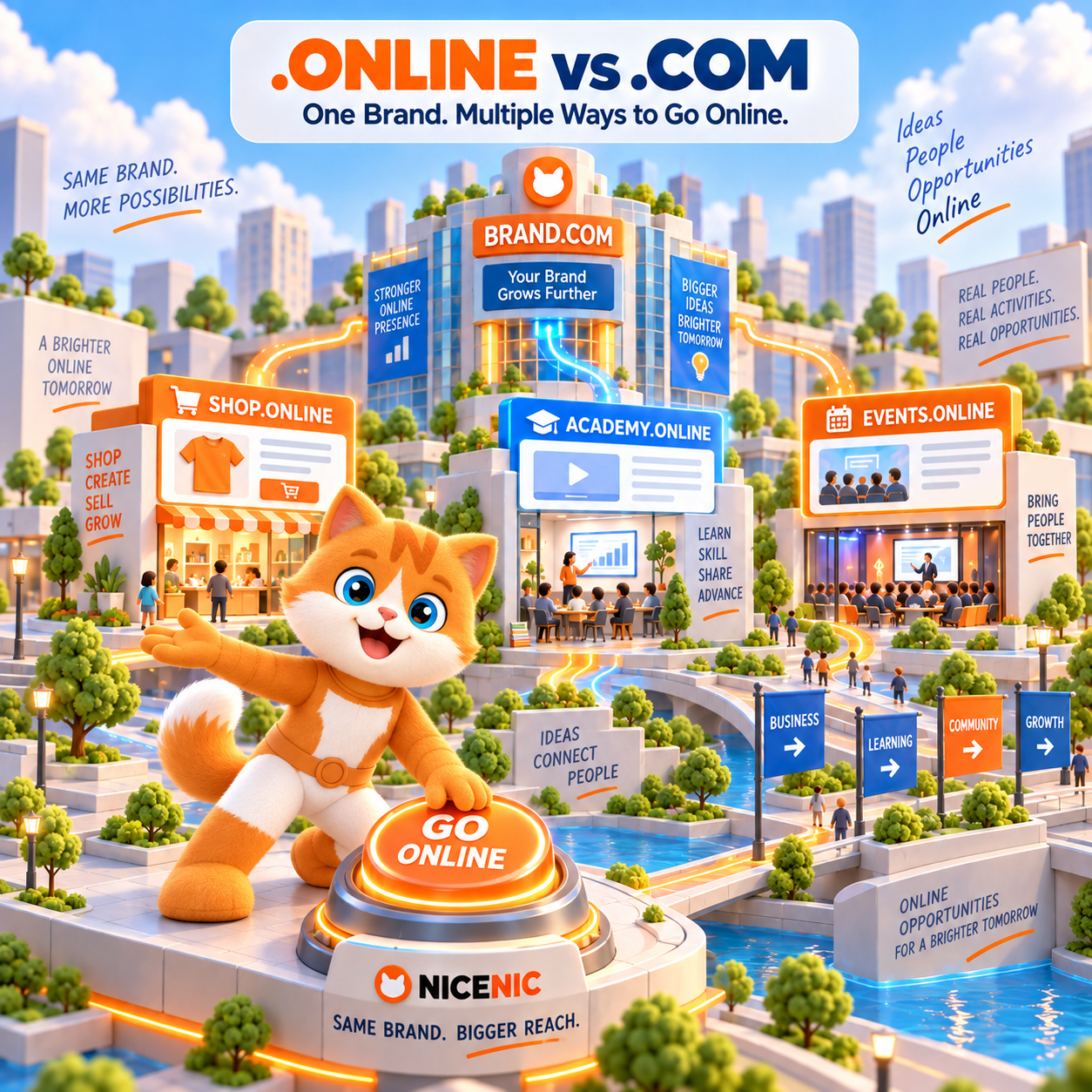
An ecommerce store, online course, remote service, membership platform, creator business, and traditional company may all need different things from a domain.
That makes .ONLINE and .COM useful for different reasons.
Choose .COM when you want a familiar, flexible primary domain that can represent the entire company across online and offline activities.
Choose .ONLINE when the internet-facing experience itself is central to the project and the extension helps create a clear, memorable domain.
For some businesses, both can have useful roles:
brand.com → main company website
shop.online → ecommerce experience
academy.online → online learning project
events.online → virtual event hub
The stronger choice depends on what the domain represents, how customers reach it, and how long you expect to use it.
.ONLINE vs .COM: The Quick Answer
.COM is the broader option.
It works across industries and gives a company room to expand into physical products, offline locations, software, consulting, ecommerce, events, or other business lines.
.ONLINE describes the way the project exists or is accessed.
That can make it relevant for:
- Ecommerce stores
- Online services
- Remote businesses
- Online courses
- Membership platforms
- Creator businesses
- Virtual events
- Online communities
- Web-based tools
- Booking platforms
- Digital publications
- Online portfolios
- Campaign sites
- Internet-first projects
The key question is:
Is being online an important part of what the domain needs to communicate?
If yes, .ONLINE can add useful context.
If the domain needs to represent a broad company whose online presence is only one part of the business, .COM may offer greater long-term flexibility.
Check Your Name in .ONLINE and .COM
Before comparing the extensions in theory, check the actual name you want.
Check .ONLINE Domain Availability
Check .COM Domain Availability
At publication, NiceNIC currently shows:
.ONLINE Market Account: $3.99 first year, $34.99 renewal
.COM Market Account: $14.99 first year, $17.99 renewal
Account level, registry pricing, Premium classification, transfer pricing, and promotions can change.
Always confirm the current domain registration and renewal prices before completing an order.
The first-year .ONLINE price is currently lower.
Its renewal price is currently higher than .COM.
That makes the expected lifetime of the domain an important part of the decision.
What Is the Main Difference Between .ONLINE and .COM?
The main difference is online positioning versus broad company identity.
.COM is largely neutral.
A company using:
northstar.com
could operate as:
- An ecommerce company
- A software business
- A retailer
- A consultancy
- A media company
- A manufacturer
- An education provider
- A financial service
- A marketplace
without the extension defining how the business operates.
.ONLINE adds another layer of meaning.
A domain such as:
northstar.online
naturally suggests an internet destination, online service, digital experience, or web-first project.
That association can be useful when it reflects the actual business.
It may matter less for a company whose website is only one channel among stores, offices, events, distribution, or other offline operations.
One Useful Strength of .ONLINE: The Domain Can Describe the Destination
Some extensions describe an industry.
.ONLINE can describe the destination itself.
Consider illustrative examples such as:
learn.online
shop.online
events.online
community.online
classes.online
studio.online
These examples illustrate naming structures only. Actual availability and Premium status must be checked before registration.
For the right project, the extension can make the address read naturally.
A user seeing:
classes.online
can quickly understand that the destination is connected to online classes.
The value comes from the complete domain name.
The extension should support the message already created by the brand.
When Should You Choose .COM?
Choose .COM when:
- You are building the permanent website for a company.
- The business operates both online and offline.
- Your company may expand into several industries.
- Broad audience familiarity is important.
- Customers may frequently hear the domain verbally.
- The website represents the whole organization.
- You expect to keep the domain for many years.
-
A clean matching
.COMis available.
Imagine a retailer that begins as an online store.
Later, it may open:
- Physical stores
- Wholesale operations
- Events
- Distribution partnerships
- Training programs
- Business services
A .COM domain can continue representing the entire organization as its channels change.
That broad flexibility can be useful for a company that does not want its identity tied to one method of doing business.
If this matches your plans, check whether your preferred .COM domain is available.
When Does .ONLINE Make More Sense?
.ONLINE becomes more relevant when an online experience is central to the purpose of the project.
Strong use cases can include:
- Ecommerce projects
- Online education
- Remote services
- Virtual events
- Online communities
- Web-based memberships
- Creator businesses
- Digital publications
- Remote consultations
- Booking services
- Online directories
- Portfolio projects
- Campaigns
- Online clubs
- Internet-first products
For example:
academy.online
could support an online learning platform.
fitness.online
could fit remote fitness classes or digital training.
market.online
could support an online marketplace.
events.online
could work for a virtual event project.
consulting.online
could identify a remote-service destination.
In these cases, .ONLINE contributes directly to how the project is understood.
If that matches your use case, check whether your preferred .ONLINE domain is available.
Is .ONLINE Good for an Ecommerce Store?
It can be.
The important question is whether the online store is:
the entire brand
or:
one sales channel of a broader company.
Imagine a retail business called Cedar House.
One structure could be:
cedarhouse.com → entire brand
shop.cedarhouse.com → online store
Another possible brand architecture could use:
cedarhouse.com → corporate brand
cedarhouse.online → dedicated online shopping experience
A web-first retailer could also consider .ONLINE as its primary domain when the complete name fits naturally.
There is no universal need to create a separate domain for ecommerce.
The decision should make navigation and branding clearer for customers.
What About a Business That Exists Only Online?
This is one of the more natural scenarios for .ONLINE.
Examples can include:
- Remote consulting
- Virtual tutoring
- Online coaching
- Digital memberships
- Online communities
- Subscription services
- Virtual events
- Creator businesses
- Internet publications
- Remote professional services
For these projects, the online channel is not a secondary part of the business.
It is where the service happens.
A suitable .ONLINE domain can reinforce that idea.
However, businesses should still choose the complete name based on clarity and memorability rather than the extension alone.
.ONLINE Can Work Well for Online Courses and Education
Online education is a particularly clear use case because the method of delivery matters to students.
Possible projects include:
- Language courses
- Professional training
- Tutoring
- Certification preparation
- Creator courses
- Workshops
- Membership learning
- Educational communities
- Remote classes
- Webinar programs
Illustrative names might include:
academy.online
classes.online
learners.online
training.online
A training company could also use:
company.com → main organization
academy.online → online learning program
This gives the education project its own identity without requiring the company to replace its main domain.
Is .ONLINE Good for Coaches and Consultants?
It can be useful when services are delivered remotely.
A consultant may operate:
name.com
as the main personal or company brand.
They could also use a focused .ONLINE domain for:
- Remote consultations
- Appointment booking
- Online workshops
- Client resources
- Membership programs
- Training
- Virtual events
For example:
coaching.online
could describe an online coaching destination.
A broad consulting company that also works heavily offline may prefer to keep its primary identity on .COM.
The domain should reflect how the business actually serves customers.
.ONLINE Can Give a Virtual Event Its Own Address
Virtual conferences, webinars, workshops, launches, and livestream events often need temporary or focused destinations.
A company might use:
company.com → main business
and:
conference.online → virtual conference
or:
launch.online → online launch
or:
workshop.online → remote workshop
A separate domain can be useful when the event needs:
- Its own advertising
- Registration pages
- Sponsor information
- Speaker profiles
- Event schedules
- Livestream access
- Post-event resources
After the event, the domain can redirect to an archive or the main company website if appropriate.
Is .ONLINE Useful for Creator Businesses?
Potentially, especially when the creator’s activity includes several online destinations.
A creator may need:
- A portfolio
- Membership
- Courses
- Digital downloads
- Newsletter signup
- Community
- Booking
- Events
- Store
- Social links
One structure is:
creator.com → main personal brand
community.online → membership project
or:
creator.com → primary site
classes.online → education business
This gives each project a clear role.
A creator can also use .ONLINE as the main domain when it creates a stronger complete name.
What About Online Marketplaces?
.ONLINE can make sense for projects where the marketplace itself exists primarily on the web.
Possible uses include:
- Local marketplaces
- Service directories
- Classified platforms
- Creator marketplaces
- B2B directories
- Product marketplaces
- Booking platforms
A domain such as:
makers.online
could suggest an online destination for makers.
A marketplace that later expands into physical locations, logistics, wholesale, or broader services may prefer a neutral .COM.
Think about how much of the future business will remain defined by the word “online.”
Does "Online" Become Redundant for an Internet Business?
Sometimes it can.
Almost every modern company has some kind of online presence.
That means .ONLINE is most useful when the online nature of the project adds meaning.
For example:
classes.online
uses the extension to explain how the classes are delivered.
events.online
can distinguish virtual events from physical ones.
community.online
can identify a digital member space.
By contrast, a manufacturing company may gain very little from emphasizing that its website is online.
The extension should contribute information that matters to the audience.
What Happens If an Online Business Later Opens Physical Locations?
This is an important long-term question.
A business may begin entirely online and later add:
- Retail locations
- Offices
- Events
- Physical products
- Distribution
- In-person services
The .ONLINE domain can still remain valid.
The question is whether the brand still wants “online” to be central to its identity.
If the company expects that transition from the beginning, a neutral .COM may provide more flexibility.
Another strategy is:
brand.com → overall company
brand.online → online channel
This keeps both possibilities open.
.ONLINE Can Work as a Channel Domain
This is one of the clearest ways for .ONLINE and .COM to work together.
A company may have several customer channels.
For example:
brand.com → company
brand.online → web experience
A retailer might use:
company.com → brand and company information
shop.online → dedicated ecommerce campaign
An education company might use:
company.com → organization
academy.online → remote learning
An events company might use:
company.com → main business
events.online → virtual events
In this structure, .ONLINE describes a channel rather than the entire company.
That can create a clearer reason for owning both domains.
Should You Replace a Long .COM With a Shorter .ONLINE?
Sometimes a cleaner alternative is worth considering.
Compare:
northstarservicesonline.com
with:
northstar.online
The .ONLINE version is shorter.
Now compare:
northstar.com
with:
northstar.online
If both were available at suitable prices and the website represented a broad company, .COM might provide more flexibility.
The useful comparison is always between the complete domain names.
Evaluate:
- Length
- Memorability
- Meaning
- Spoken clarity
- Brand fit
- Registration price
- Renewal price
- Premium status
- Expected ownership period
Do not choose an extension in isolation.
Choose the full address that works best for the project.
Think About How Customers Will Say the Domain
.ONLINE is a recognizable word.
That can help when the domain reads naturally.
For example:
classes dot online
or:
events dot online
may be understandable when spoken.
But customer behavior varies.
Before choosing, imagine the address being used in:
- Phone calls
- Podcasts
- Meetings
- Video content
- Events
- Customer support
- Word-of-mouth referrals
- Radio or audio advertising
If people are likely to hear the domain rather than click it, spoken clarity deserves extra attention.
Think About Business Email Too
The domain may become part of every business email address.
Examples include:
or:
Imagine the complete address on:
- Invoices
- Contracts
- Proposals
- Business cards
- Customer support messages
- Advertising
- Packaging
- Social profiles
The domain should work as part of the whole customer experience, not only as the website URL.
Does .ONLINE Rank Differently From .COM on Google?
The domain extension itself should not be treated as a shortcut to higher rankings.
A .COM domain does not receive guaranteed search visibility simply because it uses .COM.
A .ONLINE website can compete in search when the site provides useful content and meets normal search and technical requirements.
Search performance depends much more on:
- Helpful original content
- Search intent
- Crawlability
- Website structure
- Internal linking
- Relevant backlinks
- Page performance
- Mobile usability
- Brand reputation
- User experience
Choose .ONLINE when it improves the name or positioning.
Build SEO through the quality of the website.
Does Having "Online" in the Extension Help Rank for "Online" Searches?
It should not be treated as an automatic ranking advantage.
A domain such as:
classes.online
may clearly communicate that the site offers online classes.
That clarity can be helpful to users.
It does not mean the domain automatically ranks higher for searches containing the word “online.”
The same applies to:
shop.online
events.online
learning.online
A descriptive domain can support branding and communication.
Search visibility still depends on the website as a whole.
First-Year Price vs Long-Term Cost
At publication, NiceNIC currently shows:
.ONLINE: $3.99 first year, $34.99 renewal
.COM: $14.99 first year, $17.99 renewal
The current first-year .ONLINE price is lower.
The renewal price is higher.
Before registering, compare:
- First-year registration
- Renewal price
- Transfer price
- Premium-domain status
- Expected ownership period
Review the latest figures on the NiceNIC Domain Prices page before ordering.
A temporary event or campaign may have different cost priorities from a domain that will represent a business for ten years.
For a Permanent Brand, Look Beyond the Launch Price
A low first-year price can make testing a project easier.
A successful online business may keep the same domain for many years.
Before registering, ask:
- Is this the permanent company domain?
- Will "online" still be relevant several years from now?
- Is the complete domain easy to remember?
- What is the renewal price?
-
Is the matching
.COMavailable? - Would owning both domains be useful?
This creates a more useful long-term comparison than focusing on the first checkout price alone.
What About Premium .ONLINE Domains?
Some short, generic, or otherwise desirable names may have Premium pricing.
That means the exact domain you want may cost differently from the standard price shown for ordinary registrations.
Before building branding around a name:
- Search the exact domain.
- Confirm current availability.
- Check whether Premium pricing applies.
- Review registration cost.
- Review renewal pricing where applicable.
Do this before committing to:
- Logos
- Packaging
- Advertising
- App designs
- Signage
- Printed materials
The same check is useful for .COM and other extensions.
Should You Register Both .ONLINE and .COM?
For an important brand, owning both can make sense when both names are available and the cost fits the project.
Possible structures include:
brand.com → primary company website
brand.online → redirect or protected matching name
or:
brand.com → company
academy.online → education service
or:
brand.com → company
shop.online → ecommerce campaign
or:
brand.com → organization
events.online → virtual event channel
There is usually little reason to run identical websites on both domains.
Choose a primary address or give each domain a clear purpose.
Check the Matching Brand Before You Register
Availability alone should not decide the name.
Before registering an alternative extension, review whether the same or a very similar brand is already being used elsewhere.
Consider:
-
The matching
.COM - Existing company names
- Relevant trademarks
- Similar businesses
- Customer confusion
- Important local-market domains
A technically available domain may still be a poor brand choice if users are likely to confuse it with another established business.
The goal is to secure a name that can be used clearly and intentionally.
.ONLINE Can Be Useful for Agencies and Platforms
Web agencies, hosting providers, ecommerce platforms, SaaS businesses, and domain resellers may manage domains for many online-first customers.
Those customers can include:
- Ecommerce stores
- Course creators
- Coaches
- Communities
- Remote-service businesses
- Online publications
- Event organizers
- Membership platforms
- Web applications
Instead of checking names one by one, use NiceNIC Bulk Domain Search to compare multiple .ONLINE, .COM, and other domain ideas.
Platforms, agencies, hosting providers, and resellers that want domain operations inside their own workflow can explore the NiceNIC Domain API for supported availability, registration, renewal, transfer, DNS, pricing, and related operations.
For larger portfolios, also plan for:
- Renewal dates
- Account access
- DNS management
- Billing
- Customer ownership
- Business email
- Domain transfers
- Client handover
The operational side becomes more important as the number of domains increases.
Already Own a .ONLINE Domain Elsewhere?
You can transfer an existing domain to NiceNIC when the domain meets the applicable transfer requirements.
Typical preparation includes:
- Confirm that the domain is eligible for transfer.
- Unlock the domain at the current registrar where required.
- Obtain the Auth Code or EPP Code.
- Confirm access to the relevant account or registrant email.
- Submit the transfer.
- Monitor the transfer until completion.
Before moving an active business domain, also review:
- Nameservers
- DNS records
- Email records
- DNSSEC status where applicable
- Expiration date
- Transfer timing
Keeping unrelated DNS or hosting changes separate from the registrar transfer can make troubleshooting easier.
.ONLINE vs .COM: Side-by-Side Comparison
.ONLINE or .COM: Which Should You Choose?
Choose .COM if:
- You are building the permanent company website.
- Your business operates across online and offline channels.
- The company may expand into several categories.
- Broad audience familiarity matters.
- Customers frequently hear the domain verbally.
- You want a neutral extension.
-
A strong matching
.COMis available. - Long-term renewal cost is important.
Choose .ONLINE if:
- The project exists primarily on the internet.
- You are building an online store, course, community, or service.
- The extension makes the purpose of the site clearer.
-
.ONLINEgives you a cleaner complete domain. - You are creating a virtual event or online-only campaign.
- You want a dedicated online channel alongside an existing company domain.
- You have checked registration, renewal, and Premium pricing.
Consider both when:
.COM will represent the overall company
and
.ONLINE will represent an ecommerce channel, education project, online service, virtual event, or other web-first experience.
Final Verdict
.COM remains a strong default for businesses that want a familiar and flexible primary identity.
.ONLINE has a different strength.
It can make the way a project operates part of the domain itself.
For ecommerce projects, online courses, remote services, virtual events, communities, creator businesses, and other internet-first destinations, that meaning can be useful.
The strongest .ONLINE names usually have a clear reason for using the word.
They do more than indicate that the website exists on the internet.
They help explain how customers are expected to use the project.
Long-term cost also matters.
At publication, NiceNIC’s .ONLINE Market first-year price is lower than .COM, while its renewal price is higher.
Before choosing, ask five questions:
Is being online central to the project?
Does .ONLINE make the complete name clearer or shorter?
Will the business remain online-first in the future?
How will customers encounter and remember the domain?
Does the long-term cost fit the plan?
Then choose the domain that best fits the audience, business model, and expected lifetime of the project.
How to Register a .ONLINE or .COM Domain at NiceNIC
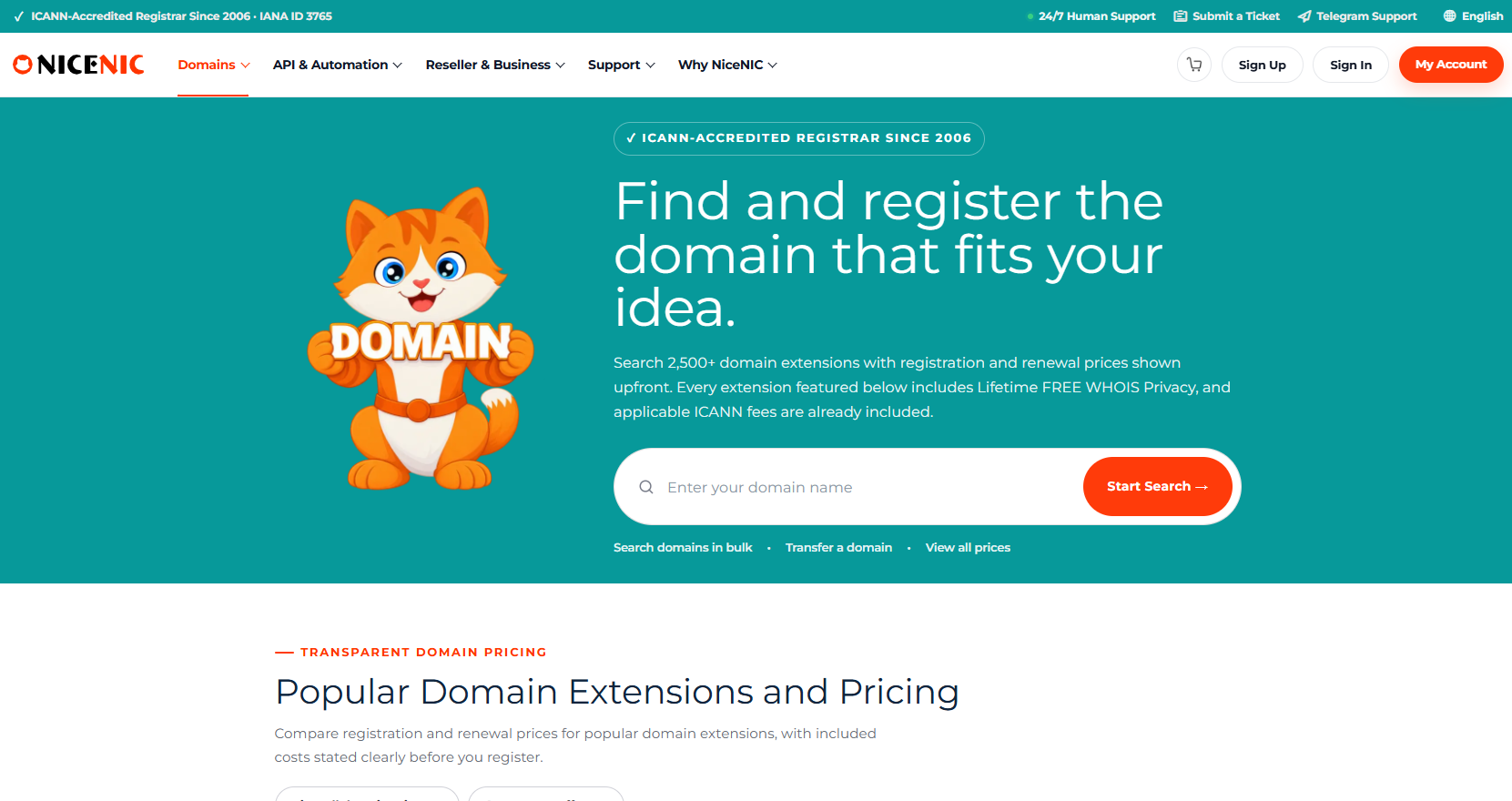
Step 1: Search Your Domain
Enter your store, course, service, community, event, company, or brand name and compare availability under .ONLINE, .COM, or both.
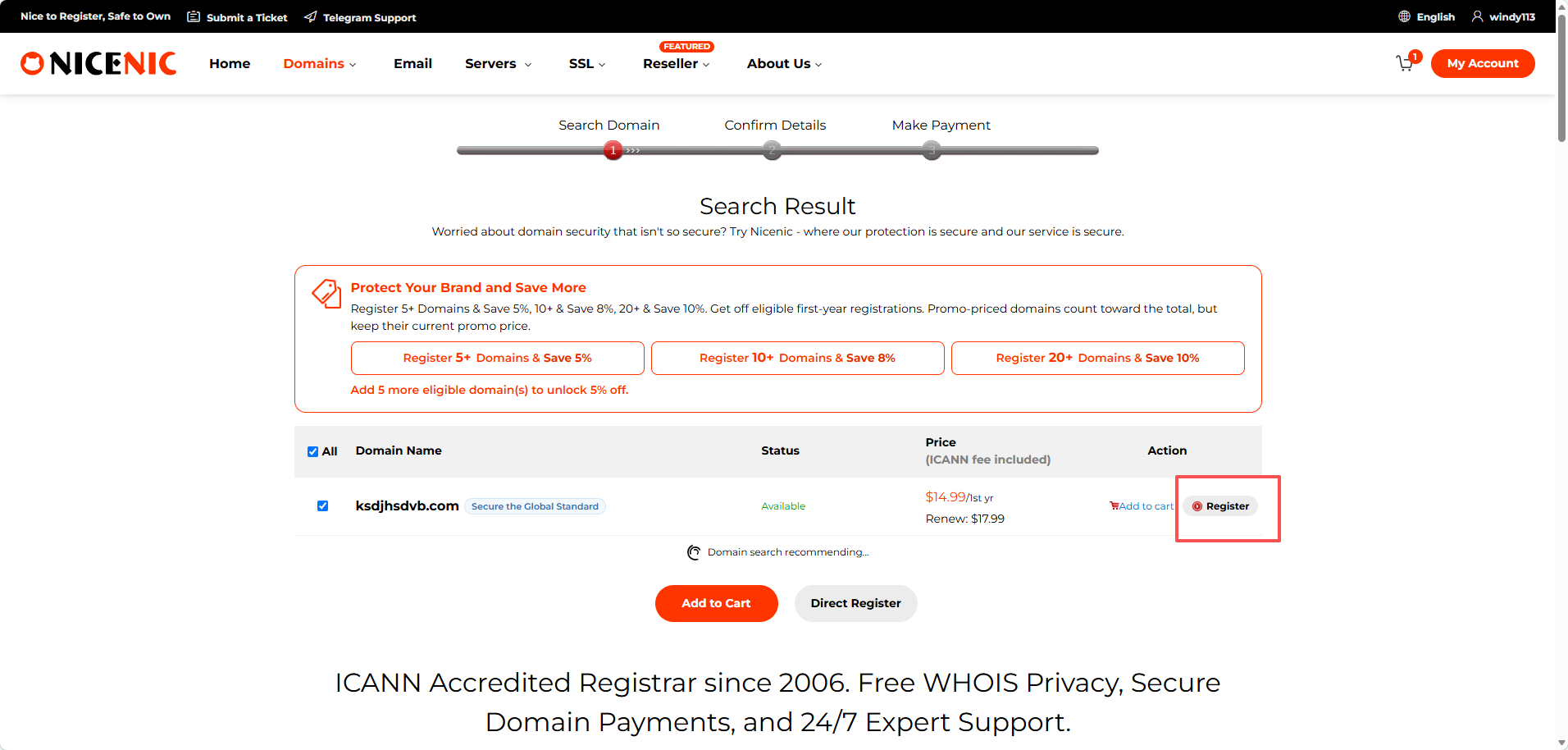
Step 2: Compare the Complete Names
Review:
- Domain length
- Memorability
- Online relevance
- Spoken clarity
- Brand flexibility
- Registration price
- Renewal price
- Premium-domain status
- Long-term purpose
Check the latest domain registration and renewal prices before making the final decision.
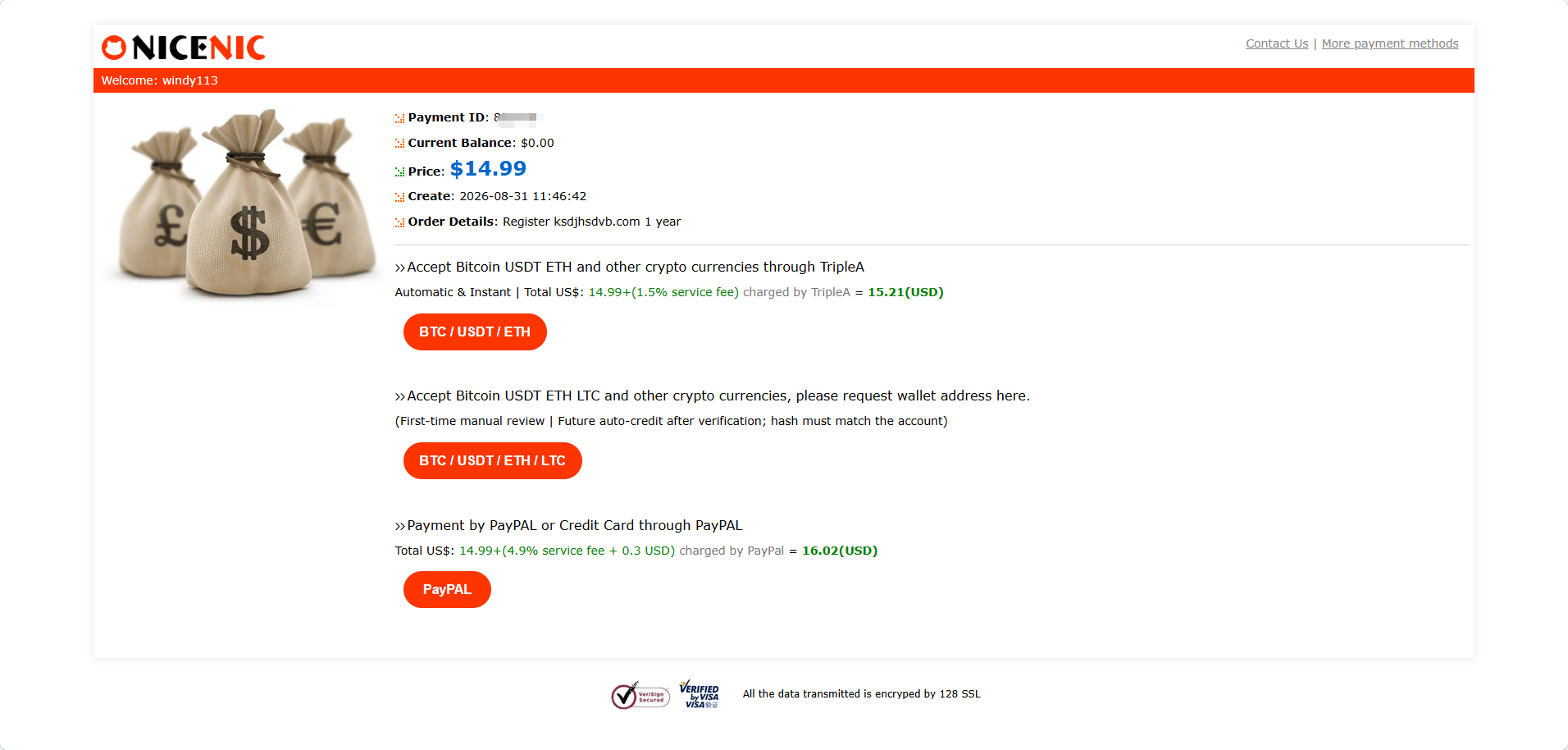
Step 3: Complete Registration
Add the selected domain to your order, confirm the registration information, choose an available payment method, and complete payment.
After registration, the domain can be managed from your NiceNIC account.
Check Your Name in .ONLINE and .COM
Ready to compare the actual name you want?
Checking several store, course, event, or client names? Use NiceNIC Bulk Domain Search.
Managing domains for customers or integrating domain services into your platform? Explore the NiceNIC Domain API.
Already own the domain elsewhere? Start with NiceNIC Domain Transfer.
Planning to keep the domain long term? Compare current registration and renewal prices before ordering.


