



One may need to represent the entire business.
The other may exist mainly to explain, document, teach, answer questions, publish research, or organize reference material.
That makes .INFO and .COM useful in different situations.
Choose .COM when you want a broad primary domain that can represent a company, brand, product, store, service, or organization over the long term.
Choose .INFO when providing information is central to the project and the extension helps users understand the purpose of the site.
For some organizations, both can have clear roles:
brand.com → main company website
product.info → product information resource
research.info → research or reference project
guide.info → public guide or knowledge resource
The stronger choice depends on what the website is expected to do, who will use it, and whether the information project should have its own identity.
.INFO vs .COM: The Quick Answer
.COM provides broad branding flexibility.
It can represent almost any type of website without defining the purpose of the content.
.INFO has a more descriptive meaning.
The extension can fit naturally with websites focused on:
- Knowledge bases
- Documentation
- Guides
- Reference resources
- Product information
- Educational material
- Research projects
- Industry information
- Public resources
- Help centers
- FAQ projects
- Data resources
- Information portals
- Resource libraries
- Independent guides
The key question is:
Is providing information the main reason this website exists?
If yes, .INFO may add useful context to the complete domain name.
If the website represents an entire business with many different functions, .COM may provide greater flexibility.
For a broader introduction to the extension, see What Is .INFO? Everything You Need To Know About .INFO Domains.
Check Your Name in .INFO and .COM
Before comparing the extensions in theory, check the names you actually want.
Check .INFO Domain Availability
Check .COM Domain Availability
At publication, NiceNIC currently shows:
.INFO Market Account: $5.99 first year, $42.99 renewal
.COM Market Account: $14.99 first year, $17.99 renewal
Account level, registry pricing, Premium classification, transfer pricing, and promotions can change.
Always confirm the current domain registration and renewal prices before completing an order.
The current .INFO first-year price is lower.
Its renewal price is higher than .COM.
For a resource that may remain online for many years, long-term cost deserves as much attention as the launch price.
What Is the Main Difference Between .INFO and .COM?
The main difference is informational purpose versus broad brand identity.
.COM is neutral.
A company using:
northbridge.com
could operate as:
- A software company
- A retailer
- A consultancy
- A publisher
- A research firm
- A manufacturer
- An education company
- A financial business
without the extension defining what users should expect to find on the website.
.INFO adds another clue.
A domain such as:
northbridge.info
may suggest that the site exists primarily to explain something, organize knowledge, publish information, or provide reference material.
That can be useful when information is the product.
It can be less useful when the same domain needs to represent a broad company, ecommerce operation, software platform, and several other business activities.
What Does .INFO Communicate?
The word “info” is commonly understood as an abbreviation of “information.”
That gives .INFO a fairly direct naming role.
Illustrative examples include:
travel.info
product.info
research.info
cityguide.info
security.info
manual.info
industry.info
These examples show possible naming structures only. Actual domain availability and Premium status must be checked before registration.
A well-matched .INFO name can help answer a visitor’s first question:
What am I going to find here?
That clarity is one of the strongest reasons to consider the extension.
Can Anyone Register a .INFO Domain?
In general, .INFO is open for registration by individuals and organizations without a special professional, geographic, or industry eligibility requirement.
Registrants still need to provide appropriate registration information and follow applicable registry, registrar, ICANN, legal, and third-party-rights requirements.
That means .INFO is not limited to:
- Educational institutions
- News organizations
- Governments
- Nonprofits
- Research institutions
A commercial company can also use .INFO.
The important question is whether the name and purpose make sense together.
When Should You Choose .COM?
Choose .COM when:
- You are building the main website for a company.
- The site needs to represent many products or services.
- Your business may change direction over time.
- Online sales are central to the site.
- You want a neutral extension.
- The website combines marketing, support, ecommerce, company information, and customer services.
- You expect the domain to remain a core business asset for many years.
-
A suitable matching
.COMis available.
Imagine a software company.
Its main website may eventually contain:
- Product pages
- Pricing
- Documentation
- Customer accounts
- Company information
- Jobs
- Partner programs
- Events
- Ecommerce
- Support
A .COM domain can comfortably cover all of those functions.
If this matches your plans, check whether your preferred .COM domain is available.
When Does .INFO Make More Sense?
.INFO becomes more relevant when information itself is central to the project.
Strong use cases can include:
- Knowledge bases
- Product documentation
- Public guides
- Research libraries
- Educational resources
- Industry reference sites
- Consumer information
- Help resources
- Technical documentation
- Community knowledge
- Public-interest information
- Data explanations
- FAQ projects
- Resource directories
- Topic-specific information portals
For example:
productguide.info
could support a public product guide.
research.info
could fit a research-oriented resource.
industry.info
could support industry reference material.
travelguide.info
could suit an independent destination guide.
If that matches your project, check whether your preferred .INFO domain is available.
.INFO Can Be Useful for a Knowledge Base
Knowledge bases have a clear purpose:
help people find answers.
They may contain:
- Tutorials
- How-to articles
- Definitions
- Troubleshooting guides
- FAQs
- Reference material
- Technical explanations
- Product instructions
- Policies
- Best practices
A .INFO domain can fit that structure when the knowledge base has its own identity.
For example:
platform.com → main product
platform.info → public knowledge resource
However, creating a separate domain is not always necessary.
A company could also use:
platform.com/help
or:
help.platform.com
Those structures keep the information directly connected to the main company domain.
The right choice depends on whether the knowledge project should function as part of the main website or as a separate resource.
.INFO vs a Help Center on .COM
This is an important decision that goes beyond the extension itself.
Imagine a company called BrightDesk.
It could use:
brightdesk.com/help
or:
help.brightdesk.com
or:
brightdesk.info
All three structures can work.
A section under .COM can be useful when:
- The documentation belongs directly to the product.
- Customers move frequently between product pages and help content.
- One website team manages everything.
- The brand wants one central web identity.
A separate .INFO domain can make sense when:
- The resource has its own name.
- The information serves a broader audience than existing customers.
- Multiple products contribute to the resource.
- The project may develop independently.
- The organization wants a dedicated public information destination.
There is no universal advantage to splitting documentation onto another domain.
Use a separate .INFO domain when the separation has a clear purpose.
Is .INFO Good for Product Documentation?
It can be.
Documentation projects often need to organize:
- Setup instructions
- API explanations
- User manuals
- Troubleshooting
- Release information
- Configuration guides
- Integration instructions
- Product specifications
- FAQs
A company might use:
company.com → corporate and product website
product.info → independent product information center
This can be especially useful when one resource supports customers, partners, developers, or users across several channels.
Another perfectly reasonable structure is:
company.com/docs
The better option depends on branding, technical architecture, maintenance, and how users navigate between the sites.
Can .INFO Work for a Public Guide?
Yes.
Guides are one of the clearest informational use cases.
Possible topics include:
- Travel
- Technology
- Industry terminology
- Consumer education
- Local resources
- Product categories
- Events
- Public services
- Hobbies
- Professional topics
A domain such as:
cityguide.info
may communicate a reference-oriented purpose.
However, the extension does not tell users who created the guide or how reliable it is.
The site itself should make important information easy to verify.
Useful elements can include:
- Publisher identity
- Author information
- Sources
- Update dates
- Contact information
- Editorial policies
- Corrections where appropriate
The extension explains the type of project.
The content establishes its usefulness.
Is .INFO Good for Educational Content?
It can be.
Educational resources can include:
- Tutorials
- Learning guides
- Study resources
- Glossaries
- Reference libraries
- Training material
- Explainers
- Course supplements
- Research summaries
.INFO can communicate that the website exists primarily to provide knowledge.
That does not mean .INFO identifies an accredited school, university, training provider, or certification body.
If institutional status matters, the website should identify the organization clearly.
The domain can describe the purpose.
Credentials and accreditation should be presented separately where relevant.
What About Research Websites?
Research-oriented websites can also fit .INFO, especially when the project is designed to publish:
- Reports
- Datasets
- Analysis
- Background material
- Industry research
- Public findings
- Reference documents
- Methodology
- Research archives
For example:
marketresearch.info
could communicate the subject of a research resource.
A commercial research company may still prefer:
company.com
for the overall business.
It could then use a .INFO domain for a particular public research project.
This gives each domain a specific role.
Can Businesses Use .INFO?
Yes.
.INFO is not limited to nonprofit or non-commercial websites.
A business can use it for:
- Product information
- Documentation
- Customer education
- Industry guides
- Technical resources
- Public reports
- Research
- Knowledge centers
- Consumer information
For example:
brand.com → company
product.info → product information
or:
company.com → main business
industry.info → public industry resource
This can help separate the commercial website from a dedicated information project.
The separation should still make sense to users.
Can .INFO Work for a News or Media Project?
It can, when the website’s primary role is publishing information.
However, .INFO does not identify a site as a verified news organization.
A media project still needs to establish:
- Publisher identity
- Authors
- Editorial standards
- Sources
- Publication dates
- Correction policies where appropriate
- Contact details
For a broader media company with video, events, subscriptions, ecommerce, and multiple publications, .COM may offer more flexibility.
For a focused information or reference project, .INFO may fit naturally.
Can .INFO Work for Public-Service Information?
Potentially.
A .INFO domain can communicate an informational purpose for:
- Community resources
- Event information
- Public guides
- Consumer awareness
- Safety information
- Educational campaigns
- Service directories
The domain itself does not indicate government ownership or official status.
If a website represents a government agency, municipality, regulator, or other official body, the organization should use the domain structure and policies appropriate to that jurisdiction.
Independent information projects should avoid presenting themselves as official when they are not.
Clear publisher identification helps users understand the source.
.INFO Works Best When Information Is Maintained
An information-focused domain creates an expectation.
Visitors expect the content to remain useful.
That makes maintenance particularly important.
For a long-term .INFO project, consider including:
- Publication dates
- Last-updated dates
- Sources
- Author or editor information
- Change history where useful
- Working links
- Current screenshots
- Updated product information
- Clear contact details
A well-named information site with outdated content can still frustrate users.
Domain selection is only the beginning.
The quality and maintenance of the resource determine whether people continue using it.
Does .INFO Automatically Make Information More Trustworthy?
No domain extension can establish the reliability of content by itself.
.INFO can communicate that information is the focus of the website.
Trust depends on the publisher and the material being provided.
Useful signals can include:
- Clear publisher identity
- Named authors
- Relevant expertise
- Sources
- References
- Update dates
- Transparent policies
- Contact information
- Corrections where appropriate
This matters especially for topics that can affect important decisions.
The extension can help set expectations.
The website needs to meet them.
Is .INFO Better Than .COM for a Knowledge Website?
It depends on what the website represents.
Imagine two projects.
Project A
A company runs:
company.com
and publishes several hundred product guides as part of its normal customer support.
Keeping those guides under the main domain may be simpler.
Project B
An organization creates an independent industry knowledge center used by customers, partners, researchers, and the general public.
A dedicated .INFO domain may give that resource a clearer identity.
The question is not simply whether the content is informational.
Ask whether the information project should have a separate brand and destination.
Is a Short .INFO Better Than a Long .COM?
Sometimes.
Compare:
travelguide.info
with:
globaltravelinformationguide.com
The .INFO version is shorter.
Now compare:
travelguide.info
with:
travelguide.com
If both names were available at suitable prices, the best choice would depend on the role of the site.
A broad travel business might prefer the flexibility of .COM.
A dedicated reference guide might find .INFO more descriptive.
Always compare the complete names.
Consider:
- Length
- Memorability
- Meaning
- Spoken clarity
- Project purpose
- Registration price
- Renewal price
- Premium status
- Expected ownership period
The extension is one part of the domain.
Think About How the Domain Will Be Shared
Information websites are often shared through:
- Search results
- Social media
- Forums
- Documentation
- Academic references
- Help tickets
- QR codes
- Printed guides
- Customer support
A domain should remain easy to identify in those environments.
For example:
helpful.info
may be concise.
A longer .COM may explain the organization more clearly.
Test the complete address in the places where users will actually encounter it.
Think About Email Before Choosing
A .INFO domain may also be used for email.
Examples include:
or:
Before choosing a separate information domain, decide whether it should also have its own email identity.
For some projects, that separation is useful.
For others, keeping communication under the main company domain may be easier for customers to recognize.
Does .INFO Rank Better Than .COM on Google?
The extension itself does not create an automatic Google ranking advantage.
Google states that it aims to return relevant results regardless of the generic top-level domain being used.
That means .INFO does not receive a ranking boost simply because the word “info” appears in the extension.
.COM also does not receive a guaranteed ranking advantage simply because it is .COM.
Search performance depends much more on factors such as:
- Helpful original content
- Search intent
- Technical crawlability
- Website structure
- Internal linking
- Relevant links
- Page performance
- Mobile usability
- Content quality
- Brand and publisher signals
- User experience
Choose .INFO because it helps users understand the project.
Build search visibility through the quality of the information.
Does the Word "Info" in the Domain Help Rank Informational Queries?
It should not be treated as a ranking shortcut.
For example:
travel.info
may clearly communicate an informational travel resource.
That clarity can help people understand the site.
It does not mean the domain automatically ranks higher for:
“travel information”
or other informational searches.
The same applies to:
product.info
research.info
guide.info
A descriptive domain can support communication and branding.
Search ranking still depends on the website and its pages.
Avoid Creating Thin Information Sites Just for the Domain
A .INFO registration works best when there is a real information project behind it.
Creating many pages simply because a keyword-based .INFO domain is available does not guarantee search traffic.
A useful information resource should have a clear reason to exist.
That may include:
- Original research
- Detailed guides
- Better organization
- Current documentation
- Expert explanations
- Useful data
- Practical tools
- Clear answers
- Regular updates
The domain can describe the resource.
The resource itself needs to provide the value.
First-Year Price vs Long-Term Cost
At publication, NiceNIC currently shows:
.INFO: $5.99 first year, $42.99 renewal
.COM: $14.99 first year, $17.99 renewal
The current .INFO first-year price is lower.
The renewal price is higher.
Before registering, compare:
- First-year registration
- Renewal price
- Transfer price
- Premium-domain status
- Expected ownership period
Review the latest figures on the NiceNIC Domain Prices page before ordering.
A temporary information campaign and a reference site intended to remain online for ten years have very different cost considerations.
For a Permanent Information Resource, Look Beyond the First Year
A low first-year registration price can make launching a resource easier.
A useful documentation site, knowledge base, or public guide may remain online for many years.
Before registering, ask:
- Is this a temporary project or a permanent resource?
- Will information remain the main purpose of the site?
-
Does the
.INFOname create a clear identity? - What is the renewal price?
-
Is a suitable
.COMavailable? - Would the content fit better under an existing company domain?
These questions provide a more realistic long-term comparison.
What About Premium .INFO Domains?
Some short, generic, or otherwise desirable names may have Premium pricing.
The exact name you want may therefore cost differently from the standard .INFO registration price.
Before building a project around a domain:
- Search the exact name.
- Confirm availability.
- Check whether Premium pricing applies.
- Review the registration price.
- Review the applicable renewal price.
Do this before committing to:
- Branding
- Logos
- Printed materials
- Advertising
- Website development
- Documentation templates
The same principle applies to .COM and other extensions.
Should You Register Both .INFO and .COM?
For an important name, owning both can make sense when the cost and use cases justify it.
One structure could be:
brand.com → main company website
brand.info → redirect or protected matching domain
Another:
company.com → business
product.info → documentation
Another:
company.com → organization
research.info → public research project
Another:
publisher.com → company
topic.info → reference resource
There is usually little reason to publish identical websites on both domains.
Choose a primary address or give each domain a specific role.
Check Existing Brands Before Registering a .INFO Alternative
A domain being available does not automatically make it a good brand choice.
Before registering a .INFO version of a name, review whether the same or a confusingly similar name is already associated with another organization.
Consider:
- Existing companies
- Relevant trademarks
-
The matching
.COM - Similar websites
- Important country-code domains
- Likely customer confusion
This is especially relevant when the .INFO project provides information about products, companies, industries, or public topics.
Choose a name that makes the publisher and purpose clear.
.INFO Can Be Useful for Agencies and Documentation Platforms
Web agencies, hosting providers, SaaS companies, documentation platforms, and resellers may manage domains for information-focused customer projects.
Those projects can include:
- Knowledge bases
- Documentation
- Customer guides
- Research resources
- Educational sites
- Help centers
- Public information projects
- Reference portals
Instead of checking names individually, use NiceNIC Bulk Domain Search to compare multiple .INFO, .COM, and other domain ideas.
Platforms, agencies, hosting providers, and resellers that want supported domain operations inside their systems can explore the NiceNIC Domain API for availability checks, registration, renewal, transfers, DNS, pricing, and related supported operations.
For larger portfolios, also plan for:
- Renewal dates
- Customer ownership
- DNS management
- Account access
- Billing
- Documentation ownership
- Client handover
- Portfolio organization
A useful information project needs reliable long-term domain management as well as good content.
Already Own a .INFO Domain Elsewhere?
You can transfer an existing domain to NiceNIC when the domain meets the applicable transfer requirements.
Typical preparation includes:
- Confirm that the domain is eligible for transfer.
- Unlock the domain at the current registrar where required.
- Obtain the Auth Code or EPP Code.
- Confirm access to the relevant account or registrant email.
- Submit the transfer.
- Monitor the transfer until completion.
Before moving an active information website, also review:
- Nameservers
- DNS records
- Email records
- DNSSEC status where applicable
- Domain expiration date
- Transfer timing
Keeping unrelated hosting or DNS changes separate from the registrar transfer can make troubleshooting easier.
.INFO vs .COM: Quick Comparison
Choose .INFO when you prioritize:
- Knowledge-base positioning
- Documentation
- Guides
- Reference resources
- Product information
- Research
- Educational material
- Public information projects
- A separate information identity
- A name where "info" contributes naturally to the purpose
Choose .COM when you prioritize:
- A primary company website
- Broad brand flexibility
- Ecommerce and commercial expansion
- Multiple products and services
- One central company identity
- Long-term use across several business areas
- Familiarity with a broad audience
Current NiceNIC Market pricing at publication:
.INFO
- First year: $5.99
- Renewal: $42.99
.COM
- First year: $14.99
- Renewal: $17.99
Pricing can change, and individual Premium domains may have different pricing. Check the live price before registration.
.INFO or .COM: Which Should You Choose?
Choose .COM if:
- You are building the permanent company website.
- The site represents the entire organization.
- You sell products or services in several categories.
- Your business may expand over time.
- You want one central web identity.
- Broad familiarity is important.
-
A suitable matching
.COMis available. - Long-term renewal cost is an important factor.
Choose .INFO if:
- Providing information is the main purpose of the site.
- You are building a guide, documentation resource, or knowledge base.
- The information project needs its own identity.
-
.INFOcreates a concise and relevant complete domain. - You are publishing research, reference material, or educational content.
- You understand the registration and renewal costs.
- The publisher and purpose of the site will be clearly identified.
Consider both when:
.COM will represent the main company
and
.INFO will represent a dedicated documentation, research, knowledge, product-information, or public-resource project.
Final Verdict
.COM remains a strong option for a company that wants one flexible domain to represent the entire organization.
.INFO has a more focused role.
It works particularly well when explaining, documenting, teaching, researching, or organizing information is central to the project.
Its strongest value comes from clarity.
A suitable .INFO name can tell visitors that they are entering a resource rather than a general corporate website.
That does not make the information automatically accurate, authoritative, or better ranked.
The publisher, content, sources, maintenance, and user experience still determine the quality of the resource.
Long-term cost also deserves attention.
At publication, .INFO has a lower NiceNIC Market first-year price than .COM, while its renewal price is higher.
Before choosing, ask five questions:
Is providing information the main purpose of the website?
Should this resource have its own domain or live under an existing company site?
Does .INFO make the complete name clearer?
Will the information remain useful and maintained over time?
Does the long-term cost fit the project?
Then choose the domain that best fits the audience, purpose, content strategy, and expected lifetime of the resource.
How to Register a .INFO or .COM Domain at NiceNIC
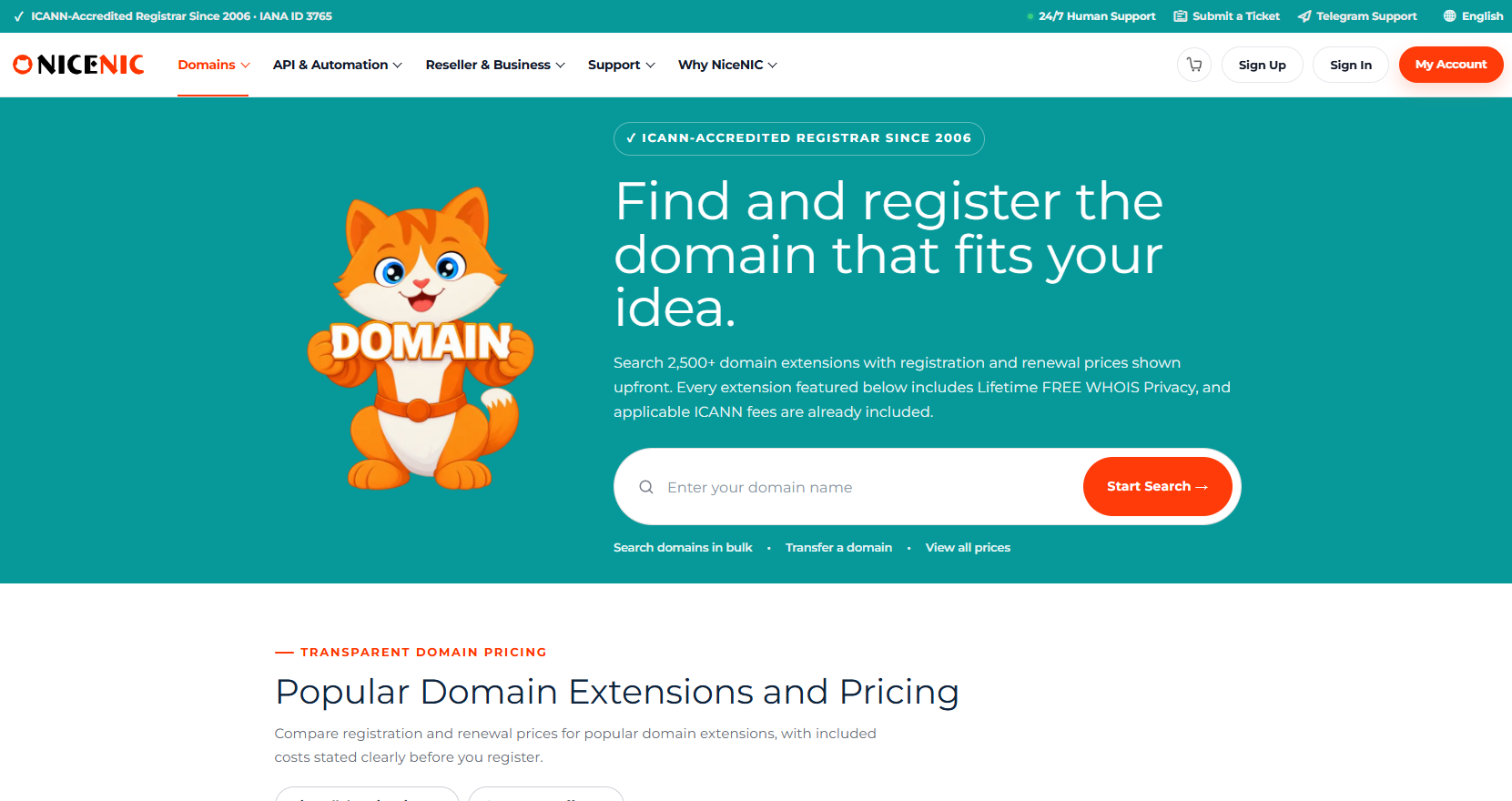
Step 1: Search Your Domain
Enter your guide, documentation, research, knowledge-base, company, or project name and compare availability under .INFO, .COM, or both.
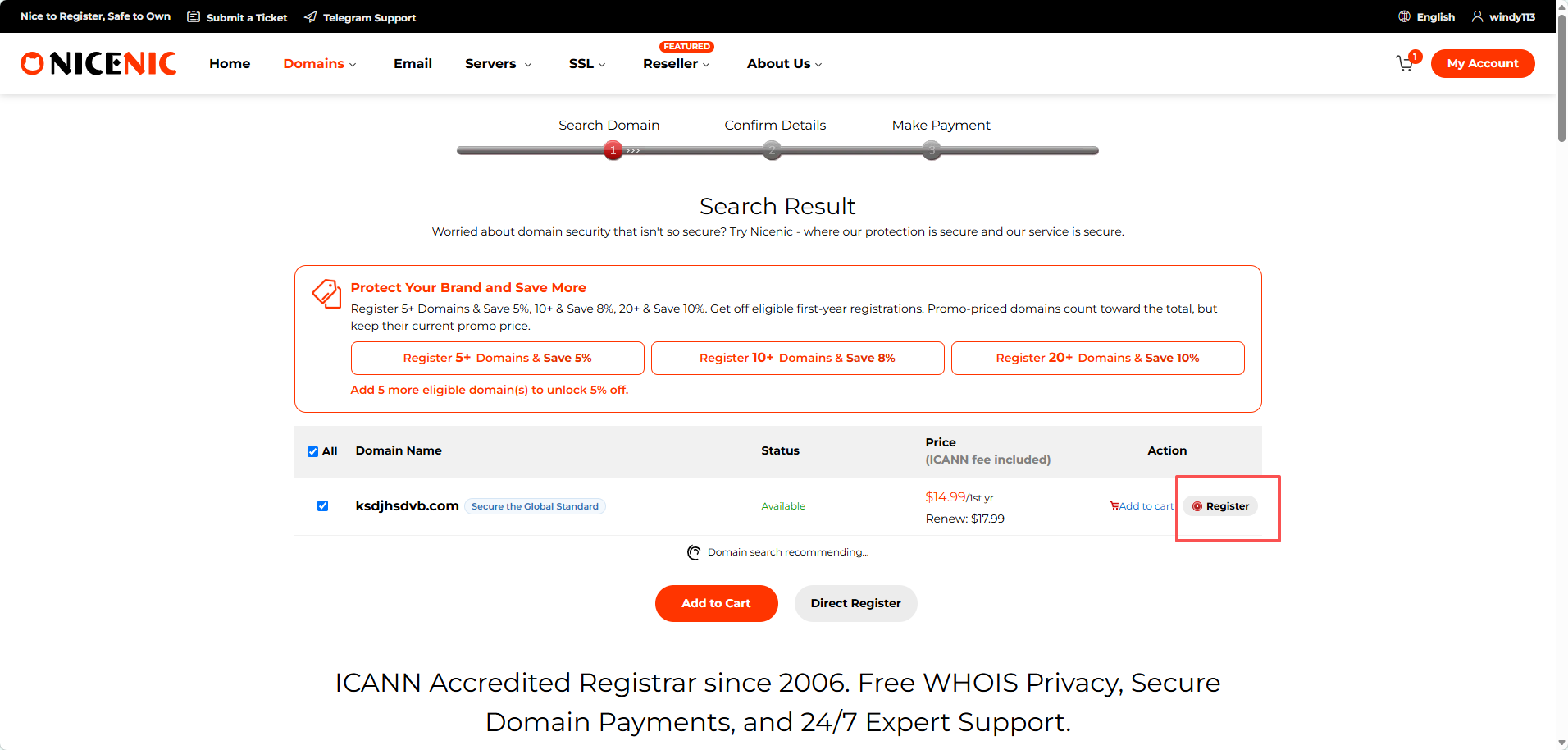
Step 2: Compare the Complete Names
Review:
- Domain length
- Memorability
- Information relevance
- Publisher identity
- Brand flexibility
- Registration price
- Renewal price
- Premium-domain status
- Long-term purpose
Check the latest domain registration and renewal prices before making the final decision.
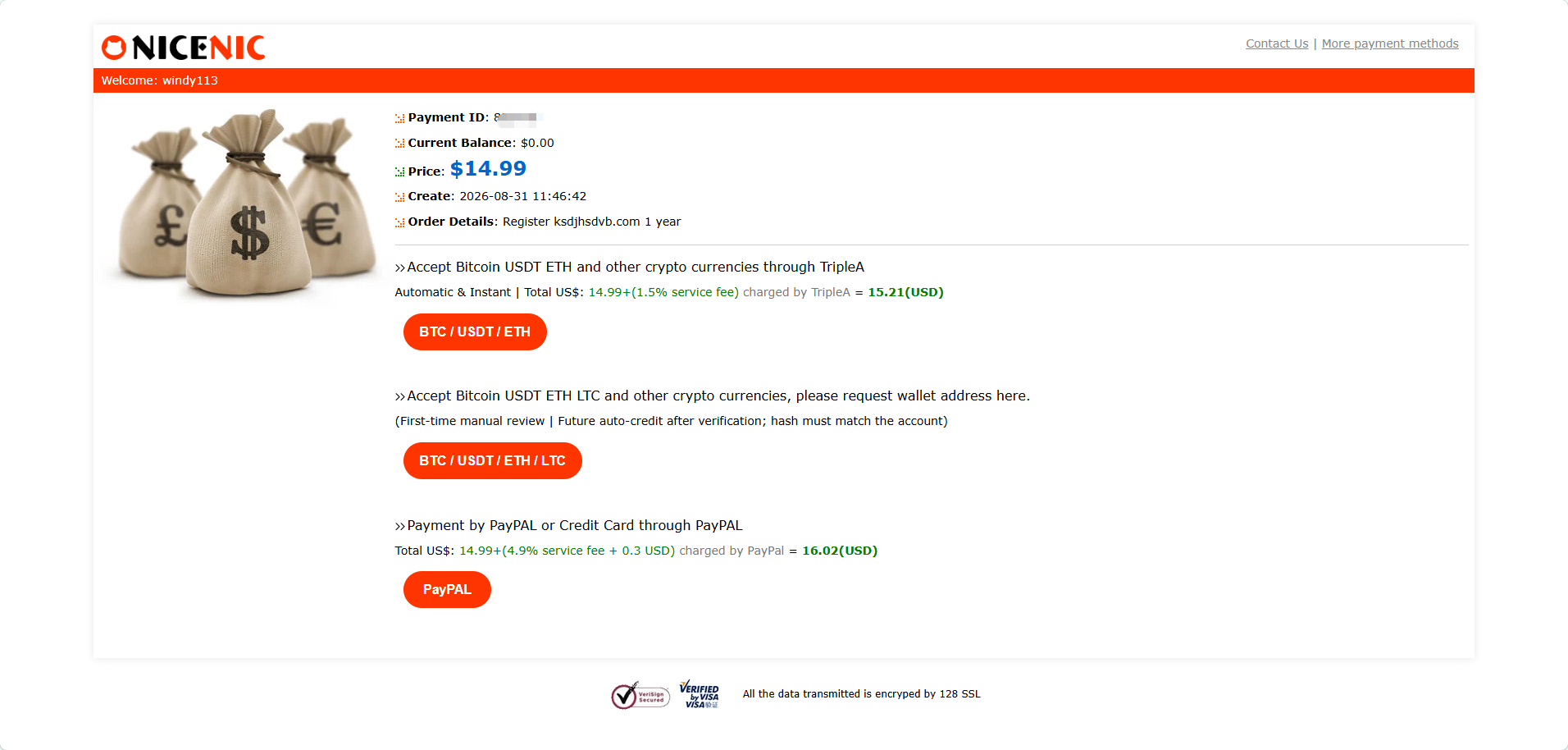
Step 3: Complete Registration
Add the selected domain to your order, confirm the registration information, choose an available payment method, and complete payment.
After registration, the domain can be managed from your NiceNIC account.
Check Your Name in .INFO and .COM
Ready to compare the actual name you want?
Checking multiple documentation, research, or client names? Use NiceNIC Bulk Domain Search.
Managing customer domains or integrating domain services into your own platform? Explore the NiceNIC Domain API.
Already own the domain elsewhere? Start with NiceNIC Domain Transfer.
Planning to keep the domain long term? Compare current registration and renewal prices before ordering.


