


.COM or choose .BLOG to make the purpose of the site immediately clear?
Choose a .COM domain when you want one broad brand that can later support products, services, ecommerce, or other business activities.
Choose a .BLOG domain when publishing, commentary, stories, guides, or ongoing content are central to the identity.
For some brands, both can work:
brand.com → main business or personal brand brand.blog → articles, insights, stories, or thought leadership
.BLOG vs .COM: The Quick Answer
.COM offers greater familiarity and broader long-term flexibility.
.BLOG immediately communicates that visitors can expect content.
That makes .BLOG particularly relevant for:
- Bloggers
- Writers
- Creators
- Newsletter publishers
- Editorial projects
- Thought leaders
- Company content hubs
The key question is:
Is content the main brand, or is content only one part of a larger business?
If publishing itself is the product, .BLOG can be a natural fit.
If the site may eventually sell products, software, services, or other offerings under the same brand, .COM usually provides more flexibility.
Check Your Name in .BLOG and .COM
Before deciding based only on the extension, check whether the actual name you want is available.
A clean .BLOG can be stronger than a long .COM filled with extra words. Likewise, if the exact .COM is available and you expect the brand to grow far beyond publishing, securing it may make more sense.
Check .BLOG Domain Availability
Check .COM Domain Availability
Domain prices can differ significantly by extension, account level, renewal period, and premium status. Before committing to a long-term content brand, compare current registration, renewal, and transfer prices.
What Is the Main Difference Between .BLOG and .COM?
The biggest difference is content-first identity versus broader brand flexibility.
.COM is neutral.
A writer could begin with articles, later launch a course, publish books, sell memberships, create software, or build a broader media company without the .COM address feeling too specific.
.BLOG communicates the site’s purpose immediately.
Names such as:
alexrivera.blog
travelnotes.blog
productthinking.blog
clearly suggest articles, commentary, stories, or ongoing publishing.
That clarity is useful when readers are the main audience and content is the main product.
When Should You Choose .COM?
Choose .COM when the domain needs to represent more than the blog itself.
It is usually the stronger option when:
- You are building a broad personal or company brand.
- You may eventually sell products or services.
- Your site includes ecommerce, software, consulting, or other business activities.
- General domain familiarity matters.
-
A strong matching
.COMis available.
For example, imagine a creator brand called Northlight.
Today it publishes photography tutorials.
Later it may offer:
- Online courses
- Presets
- Workshops
- Books
- Photography services
northlight.com can comfortably represent all of those activities.
That flexibility remains one of .COM’s strongest advantages.
When Does .BLOG Make More Sense?
Choose .BLOG when publishing is at the center of the project.
It can work particularly well for:
- Personal blogs
- Professional writers
- Travel journals
- Industry commentary
- Niche publications
- Creator content
- Newsletter archives
- Educational resources
- Company insights
- Product stories and updates
Suppose your preferred brand is Northlight.
If northlight.com is unavailable but:
northlight.blog
is available, the .BLOG version keeps the brand short while also explaining what visitors will find there.
In this case, .BLOG is not merely a fallback for an unavailable .COM.
The extension contributes directly to the site’s identity.
.BLOG Can Work for More Than a Personal Diary
One common misconception is that .BLOG is only for personal bloggers.
It can also work for organizations that publish regularly.
For example, a SaaS company might use:
company.com → product, pricing, support, and sales
company.blog → guides, research, product stories, or industry commentary
A consulting firm could use .BLOG for thought leadership.
A creator could use it as the main publishing home.
A company could use it to separate editorial content from a sales-focused corporate website.
The value of .BLOG comes from making the purpose of that destination obvious.
.COM + .BLOG Can Work Together
For content-heavy brands, .COM and .BLOG do not always need to compete.
They can serve different roles:
brand.com → company, products, services, ecommerce
brand.blog → articles, insights, commentary, stories
Or for a personal brand:
name.com → portfolio and professional identity
name.blog → long-form writing
There is usually no need to publish identical content on both domains.
Choose one primary destination for each purpose, or redirect the secondary domain when appropriate.
If both exact names are important to the long-term brand, registering both can also preserve future options.
Does .BLOG Affect SEO?
Using .BLOG does not automatically make a website rank higher for blog or content-related searches.
Google has explained that new generic top-level domains are generally treated like other gTLDs, and a keyword inside the extension does not create an automatic ranking advantage.
So:
marketing.blog
does not automatically outrank a .COM website for marketing-related searches simply because it ends in .blog.
Search performance depends much more on:
- Helpful and original content
- Search intent
- Publishing consistency
- Internal linking
- Relevant backlinks
- Website structure
- Technical accessibility
- Page performance
- Brand authority
Choose .BLOG because it strengthens the publishing identity—not because you expect the extension itself to improve rankings.
For a Content Brand, the Registrar Matters Too
Choosing .BLOG or .COM is only part of the long-term decision.
A successful content domain may stay in use for years, accumulating articles, backlinks, bookmarks, social links, email addresses, and brand recognition.
That makes long-term management important.
Look beyond the first-year price. Before building years of content around a domain, check registration, renewal, transfer, and premium-domain costs. NiceNIC publishes these pricing categories so customers can compare current domain prices before committing.
Keep routine management manageable. Bloggers and creators may not have dedicated technical staff. DNS records, nameservers, renewals, and transfers should therefore be easy to locate and manage.
Plan for renewal. An established content domain can become more valuable over time. Losing control of it can affect years of backlinks, bookmarks, search visibility, and reader recognition.
Human support also matters when something goes wrong. A DNS, transfer, verification, or account issue may require investigation rather than another automated response. NiceNIC provides real human support for domain and account cases that need review.
Already own your content domain elsewhere? Review NiceNIC domain transfer options.
.BLOG or .COM: Which Should You Choose?
Choose .COM if:
- You want maximum familiarity.
- Your blog is part of a broader business or personal brand.
- You may later sell products or services.
- You want maximum flexibility as the brand grows.
-
A strong matching
.COMis available.
Choose .BLOG if:
- Publishing is the main purpose of the site.
- You are a blogger, writer, creator, or newsletter publisher.
- You want visitors to understand the site's purpose immediately.
-
.BLOGgives you a cleaner and more memorable name. - Content itself is central to the brand.
Consider both if .COM will represent the overall brand while .BLOG becomes the dedicated publishing destination.
Final Verdict
For a broad business or personal brand, .COM remains the more flexible long-term choice.
For bloggers, writers, creators, newsletters, and publishing-led projects, .BLOG can communicate the purpose more clearly and create a strong content-first identity.
The better choice depends on what you expect the domain to represent several years from now.
If content is the brand, .BLOG may fit naturally.
If content is one part of a much larger business, .COM usually leaves more room to grow.
How to Register a .BLOG or .COM Domain at NiceNIC
Once you have chosen the extension, registration only takes a few steps.
Step 1: Search Your Domain
Enter your preferred blog, creator, or brand name, select .BLOG, .COM, or both, and click Search.
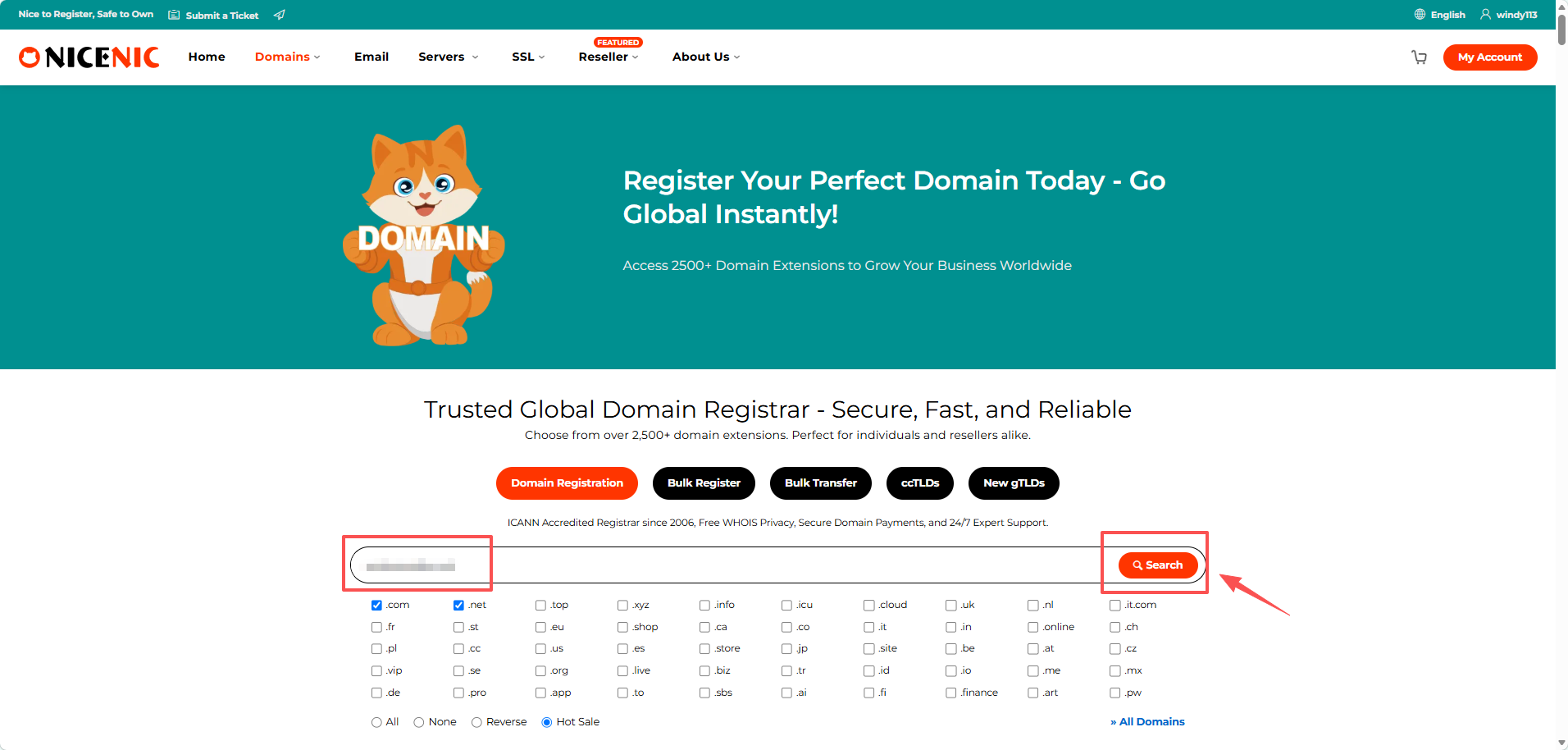
Search your preferred name and select the extensions you want to compare.
Step 2: Choose an Available Domain
Review the availability and current price, then click Register for the domain you want.
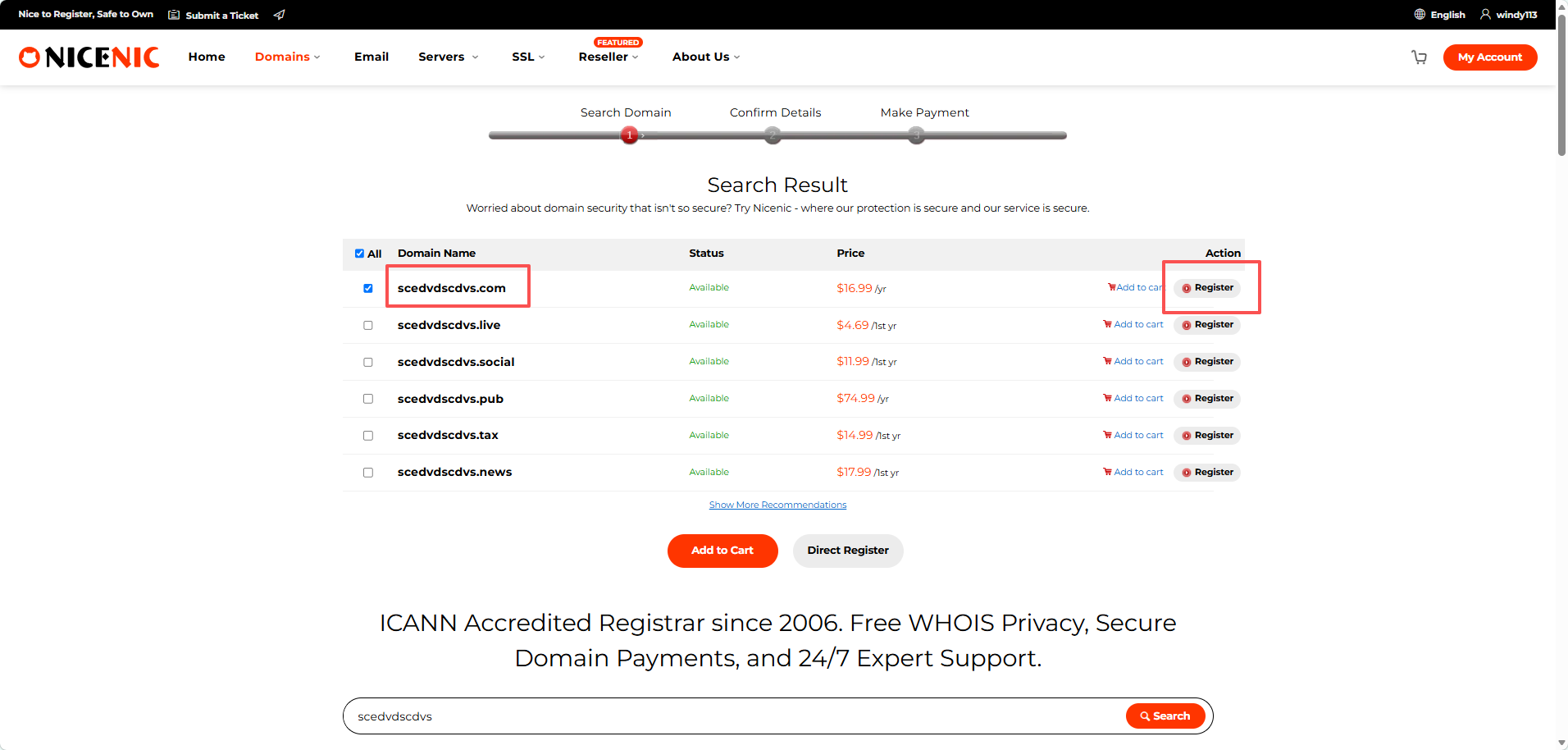
Check availability and choose the domain that fits your content brand.
Step 3: Complete Payment
Confirm the registration details, choose an available payment method, and complete the order.
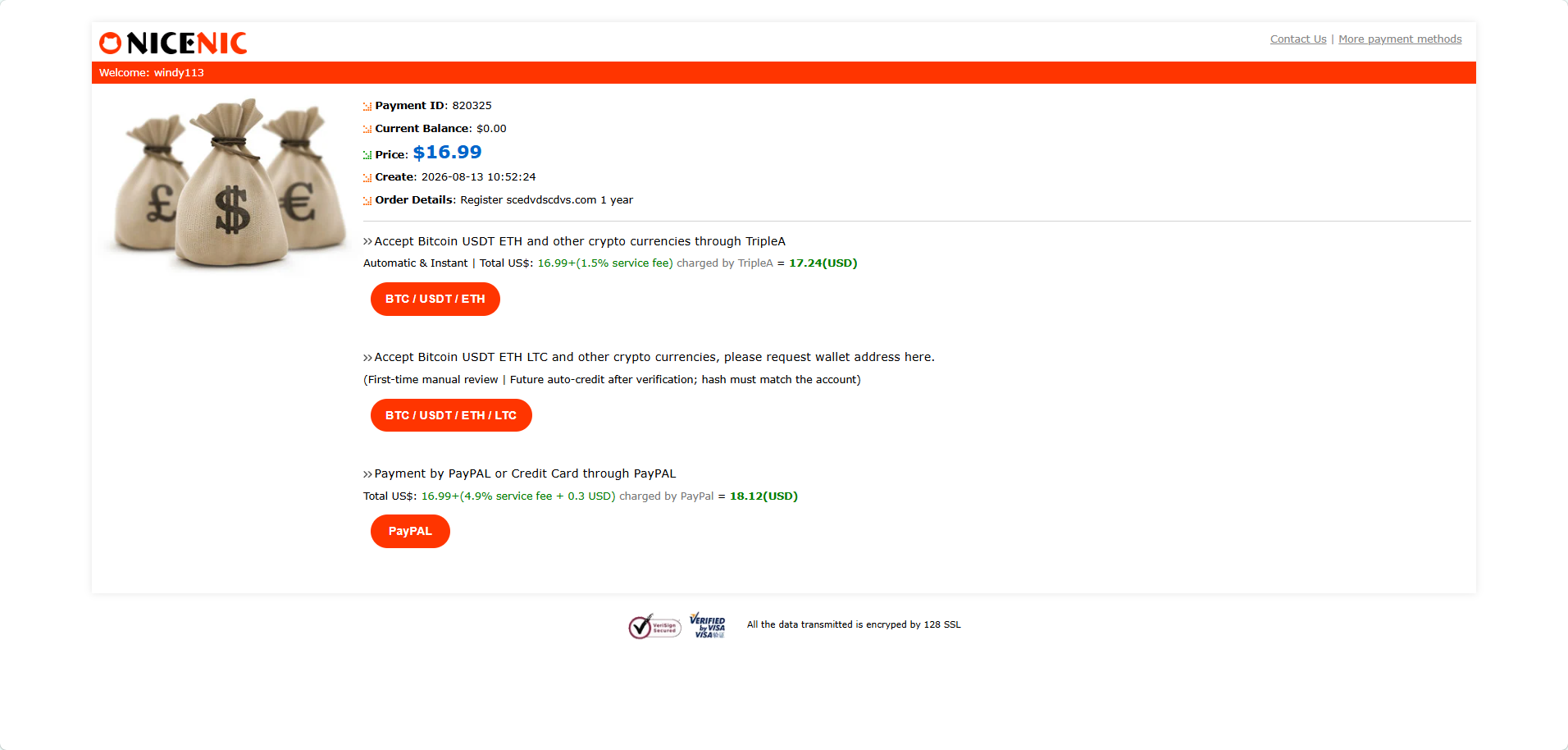
Review the order and complete payment.
After registration, you can manage your domain from your NiceNIC account and connect it to your blog, website, newsletter archive, or other publishing platform.
Check Your Name in .BLOG and .COM
Ready to compare the actual name you want?
Already own the domain elsewhere? Review domain transfer options.
Want to understand the long-term cost first? Compare registration, renewal, and transfer prices.
Found the right name? Create a free NiceNIC account and complete your registration.
Managing content domains for several clients? NiceNIC also provides bulk domain search and Reseller API v2 for larger workflows.


