


Προβολές:98
Ώρα:2026-08-12 14:24:20 Συγγραφέας: windy 
A domain order is not really complete if the customer still needs to configure DNS manually before the service works.
For hosting providers, domain resellers, SaaS platforms, and other online businesses, that extra step creates friction for customers and repetitive work for staff.
A DNS API allows DNS management to become part of the same automated workflow as domain registration and service activation.
With NiceNIC Reseller API v2, eligible resellers can automate supported DNS operations including listing, creating, updating, and deleting DNS records.
New to NiceNIC? Create a NiceNIC Account and explore the NiceNIC Reseller Program to start building your domain and DNS workflow.
Quick Answer
NiceNIC API v2 can support DNS automation such as:
It is connecting:
Domain registration → DNS provisioning → Service activation
inside one customer journey.
What Is a DNS API?
A DNS API allows an application to manage DNS programmatically instead of requiring every change to be made manually through a control panel.
Without automation:
Customer orders a domain
→ Domain is registered
→ DNS is configured manually
→ Domain connects to the service
With a DNS API:
Customer orders a domain
→ Domain is registered
→ Your system creates the required DNS records
→ Service provisioning continues
This becomes increasingly useful when the same DNS actions need to be repeated across many customers or domains.
What Can NiceNIC DNS API Automate?
NiceNIC API v2 documents the core DNS operations needed for automated record management.
These operations are most valuable when they are triggered by a customer action rather than handled manually one record at a time.
1. Automate Domain and Hosting Provisioning
Hosting providers are one of the clearest users of DNS automation.
A customer may purchase:
Domain + Hosting
The domain can be registered successfully, but it still needs to point to the correct hosting environment.
Instead of requiring staff or the customer to configure that manually, the workflow can become:
Customer selects domain
→ Purchases hosting
→ Domain is registered
→ Required DNS configuration is created
→ Domain connects to hosting
This removes a repetitive provisioning step and helps keep the entire onboarding process inside the hosting provider's own platform.
For a hosting company processing many domain orders, that can reduce manual work significantly.
2. Give Domain Resellers More Than Registration
A reseller relationship does not end when the domain is registered.
Customers may still need to connect the domain to hosting, email, a landing page, or another service.
A reseller using DNS automation can keep more of that workflow inside its own customer portal.
Instead of:
Sell domain → Customer leaves to configure DNS elsewhere
the experience can become:
Search → Register → Configure DNS → Activate service
That gives the reseller more control over the customer experience while reducing the number of separate systems the customer needs to use.
For businesses evaluating API-based domain services, the NiceNIC Reseller Program provides access to reseller tools and API options.
3. Simplify SaaS Custom-Domain Setup
SaaS platforms often allow customers to connect custom domains.
That process may require a CNAME, TXT verification value, or another supported DNS record before the domain can be activated.
When users need to copy these values manually, custom-domain onboarding becomes more technical than necessary.
A DNS API can make the process more integrated:
Customer adds custom domain
→ Application identifies the required DNS record
→ Record is created through the API
→ SaaS platform verifies the configuration
→ Custom domain is activated
This is particularly useful for website builders, SaaS applications, and other platforms where custom domains are part of the product.
Email and Other DNS Workflows
NiceNIC's current DNS API documentation includes MX and TXT among its documented record types.
That makes DNS automation relevant to email-related workflows as well.
For example, a business selling domain and email services may create supported DNS records as part of email activation instead of asking every customer to enter them manually.
DNS changes affecting live email should still be handled carefully because incorrect records can interrupt mail delivery.
The same principle applies to other DNS workflows: automate repetitive actions, but validate important changes before applying them.
Child Nameservers for Hosting Providers
NiceNIC API v2 also documents child nameserver operations.
These can be useful for hosting providers operating branded nameservers such as:
ns1.example.com
ns2.example.com
This is a more specialized use case, but it can allow hosting businesses to connect domain registration, nameserver configuration, and service provisioning more closely.
A Simple DNS API Request
A simplified request to create an A record can look like this:
curl "https://api.NiceNIC/v2/?category=dns&action=create_record&domain=example.com&type=A&host=www&value=192.0.2.10"
-H "Authorization: username:api_secret"
-H "Content-Type: application/json"
The application supplies the domain and record information, then sends the request using API authentication.
For production integrations, always use the current parameters from the official NiceNIC Reseller API v2 documentation.
DNS Automation Still Needs Safeguards
Because DNS directly affects websites, email, and other services, automation should still include basic validation.
At minimum:
Do You Actually Need a DNS API?
Manual DNS management may still be enough if you manage only a small number of domains and rarely change DNS.
A DNS API becomes more useful when:
Does manual DNS setup slow down customer activation or create repetitive work for your team?
If the answer is yes, DNS automation may be worth testing.
How to Start With NiceNIC DNS API
You do not need to automate every DNS workflow immediately.
A practical starting process is:
Frequently Asked Questions
1. What is a DNS API?
A DNS API allows an application to retrieve and manage DNS records programmatically instead of requiring every change to be made manually through a control panel.
2. Does NiceNIC provide DNS API functionality?
Yes. NiceNIC Reseller API v2 documents operations for listing, creating, updating, and deleting DNS records.
3. Can NiceNIC DNS API automate hosting or SaaS provisioning?
Yes. Supported DNS operations can be integrated into workflows where a domain needs to connect to hosting, a SaaS platform, email, or another service.
4. How do I start using NiceNIC DNS API?
Create a NiceNIC account first, review the reseller options, and configure API access after the account meets the applicable reseller requirements.
Start DNS Automation With NiceNIC
DNS should not become a manual interruption between domain registration and service activation.
NiceNIC Reseller API v2 allows eligible resellers to connect supported DNS operations with their own hosting, reseller, or SaaS workflows.
Start with one controlled DNS use case before expanding automation across your customer base.
→ Create a NiceNIC Account
→ Explore the NiceNIC Reseller Program
→ View NiceNIC Reseller API v2 Documentation
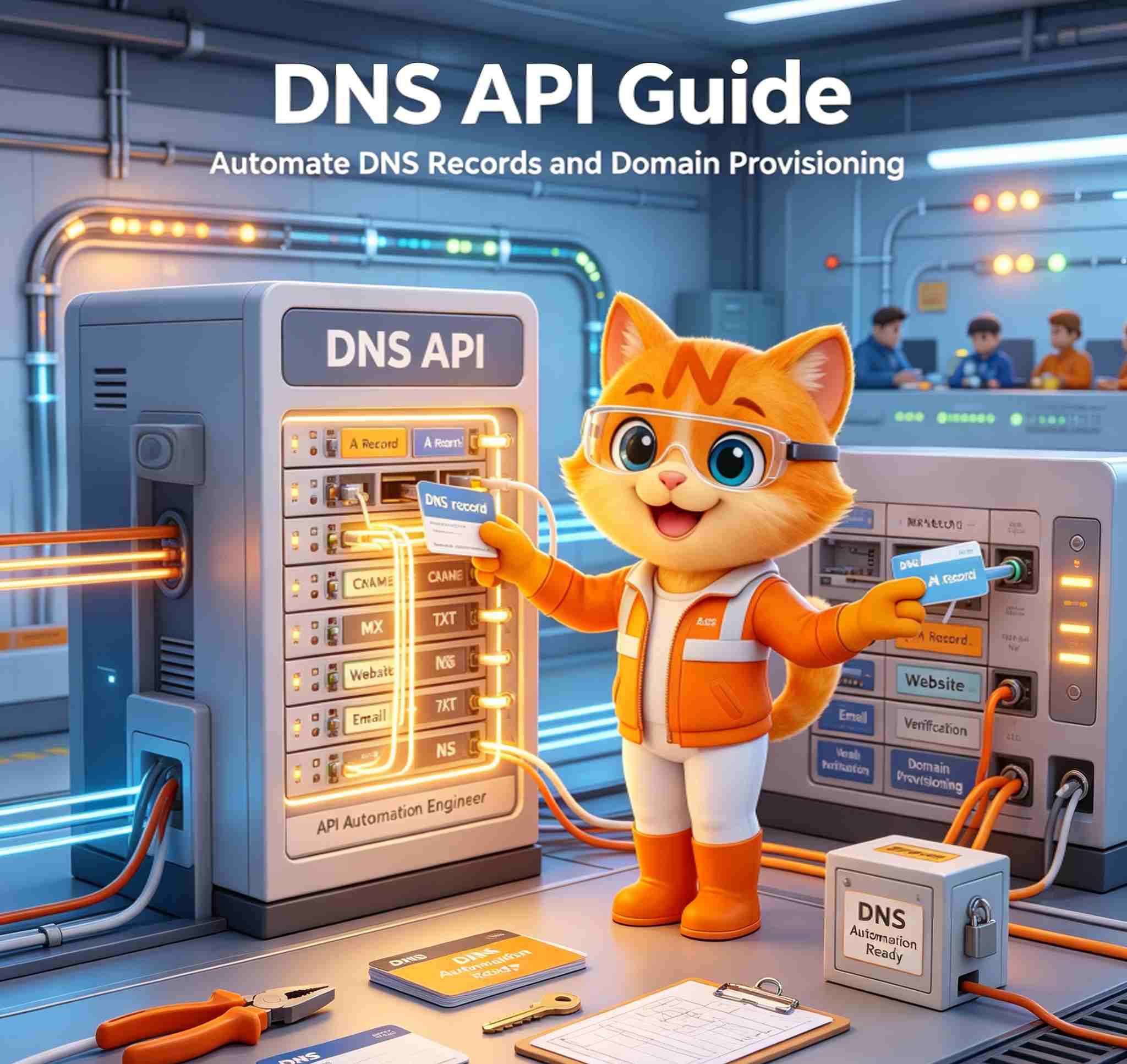
For hosting providers, domain resellers, SaaS platforms, and other online businesses, that extra step creates friction for customers and repetitive work for staff.
A DNS API allows DNS management to become part of the same automated workflow as domain registration and service activation.
With NiceNIC Reseller API v2, eligible resellers can automate supported DNS operations including listing, creating, updating, and deleting DNS records.
New to NiceNIC? Create a NiceNIC Account and explore the NiceNIC Reseller Program to start building your domain and DNS workflow.
Quick Answer
NiceNIC API v2 can support DNS automation such as:
- Listing DNS records
- Creating DNS records
- Updating DNS records
- Deleting DNS records
- Connecting domains to hosting or SaaS services
- Adding supported email or verification records
- Managing child nameservers where required
It is connecting:
Domain registration → DNS provisioning → Service activation
inside one customer journey.
What Is a DNS API?
A DNS API allows an application to manage DNS programmatically instead of requiring every change to be made manually through a control panel.
Without automation:
Customer orders a domain
→ Domain is registered
→ DNS is configured manually
→ Domain connects to the service
With a DNS API:
Customer orders a domain
→ Domain is registered
→ Your system creates the required DNS records
→ Service provisioning continues
This becomes increasingly useful when the same DNS actions need to be repeated across many customers or domains.
What Can NiceNIC DNS API Automate?
NiceNIC API v2 documents the core DNS operations needed for automated record management.
| DNS Operation | Example Use |
|---|---|
| List Records | Retrieve the current DNS configuration |
| Create Records | Add website, email, verification, or service records |
| Update Records | Change an existing DNS value or destination |
| Delete Records | Remove records that are no longer required |
| Child Nameservers | Manage branded nameserver configurations where needed |
1. Automate Domain and Hosting Provisioning
Hosting providers are one of the clearest users of DNS automation.
A customer may purchase:
Domain + Hosting
The domain can be registered successfully, but it still needs to point to the correct hosting environment.
Instead of requiring staff or the customer to configure that manually, the workflow can become:
Customer selects domain
→ Purchases hosting
→ Domain is registered
→ Required DNS configuration is created
→ Domain connects to hosting
This removes a repetitive provisioning step and helps keep the entire onboarding process inside the hosting provider's own platform.
For a hosting company processing many domain orders, that can reduce manual work significantly.
2. Give Domain Resellers More Than Registration
A reseller relationship does not end when the domain is registered.
Customers may still need to connect the domain to hosting, email, a landing page, or another service.
A reseller using DNS automation can keep more of that workflow inside its own customer portal.
Instead of:
Sell domain → Customer leaves to configure DNS elsewhere
the experience can become:
Search → Register → Configure DNS → Activate service
That gives the reseller more control over the customer experience while reducing the number of separate systems the customer needs to use.
For businesses evaluating API-based domain services, the NiceNIC Reseller Program provides access to reseller tools and API options.
3. Simplify SaaS Custom-Domain Setup
SaaS platforms often allow customers to connect custom domains.
That process may require a CNAME, TXT verification value, or another supported DNS record before the domain can be activated.
When users need to copy these values manually, custom-domain onboarding becomes more technical than necessary.
A DNS API can make the process more integrated:
Customer adds custom domain
→ Application identifies the required DNS record
→ Record is created through the API
→ SaaS platform verifies the configuration
→ Custom domain is activated
This is particularly useful for website builders, SaaS applications, and other platforms where custom domains are part of the product.
Email and Other DNS Workflows
NiceNIC's current DNS API documentation includes MX and TXT among its documented record types.
That makes DNS automation relevant to email-related workflows as well.
For example, a business selling domain and email services may create supported DNS records as part of email activation instead of asking every customer to enter them manually.
DNS changes affecting live email should still be handled carefully because incorrect records can interrupt mail delivery.
The same principle applies to other DNS workflows: automate repetitive actions, but validate important changes before applying them.
Child Nameservers for Hosting Providers
NiceNIC API v2 also documents child nameserver operations.
These can be useful for hosting providers operating branded nameservers such as:
ns1.example.com
ns2.example.com
This is a more specialized use case, but it can allow hosting businesses to connect domain registration, nameserver configuration, and service provisioning more closely.
A Simple DNS API Request
A simplified request to create an A record can look like this:
curl "https://api.NiceNIC/v2/?category=dns&action=create_record&domain=example.com&type=A&host=www&value=192.0.2.10"
-H "Authorization: username:api_secret"
-H "Content-Type: application/json"
The application supplies the domain and record information, then sends the request using API authentication.
For production integrations, always use the current parameters from the official NiceNIC Reseller API v2 documentation.
DNS Automation Still Needs Safeguards
Because DNS directly affects websites, email, and other services, automation should still include basic validation.
At minimum:
- Check the current DNS configuration before overwriting records
- Validate the record type, host, and target value
- Store and verify the API response
- Keep API credentials on the server side
Do You Actually Need a DNS API?
Manual DNS management may still be enough if you manage only a small number of domains and rarely change DNS.
A DNS API becomes more useful when:
- Domain and hosting orders happen regularly
- Customers repeatedly need similar DNS configurations
- SaaS users connect custom domains
- Staff spend time entering the same types of records
- DNS provisioning should happen inside your own platform
Does manual DNS setup slow down customer activation or create repetitive work for your team?
If the answer is yes, DNS automation may be worth testing.
How to Start With NiceNIC DNS API
You do not need to automate every DNS workflow immediately.
A practical starting process is:
- Create a NiceNIC account.
- Review the NiceNIC Reseller Program.
- Configure API access for an eligible reseller account.
- Set a dedicated API password and authorized server IP.
- Test DNS record listing on a controlled domain.
- Test create, update, and delete operations before moving to live customer workflows.
Frequently Asked Questions
1. What is a DNS API?
A DNS API allows an application to retrieve and manage DNS records programmatically instead of requiring every change to be made manually through a control panel.
2. Does NiceNIC provide DNS API functionality?
Yes. NiceNIC Reseller API v2 documents operations for listing, creating, updating, and deleting DNS records.
3. Can NiceNIC DNS API automate hosting or SaaS provisioning?
Yes. Supported DNS operations can be integrated into workflows where a domain needs to connect to hosting, a SaaS platform, email, or another service.
4. How do I start using NiceNIC DNS API?
Create a NiceNIC account first, review the reseller options, and configure API access after the account meets the applicable reseller requirements.
Start DNS Automation With NiceNIC
DNS should not become a manual interruption between domain registration and service activation.
NiceNIC Reseller API v2 allows eligible resellers to connect supported DNS operations with their own hosting, reseller, or SaaS workflows.
Start with one controlled DNS use case before expanding automation across your customer base.
→ Create a NiceNIC Account
→ Explore the NiceNIC Reseller Program
→ View NiceNIC Reseller API v2 Documentation
Πιστοποιημένος Καταχωρητής ICANN από το 2006
Αγοράστε και καταχωρίστε το domain .COM σας σήμερα
Ελέγξτε τη διαθεσιμότητα domain .COM, καταχωρίστε νέο domain .COM, αναζητήστε πολλαπλά ονόματα μαζικά ή μεταφέρετε τα υπάρχοντα domains .COM σας στο NiceNIC. Δημιουργήθηκε για επιχειρήσεις, επενδυτές domain, πρακτορεία, παρόχους φιλοξενίας και μεταπωλητές.
Ανανέωση: $17.99
Αγορά
$22.49 $14.99
πρώτος χρόνος
Ανανέωση: $17.99
Βασικό
$14.99
0% off
Ανανέωση: $17.99
Υπέροχο
$14.99
0% off
Ανανέωση: $16.99
VIP
$14.99
0% off
ΣΧΕΤΙΚΑ ΝΕΑ:
Τελευταία Νέα:
How Does the NiceNIC Domain Reseller Program Work?
Επόμενα Νέα: Domain Management API: How to Automate Renewals, Transfers and Domain Lifecycles
Επόμενα Νέα: Domain Management API: How to Automate Renewals, Transfers and Domain Lifecycles


