


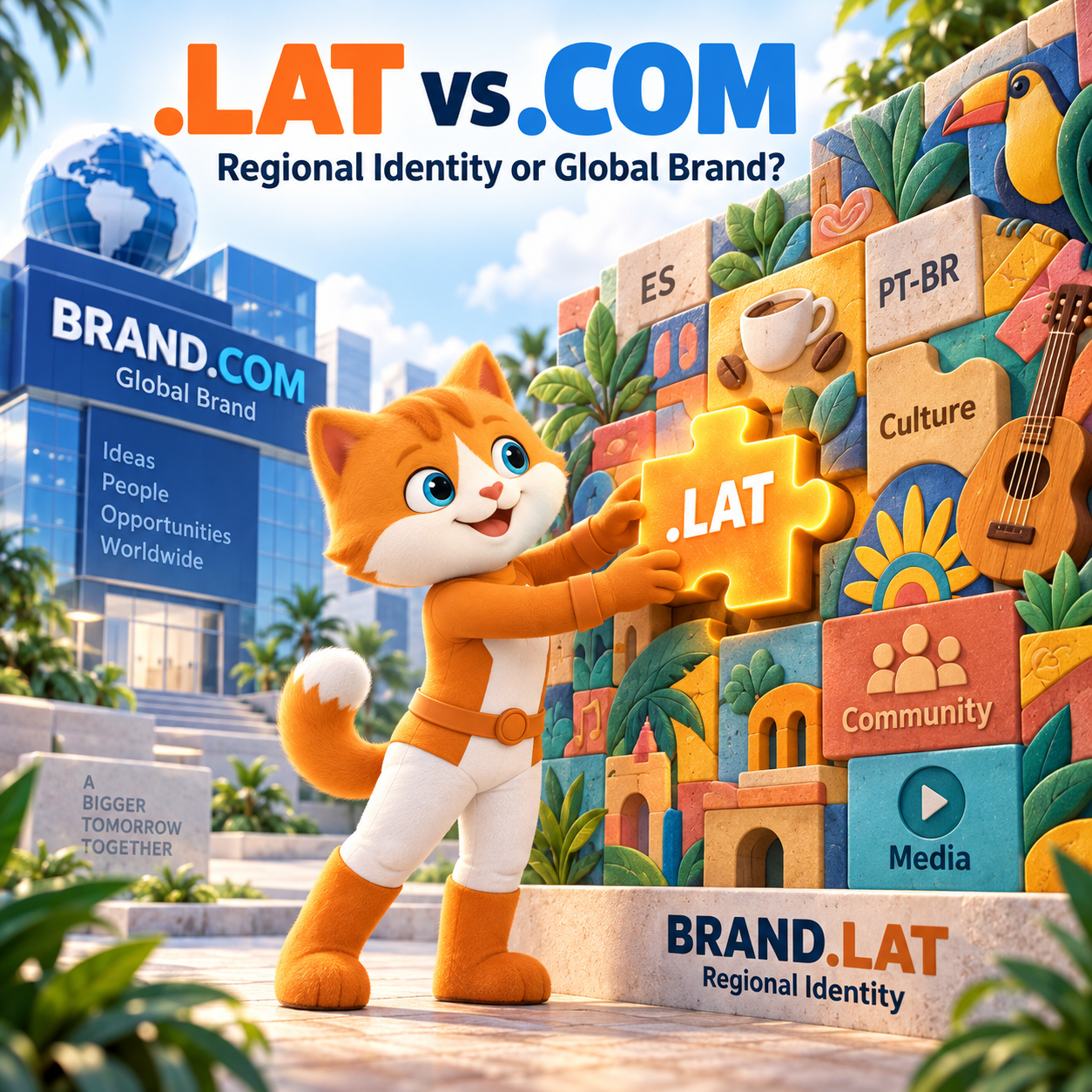
A brand serving Latin American audiences does not always need the same domain strategy as a company serving one country or the entire world.
A business may need one permanent global website.
A regional media project, bilingual campaign, cultural platform, community initiative, or cross-border service may need a domain that communicates a broader Latin identity.
That makes .LAT and .COM useful for different reasons.
Choose .COM when you want a broad, flexible primary domain that can represent the entire company across countries, languages, products, and future business models.
Choose .LAT when Latin America, Latino communities, regional culture, bilingual communication, or cross-border Latin audiences are genuinely central to the project and the extension helps explain that positioning.
For some organizations, both can serve different roles:
brand.com → global company website
brand.lat → Latin-focused regional project
culture.lat → cultural platform
community.lat → regional or community initiative
Before deciding, compare the actual names and long-term costs:
Check .LAT Domain Availability
Check .COM Domain Availability
.LAT vs .COM at a Glance
Choose .LAT if: Latin American markets, Latino communities, regional culture, multilingual content, or cross-border Latin audiences are central to the project.
Choose .COM if: you need one broad primary domain that can represent the company globally without tying the brand to one region or cultural positioning.
.LAT type: Generic top-level domain, or gTLD.
.LAT is not: a country-code domain for Latin America.
Google geotargeting: .LAT is a generic TLD, so the extension itself does not automatically target one Latin American country in Google Search.
Languages: .LAT can be used with Spanish, Portuguese, bilingual, or other relevant content strategies.
Pricing: Compare registration, renewal, transfer, and Premium pricing before choosing a long-term domain.
What Is the Main Difference Between .LAT and .COM?
The main difference is regional identity versus broad brand neutrality.
.COM does not tell visitors which geographic or cultural audience the company serves.
A business using:
northstar.com
could operate in:
- Mexico
- Brazil
- Colombia
- Argentina
- Chile
- the United States
- Europe
- multiple global markets
without the extension defining its audience.
.LAT communicates something more specific.
A name such as:
northstar.lat
may suggest that Latin America, Latin culture, or Latino communities are important to the project.
That can be useful when regional identity is part of the brand.
It can become less useful if the same domain later needs to represent a company whose business is no longer connected to that positioning.
What Is a .LAT Domain?
.LAT is a generic top-level domain.
It is not the country-code domain of a particular nation.
That distinction matters because Latin America includes many countries, each with its own national domain extension.
Examples include country-code domains such as:
.MX for Mexico
.BR for Brazil
.AR for Argentina
.CL for Chile
A .LAT domain takes a different approach.
Rather than representing one country, it can support projects that want to communicate a broader Latin or Latin American identity.
NiceNIC’s current .LAT registration information describes it as suitable for Latin America-focused brands, Latino community projects, regional culture, multilingual media, and cross-border services.
Current registry information also identifies .LAT as a generic TLD rather than a country-code extension.
Who Can Register a .LAT Domain?
NiceNIC’s current .LAT information states that .LAT is generally available through participating registrars, subject to:
- Domain availability
- Reserved-name rules
- Registry policies
- Acceptable-use requirements
- Accurate registrant information
- Applicable law and third-party rights
It is not presented as requiring the registrant to live in one specific Latin American country.
That makes it structurally different from many ccTLDs that may have country-specific eligibility or registration requirements.
Always check the current rules for the exact name before placing an order.
How Much Do .LAT and .COM Cost?
At publication, NiceNIC currently shows:
.LAT Market Account
- First year: $2.99
- Renewal: $47.99
.COM Market Account
- First year: $14.99
- Renewal: $17.99
The .LAT first-year registration price is currently much lower.
Its renewal price is substantially higher.
That difference matters when the domain is intended to become a permanent regional brand.
A one-year campaign and a domain expected to operate for ten years should not be evaluated using only the first checkout price.
Account level, registry pricing, Premium classification, transfer pricing, and promotions can change.
Always review the latest domain registration and renewal prices before ordering.
When Should You Choose .COM?
Choose .COM when:
- You are building the permanent global company website.
- Your business operates in several regions.
- Latin America is only one market among many.
- The brand may enter unrelated markets later.
- You want one neutral domain identity.
- The same website serves customers worldwide.
- You expect to keep the domain for many years.
-
A suitable matching
.COMis available.
Imagine a software company serving:
- Latin America
- North America
- Europe
- Asia-Pacific
The company may begin with a strong Latin American customer base but expand internationally.
A .COM domain can continue representing the parent brand regardless of which market becomes largest.
If that matches your business, check whether your preferred .COM domain is available.
When Does .LAT Make More Sense?
.LAT becomes more relevant when Latin identity is central to the actual project.
Strong use cases can include:
- Latin American media
- Latino community platforms
- Regional cultural projects
- Cross-border business initiatives
- Latin entrepreneurship networks
- Music and entertainment projects
- Regional events
- Spanish-Portuguese bilingual platforms
- Tourism projects covering multiple Latin American countries
- Educational initiatives
- Regional campaigns
- Community organizations
- Creator networks
- Latin-focused ecommerce campaigns
Illustrative naming structures might include:
culture.lat
music.lat
founders.lat
community.lat
travel.lat
media.lat
business.lat
These examples illustrate naming structures only.
Actual availability and Premium pricing must be checked before registration.
If that positioning fits your project, check whether your preferred .LAT domain is available.
.LAT Is Not a Latin America ccTLD
This is one of the most important facts to understand before registering.
There is no single country-code domain representing all of Latin America.
Country-code domains represent individual countries or territories.
.LAT is different.
It is a generic top-level domain with regional and cultural positioning.
That means:
.BR can communicate a Brazil-specific identity.
.MX can communicate a Mexico-specific identity.
.AR can communicate an Argentina-specific identity.
.LAT can communicate a broader Latin-oriented identity without selecting one country.
This distinction becomes important for both branding and SEO.
.LAT vs a Country-Code Domain: Which Should You Choose?
Start with the audience.
Choose a relevant country-code domain when:
- One country is clearly the primary market.
- Local country identity is important.
- The business meets the relevant registration requirements.
- The website is specifically designed for that national audience.
Consider .LAT when:
- The project spans several Latin American countries.
- A cultural or community identity is more important than one country.
- Spanish and Portuguese audiences may both be relevant.
- The project serves Latin communities outside Latin America as well.
- A single country code would make the project look narrower than intended.
For example:
brand.mx
can make sense for a Mexico-specific operation.
brand.br
can make sense for a Brazil-specific operation.
brand.lat
can make more sense when the project is intentionally regional.
.LAT Does Not Automatically Geotarget Your Website to Latin America
This point matters for SEO.
.LAT is a generic TLD.
Google distinguishes generic TLDs from country-code TLDs when considering geographic signals.
A country-code domain such as:
.DE
or:
.CN
can provide a strong country-specific signal.
A generic TLD such as:
.COM
or:
.LAT
does not automatically identify one target country in the same way.
That means registering:
brand.lat
does not automatically tell Google:
“Rank this website across Latin America.”
Latin America is also not one search market.
Mexico, Brazil, Argentina, Colombia, Chile, Peru, and other countries have different:
- Search behavior
- Languages
- currencies
- regulations
- local competitors
- commercial expectations
The domain can support regional branding.
The website still needs an actual international SEO strategy.
How Should a .LAT Website Handle Multiple Countries?
A regional website should make country and language structure clear.
Possible structures include:
brand.lat/mx/
brand.lat/br/
brand.lat/ar/
or appropriate language-based sections.
The exact architecture depends on the business.
For multi-regional or multilingual content, useful technical considerations can include:
- Clear locale-specific URLs
-
hreflang - Correct language content
- Local currencies where relevant
- Local shipping information
- Country-specific legal information
- Local contact information
- Accurate canonical configuration
Google’s international-site guidance recommends explicit regional and language signals rather than relying only on the domain name.
A .LAT domain can provide the regional umbrella.
The site architecture should explain the individual markets.
Spanish Is Not the Only Language Relevant to .LAT
Latin America is multilingual.
Spanish is widely used across the region, but a regional domain strategy may also involve:
- Portuguese
- English
- French
- Indigenous languages
- Bilingual content
Brazil alone makes Portuguese particularly important for many Latin America-wide projects.
That means a .LAT project should not automatically assume:
.LAT = Spanish only
A regional business may need:
/es/
and:
/pt/
or separate country structures depending on its audience.
Choose the content architecture based on real customer needs rather than the extension alone.
Is .LAT Good for a Latin American Ecommerce Project?
It can be, particularly for a regional shopping initiative.
Potential use cases include:
- Latin American brand campaigns
- Cross-border product collections
- Regional marketplace projects
- Latin creator merchandise
- Cultural products
- Regional promotions
For example:
brand.com → global business
shop.lat → Latin-oriented shopping campaign
However, a regional ecommerce strategy involves much more than the domain.
Customers may need clear information about:
- Currency
- Shipping
- Import duties
- Taxes
- Payment methods
- Returns
- Delivery areas
- Consumer rights
- Customer support
Those details vary by country.
A .LAT domain can communicate regional positioning.
It does not make multiple Latin American markets operationally identical.
Can a Global Brand Use .LAT?
Yes, especially as a regional layer.
A global brand might use:
brand.com → worldwide corporate website
and:
brand.lat → Latin regional campaign or content hub
This can work for:
- Product launches
- Regional events
- Cultural campaigns
- Partner programs
- Community initiatives
- Regional media
- Latin creator collaborations
A separate .LAT domain is most useful when the regional project has a clear reason to exist independently.
If the only difference is language, keeping localized content under the main .COM may sometimes be simpler.
For example:
brand.com/es/
and:
brand.com/pt-br/
may be appropriate for some businesses.
The domain structure should follow the business architecture.
.LAT Can Work for Regional Media
Media is one of the more natural use cases because stories often cross national borders.
A regional publication might cover:
- Business
- Technology
- Music
- Culture
- Entertainment
- Startups
- Travel
- Food
- Design
- Community news
A .LAT domain can support an editorial identity that is broader than one country.
For example:
culture.lat
could represent regional cultural coverage.
startup.lat
could represent a regional entrepreneurship publication.
The extension can describe the intended regional perspective.
The publisher, reporting, editorial standards, and content determine the quality of the publication.
Is .LAT Good for Community Projects?
It can be.
Community projects may bring together people across:
- Countries
- Cities
- Languages
- Professional fields
- Cultural interests
Possible projects include:
- Founder communities
- Creator networks
- Cultural associations
- Professional groups
- Student communities
- Diaspora projects
- Regional nonprofits
- Educational initiatives
A .LAT domain can fit when the community intentionally identifies with a broader Latin context.
The extension does not prove:
- Membership size
- Community activity
- Geographic representation
- Cultural authority
- Official status
Those characteristics need to be communicated through the project itself.
Does a .LAT Domain Prove Latin Ownership or Identity?
No.
A domain extension is not an identity certificate.
Registering a .LAT name does not prove that:
- The owner is from Latin America.
- The company is headquartered in Latin America.
- The founders identify as Latino.
- The project represents all Latin communities.
- The site has official regional authority.
The domain communicates positioning.
Organizations should describe who they are accurately on the website.
This matters particularly for community, cultural, media, and advocacy projects.
Avoid Speaking for an Entire Region
Latin America is not one homogeneous market or culture.
A website using .LAT should avoid assuming that:
- Every country has the same preferences.
- All users speak the same language.
- The same offer works everywhere.
- Regulations are identical.
- One cultural message represents the entire region.
A strong regional project can still recognize local differences.
For example, the same brand may maintain different:
- Product catalogs
- currencies
- language variants
- delivery policies
- campaigns
- support channels
under one broader .LAT identity.
Is .LAT Good for Cross-Border Business?
Potentially.
A regional service may connect customers or businesses across several countries.
Examples include:
- Logistics
- B2B marketplaces
- Professional services
- Media
- Events
- Education
- Technology communities
- Regional partnerships
A domain such as:
partners.lat
could suit a cross-border partner network.
The website should still explain:
- Which countries are supported.
- Which services are available in each country.
- Which legal entity provides the service.
- Which currencies and payment methods apply.
The extension can create regional context.
Operational coverage should be stated separately.
What About U.S. Latino Audiences?
A .LAT project can also be relevant to communities outside Latin America when the regional or cultural positioning genuinely fits the project.
For example, a media, cultural, community, or creator project may serve audiences in:
- the United States
- Canada
- Europe
- Latin America
The domain does not restrict the physical location of visitors.
However, the website should avoid assuming cultural identity simply from geography or language.
Build content for the audience the project actually serves.
.LAT vs .LATINO: Are They the Same Extension?
No.
.LAT and .LATINO are separate generic top-level domains.
For example:
example.lat
and:
example.latino
are two separate domain registrations.
They have different registry arrangements, availability, and pricing.
.LAT is shorter and can support broader regional or cultural naming.
.LATINO spells out a different identity term more explicitly.
Neither should automatically be considered better.
If both fit a project, compare:
- Complete domain name
- Intended audience
- Language
- Brand tone
- Availability
- Registration price
- Renewal cost
- Long-term positioning
Do not treat them as interchangeable versions of one domain.
.LAT vs .COM for a Bilingual Brand
Consider a business serving customers in both Spanish and Portuguese.
A .COM domain can provide a neutral global parent brand:
brand.com
with:
brand.com/es/
and:
brand.com/pt-br/
A .LAT domain can provide a regional umbrella:
brand.lat
with similar language or country sections.
The choice depends on whether the Latin regional identity is:
one market segment
or:
a central part of the brand itself.
If Latin America is one division of a global company, .COM may be the more natural parent domain.
If the project exists specifically for a Latin regional audience, .LAT may provide a clearer identity.
Is a Short .LAT Better Than a Long .COM?
Sometimes.
Compare:
founders.lat
with:
latinamericanfoundersnetwork.com
The .LAT version is much shorter.
Now compare:
founders.lat
with:
founders.com
If both were available at suitable prices, the decision would depend on the actual project.
A global business network may value .COM.
A Latin-focused founder community may find .LAT more descriptive.
Compare the complete names based on:
- Length
- Meaning
- Pronunciation
- Regional relevance
- Audience understanding
- Registration price
- Renewal price
- Premium status
- Long-term purpose
A shorter domain is only useful when the meaning remains clear.
Does .LAT Rank Better for Latin America Searches?
There is no automatic ranking bonus simply because a website uses .LAT.
Google treats .LAT as a generic top-level domain.
That means the extension itself does not automatically rank a site higher across:
- Mexico
- Brazil
- Argentina
- Colombia
- Chile
- Peru
- other Latin American markets
Search performance depends much more on factors such as:
- Useful original content
- Search relevance
- Language
- Country-specific content
-
hreflang - Technical crawlability
- Internal linking
- Relevant external links
- Page performance
- Brand signals
- User experience
Use .LAT when the regional meaning improves the brand.
Build international SEO through the website architecture and content.
For current international-site guidance, see Google Search Central: Managing Multi-Regional and Multilingual Sites.
Does .LAT Automatically Improve Trust With Latin Audiences?
That should not be assumed.
A relevant regional domain may help users understand the intended audience.
Trust depends on the organization behind the website.
Useful trust signals can include:
- Clear company identity
- Local or regional contact information where relevant
- Accurate language
- Transparent pricing
- Appropriate policies
- Reliable customer support
- Secure HTTPS
- Current content
- Clear legal entity information
A .LAT domain can communicate positioning.
The business must establish trust through its actual operation.
Does .LAT Prove a Business Operates Across Latin America?
No.
A company may register a .LAT domain even if it currently serves only part of the region.
If geographic coverage matters, state it clearly.
For example:
Currently available in Mexico, Colombia, and Chile
is more useful than relying on the domain to imply continent-wide coverage.
Avoid presenting a regional domain as evidence that the company operates in every Latin American market.
Does .LAT Improve Click-Through Rate?
No particular click-through rate should be assumed from the extension alone.
A .LAT domain may communicate relevant regional positioning to some audiences.
Whether someone clicks can depend on:
- Search intent
- Brand familiarity
- Page title
- Search snippet
- Offer
- Language
- Reputation
- Relevance
Use .LAT when it helps make the brand or project clearer.
Do not rely on the extension to guarantee user behavior.
First-Year Price vs Long-Term Cost
At publication, NiceNIC currently shows:
.LAT: $2.99 first year, $47.99 renewal
.COM: $14.99 first year, $17.99 renewal
The current .LAT first-year price is substantially lower.
Its renewal price is substantially higher.
Before registering, compare:
- First-year registration
- Renewal price
- Transfer price
- Premium-domain status
- Expected ownership period
Review the latest figures on the NiceNIC Domain Prices page before ordering.
A one-year regional campaign and a permanent Latin media brand have very different cost profiles.
For a Permanent Regional Brand, Look Beyond the First Year
A low registration price can make launching a project easier.
A successful regional platform may keep the same domain for many years.
Before registering, ask:
- Is this a temporary campaign or a permanent brand?
- Will Latin regional identity remain central?
- Is one country more important than the wider region?
- Will the site need multiple languages or country versions?
- What is the renewal price?
-
Would the main company still be better represented by
.COM?
These questions provide a more realistic long-term comparison than the first-year price alone.
What About Premium .LAT Domains?
Some short, generic, or desirable .LAT names may have Premium pricing.
The exact name you want may therefore cost differently from the standard TLD price.
Before building a project around a domain:
- Search the exact name.
- Confirm availability.
- Check whether Premium pricing applies.
- Review the registration price.
- Review the applicable renewal price.
Do this before committing to:
- Logos
- Advertising
- Event materials
- Regional campaigns
- Packaging
- Social profiles
- App interfaces
The same principle applies to .COM and other domain extensions.
Should You Register Both .LAT and .COM?
For an important regional brand, owning both may make sense when both names are available and the cost fits the plan.
One structure could be:
brand.com → global company
brand.lat → Latin regional hub
Another:
company.com → organization
community.lat → regional community
Another:
brand.com → global ecommerce
shop.lat → regional campaign
Another:
publisher.com → parent company
culture.lat → Latin culture publication
There is usually little reason to publish identical websites on both domains.
Choose one primary address or give each domain a clearly defined role.
If similar content is published across regional URLs, review canonical and hreflang configuration carefully.
Check Existing Brands Before Registering
A domain being available does not automatically make it a suitable brand.
Before registering a .LAT version of a name, review:
- Existing companies
- Trademarks
- Media brands
- Community organizations
-
The matching
.COM - Country-code versions
- Relevant social accounts
- Potential audience confusion
This matters especially when the name refers to:
- A region
- A cultural organization
- A public initiative
- A known brand
- A community
Choose a name that clearly identifies your own project.
.LAT Can Be Useful for Agencies and Cross-Border Platforms
Agencies, hosting providers, ecommerce platforms, publishers, and resellers may manage domains for clients targeting Latin markets.
Those projects can include:
- Regional campaigns
- Multilingual websites
- Latin media
- Community platforms
- Tourism projects
- Ecommerce campaigns
- Events
- Cross-border services
Instead of checking names one at a time, use NiceNIC Bulk Domain Search to compare multiple .LAT, .COM, country-code, and brand variants.
Platforms, agencies, hosting providers, and resellers that want supported domain operations inside their own systems can explore the NiceNIC Domain API for availability checks, registration, renewal, transfer, DNS, pricing, and related supported operations.
For larger regional portfolios, also plan for:
- Renewal dates
- Country-specific domains
- DNS management
- Account access
- Customer ownership
- Multilingual content
- Brand protection
- Client handover
A regional domain strategy should remain manageable as the number of countries and domains grows.
Already Own a .LAT Domain Elsewhere?
You can transfer an existing domain to NiceNIC when the domain meets the applicable transfer requirements.
Typical preparation includes:
- Confirm that the domain is eligible for transfer.
- Unlock the domain at the current registrar where required.
- Obtain the Auth Code or EPP Code.
- Confirm access to the relevant registrant account or email.
- Submit the transfer.
- Monitor the transfer until completion.
Before moving an active regional site, also review:
- Nameservers
- DNS records
- Email records
- DNSSEC status where applicable
- Language and regional URLs
- Domain expiration date
- Transfer timing
Avoid combining unrelated registrar, DNS, hosting, email, and international-site migrations at the same time unless necessary.
Separating changes can make troubleshooting easier.
.LAT or .COM: Which Should You Choose?
Choose .COM if:
- You are building the permanent global company website.
- Latin America is one market among several.
- You want one neutral identity across countries.
- Your business may expand beyond regional positioning.
- Broad brand flexibility matters.
- You expect to keep the domain for many years.
-
A suitable matching
.COMis available. - Long-term renewal cost is important.
Choose .LAT if:
- Latin American or Latino community positioning is genuinely central to the project.
- You are building a regional media, culture, community, or cross-border platform.
- The project spans several countries rather than one national market.
- Spanish and Portuguese or other multilingual content may coexist.
-
.LATcreates a clearer complete domain name. -
You understand that
.LATis a gTLD rather than a ccTLD. - You have checked registration, renewal, and Premium pricing.
- The regional positioning is likely to remain relevant over time.
Consider both when:
.COM will represent the global company
and
.LAT will represent a Latin regional hub, community, campaign, media property, cultural project, or cross-border service.
Final Verdict
.COM remains a strong option when a company needs one broad domain that can represent the business across countries, products, languages, and future stages of growth.
.LAT has a different role.
It works best when a broader Latin identity is genuinely central to the project and when choosing a single country-code domain would make the intended audience look too narrow.
The most important technical distinction is simple:
.LAT is a generic top-level domain.
It is not a Latin America country-code domain.
That means it can support regional branding without automatically creating country-specific Google geotargeting.
It also does not automatically prove:
- Latin ownership
- Regional authority
- Cultural representation
- Local trust
- Search ranking advantage
- Operation in every Latin American country
Those qualities come from the organization, content, market coverage, and website implementation.
Long-term cost matters too.
At publication, .LAT has a much lower NiceNIC Market first-year price than .COM, while its renewal price is substantially higher.
Before choosing, ask five questions:
Is Latin regional identity genuinely central to the project?
Would one country-code domain be too narrow?
Does .LAT make the complete name clearer than the available .COM?
How will languages and country-specific content be structured?
Does the long-term cost fit the project?
Then choose the domain that best fits the audience, regional strategy, brand architecture, and expected lifetime of the project.
How to Register a .LAT or .COM Domain at NiceNIC
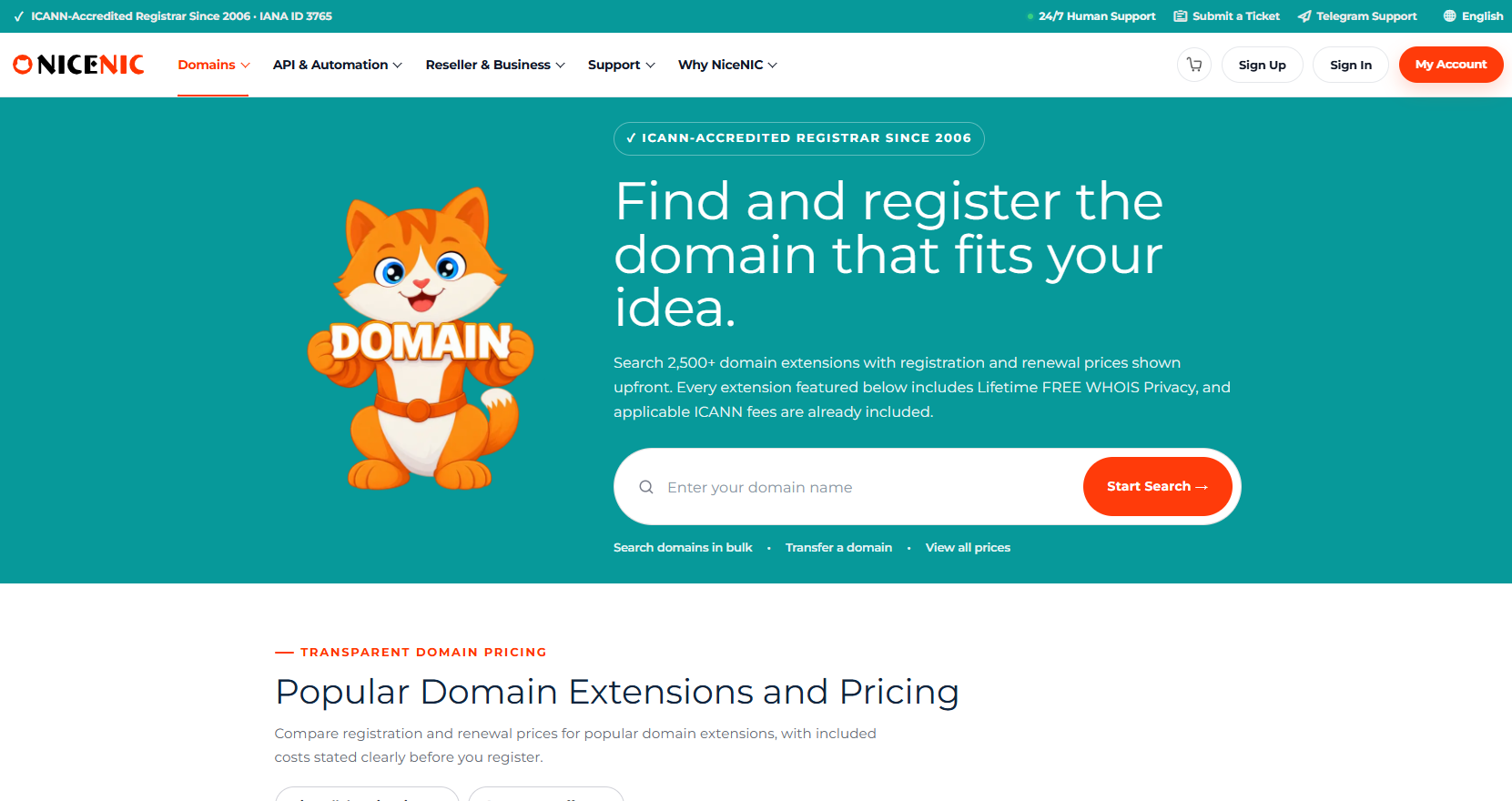
Step 1: Search the Exact Name
Compare your preferred regional, cultural, community, company, or campaign name under .LAT, .COM, or both.
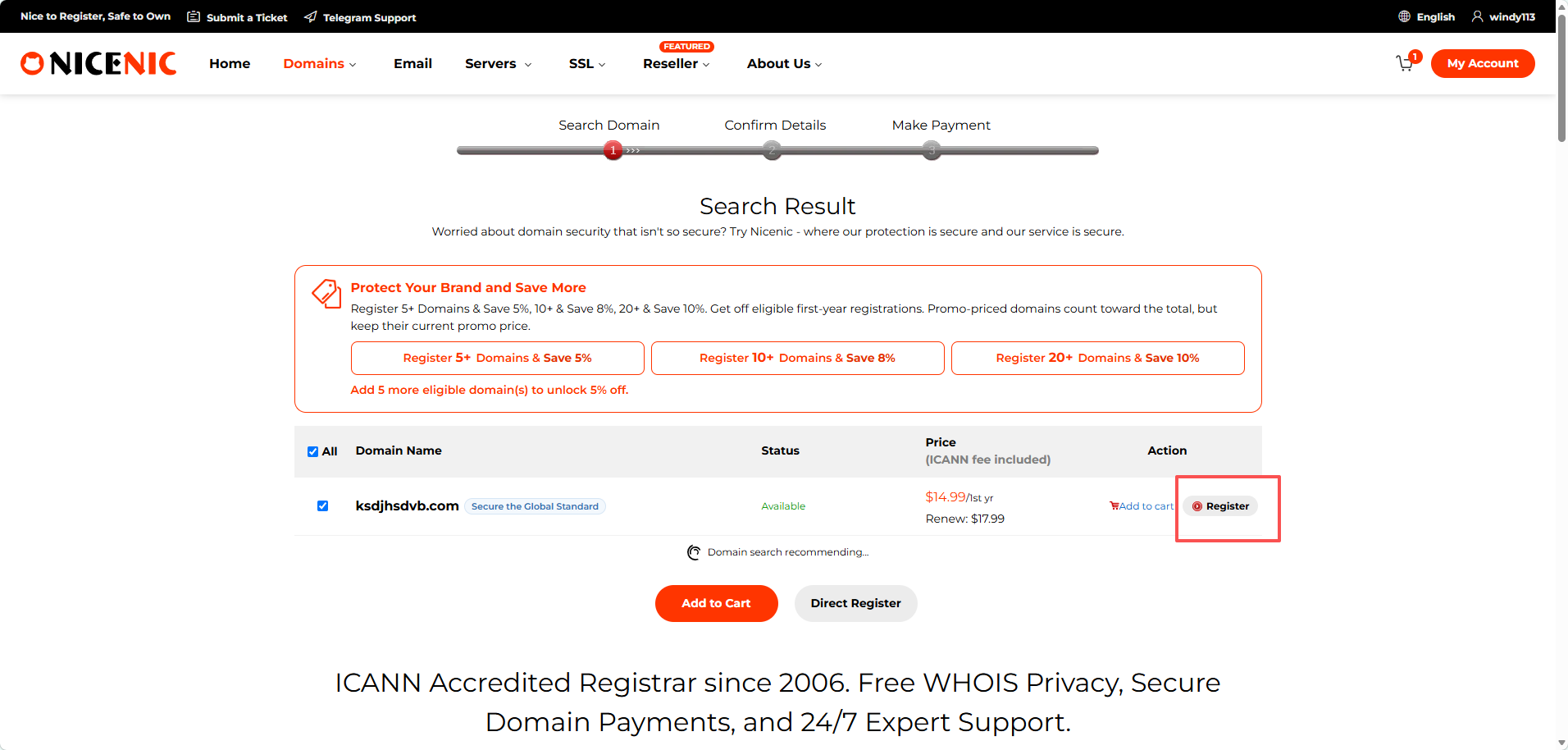
Step 2: Compare the Complete Decision
Review:
- Domain length
- Regional relevance
- Audience understanding
- Language strategy
- Global brand flexibility
- Registration price
- Renewal price
- Premium-domain status
- Country-specific requirements
- Long-term purpose
Check the latest domain registration and renewal prices before making the final decision.
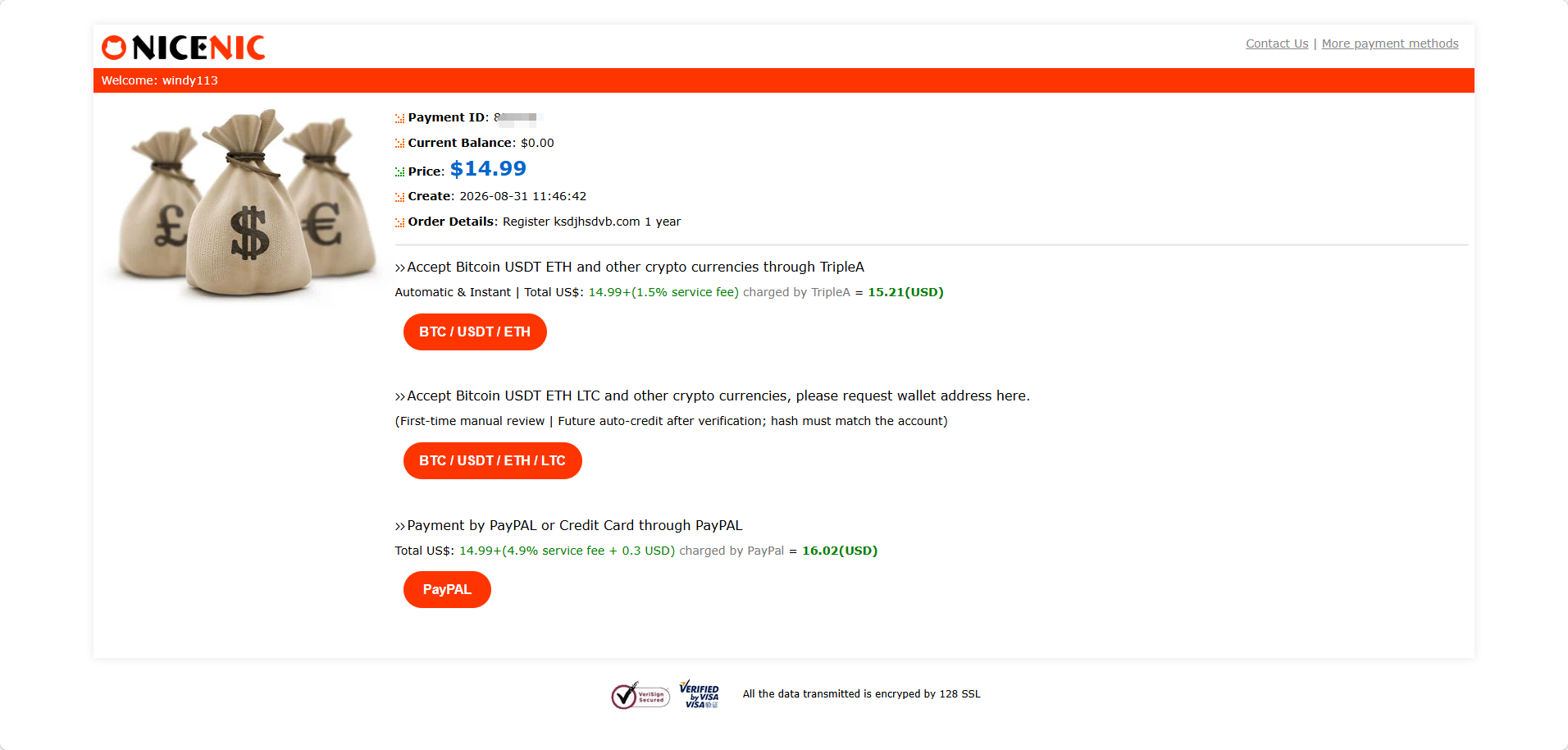
Step 3: Complete Registration
Add the selected domain to your order, confirm the registration information, choose an available payment method, and complete payment.
After registration, the domain can be managed from your NiceNIC account.
Check Your Name in .LAT and .COM
Ready to compare the actual name you want?
Checking multiple regional, multilingual, campaign, or client names? Use NiceNIC Bulk Domain Search.
Managing customer domains or integrating domain services into your platform? Explore the NiceNIC Domain API.
Already own the domain elsewhere? Start with NiceNIC Domain Transfer.
Planning to keep the domain long term? Compare current registration and renewal prices before ordering.


